A year of culinary collaboration rather than a single gala
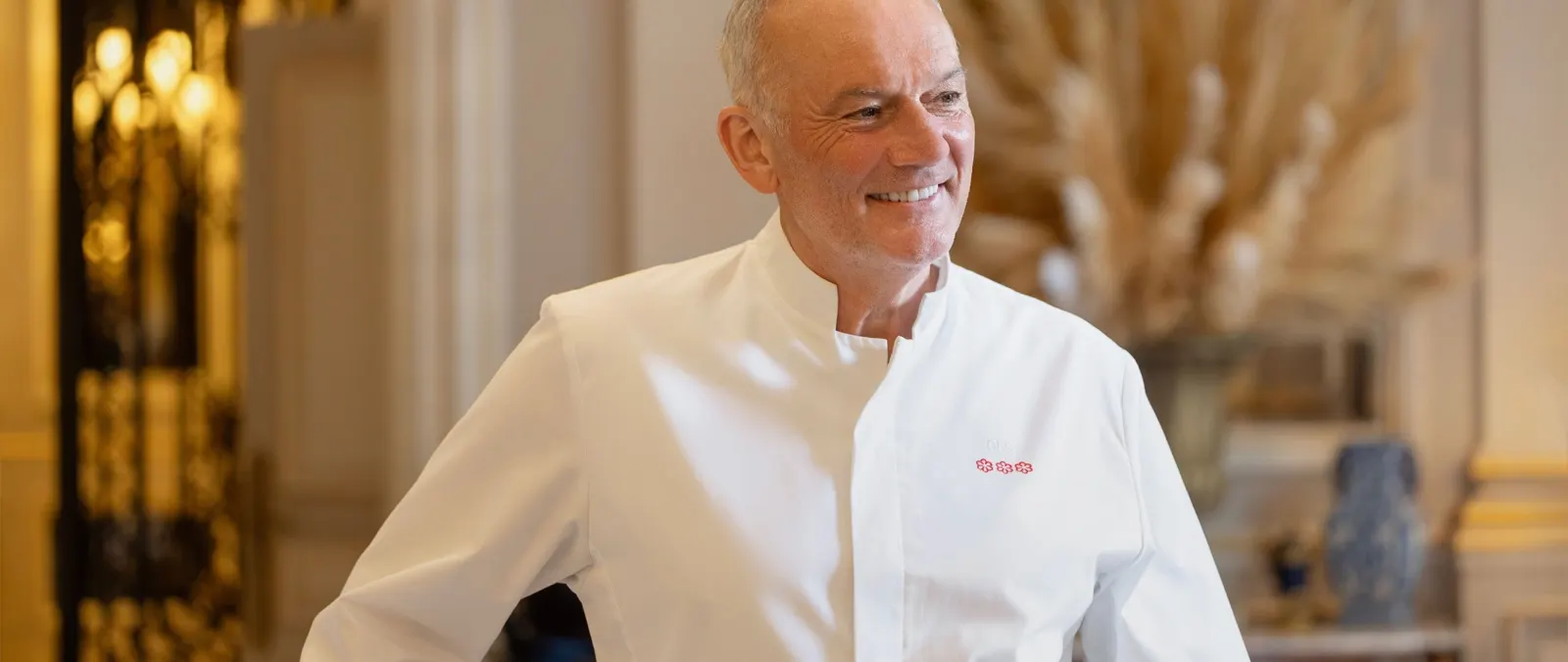
Four Seasons Yachts announced on 17 November 2026 that Christian Le Squer will act as culinary ambassador for Sedna throughout 2027. The French chef is executive chef of Le Cinq at Four Seasons Hotel George V in Paris, which holds three Michelin stars. His collaboration with the restaurant aboard Four Seasons I involves menu development, training and two periods of personal presence during cruises. Four Seasons I is a large luxury passenger vessel, not a privately owned yacht within the 12-to-23.99-metre editorial fleet range of this publication. The interest for Luxury Yacht Guide readers is culinary technique and hospitality at sea rather than the vessel's construction or classification. Bringing a chef's work into a maritime setting provides an opportunity to examine how a restaurant can retain a distinct identity while operating away from its home city. The planned year-long format is also more substantial than inviting a celebrated guest to prepare a single promotional dinner.
A Breton background and a contemporary French approach
The announcement describes Le Squer's origins in Morbihan on the coast of Brittany and his career at Pavillon Ledoyen before moving to the George V in 2014. His cooking is presented as a lighter interpretation of established French culinary technique, with attention paid to the balance of colour, texture and flavour. For guests interested in French gastronomic culture, the coastal origin of the chef is a useful contextual detail, although it cannot predict the content of every dish he will design for Sedna. The collaboration offers scope to explore how a recognisable culinary approach can be maintained when a restaurant moves between regions with different climates and ingredient supplies. The chef's approach to changing a menu when produce is no longer at its best is especially pertinent. A yacht's provisions are affected by where it is travelling, the length of the passage and the quality of local sourcing. Culinary identity can be expressed through technique and judgement rather than dependence on a rigid list of ingredients.
A tasting menu and an à la carte alternative
Four Seasons says Sedna will offer a signature tasting menu and à la carte choices reflecting Le Squer's approach to French cooking. These formats serve different purposes. The tasting menu allows the kitchen to establish a deliberate progression of flavours and portions, while individual selections give guests more control over the length and content of a meal. This distinction is equally relevant aboard a private yacht. A group of six guests may choose a formal dinner one evening and a less structured meal the next; the workload for the galley will differ accordingly. A successful host can establish whether guests enjoy a long culinary sequence, prefer fewer courses or have specific dietary needs. The aim should be to organise the menu around the people at the table and circumstances of the voyage. The announcement does not provide a final menu for every day of 2027, so it would be premature to infer exactly which dishes will be served on a particular date.
Training as the enduring element of the collaboration
One of the most consequential commitments in the release is the plan for Sedna's chefs to train alongside Le Squer and his kitchen team at Le Cinq. A restaurant's standards depend not only on a signature dish but also on the shared skills that make service consistent when a visiting chef is absent. Training can communicate the reasoning behind a preparation, the importance of ingredient condition and the organisation necessary to serve several dishes at the correct temperature and time. For private yacht owners, the principle is directly applicable even though their galley will be much smaller. A chef may benefit from specialist training in pastry, dietary catering or provisioning, according to the needs of the boat. The boat's facilities and crew complement should shape what is attempted, with allowances for preparation, space and safety. A carefully executed dish using manageable processes can be preferable to an ambitious sequence requiring more kitchen capacity than the vessel can realistically provide.
The Caribbean residency in late February
The first announced residency runs from 21 to 28 February 2027, covering the Lesser Antilles with Guadeloupe and Anguilla among the featured destinations. Four Seasons' itinerary description refers to Creole cooking, agricole rum traditions and seafood associated with the region. These references suggest opportunities for guests to encounter the food culture of different islands, but the company has not disclosed exact menus or confirmed that every named ingredient will feature in Sedna. The itinerary offers an example for owners planning an independent Caribbean cruise. Local provisioners and knowledgeable restaurants can introduce a yacht party to ingredients reflecting the destination's cultural history, rather than importing everything for a fixed European menu. Responsible sourcing and the availability of local species should guide those decisions. A visit to a shore restaurant or food producer can help a traveller appreciate how different culinary traditions have evolved, provided the visit respects local arrangements and is planned around the realities of the yacht's own itinerary.
A September itinerary through the Greek Isles
The second announced residency runs from 12 to 19 September 2027 and features Mykonos and Göcek, connecting the Cyclades with Türkiye's Turquoise Coast. The release highlights food traditions that include kopanisti cheese, seafood, olive oil and meze. There is a considerable difference between the cuisines of islands and mainland communities, and the opportunity to understand these differences can add substance to a Mediterranean cruising holiday. A French-trained chef need not replace a local preparation with a more elaborate version. There can be value in understanding the original function of a dish and choosing how to complement it within a wider meal. A private yacht may be particularly well positioned to adapt its dining arrangements when visiting destinations in succession. Rather than maintaining the same table every day, the chef can discuss ingredients available in the next port, and the owner can decide which meals would be best enjoyed ashore. Such flexibility depends on sensible provisioning and cooperation between crew and guests.
Restaurant scale and yacht-scale hospitality
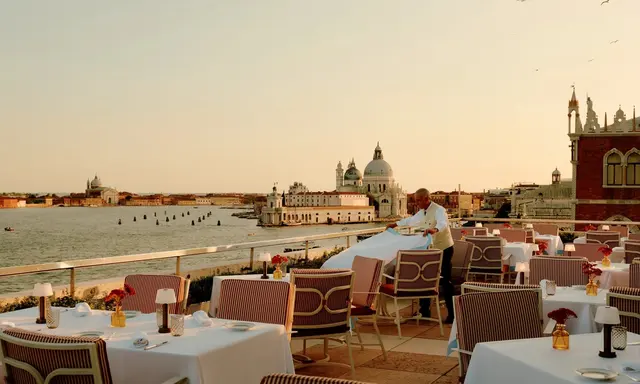
Sedna is described as seating sixty-six guests inside and forty outside, alongside a private dining room accommodating up to ten. The release identifies its emerald-green interior and a wine programme curated by a sommelier. These are features of a passenger restaurant, with an operating model very different from a yacht carrying a small private group. It would be misleading to suggest a midsize yacht needs comparable space or facilities to achieve excellent fine dining. Indeed, its smaller guest complement can offer advantages in individual attention and the ability to respond to changes of preference. The designer and crew can focus on the relationship between galley, dining table and circulation routes needed for safe service. Guests who value privacy can arrange a meal in an appropriate area of the boat, taking weather and sea conditions into account. Menu development should consider the availability of suitable storage and equipment before elaborate presentation. A high standard of hospitality does not depend on the number of seats available.
What owners can take from the announcement
The collaboration is scheduled for 2027 and its results have not yet been independently assessed. The chef's Michelin recognition relates to Le Cinq in Paris, not an award for Sedna, and it would be incorrect to transfer that rating to the restaurant at sea. Nevertheless, the programme raises meaningful questions about how a maritime dining experience is developed over time. Its announced training, menu work and two geographically distinct residencies offer a coherent basis for discussing the connection between French technique and regional produce. The lesson for private yacht owners is not to pursue celebrity involvement for its own sake but to consider the systems enabling food to remain an important and pleasurable part of a voyage. Clear communication about dietary requirements, regular attention to provisioning and appropriate support for the galley can be more influential than the number of elaborate dishes offered. The quality of a meal is ultimately experienced through the ingredients, the care with which they are prepared and the atmosphere in which the guests enjoy them.
Sources and lead image
Source documentation: https://press.fourseasons.com/news-releases/2026/fsy-chef-christian-le-squer/. Lead image: Chef Christian Le Squer in the Four Seasons press release — Four Seasons / official press centre. Official issuer-supplied press photograph, reproduced for editorial coverage of the specific announcement and resized for web display.