A Rheingau estate takes first place in the annual vineyard ranking
Schloss Johannisberg in Germany's Rheingau has been named The World's Best Vineyard 2026 by The 50 Best Vineyards. The organiser announced the result on 18 November at an awards ceremony held at Viña Don Melchor in Santiago, Chile. The historic estate advances from second place in 2025 and also receives the award for Europe's leading vineyard destination.
The distinction recognises the experience of visiting wine estates rather than identifying the world's best individual bottle of wine. The 2026 ranking encompasses fifty estates in thirty-one wine regions across fifteen destinations and six continents. Its geographical range is particularly relevant to travellers interested in combining gastronomy, architecture and landscape within a single itinerary.
For Luxury Yacht Guide readers, the list offers a collection of possible shore-based experiences, some readily combined with coastal travel and others better approached as separate inland journeys. It also illustrates the diversity of properties through which visitors can explore the culture of wine production.
A landscape associated with Riesling
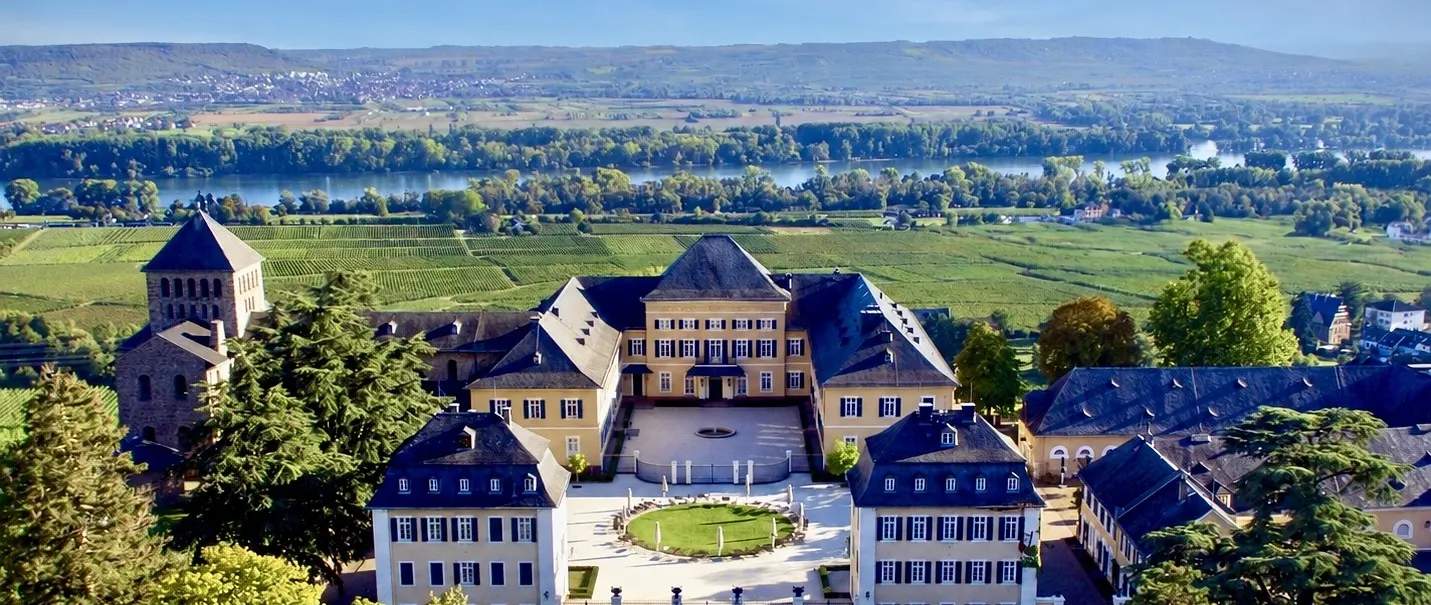
Schloss Johannisberg's position in the Rheingau gives the estate a distinctive relationship with the Rhine and its surrounding vineyards. The organiser's official photograph depicts the established buildings above the cultivated landscape, with views extending towards the river valley.
The estate is particularly associated with Riesling. Its long history of wine production and the relationship between its buildings and vineyards form part of the visitor experience recognised by the award. Travellers can explore these features through guided visits and tastings, subject to the arrangements offered by the estate.
Riesling provides an interesting subject for a visit because its characteristics are affected by several decisions made during cultivation and production. Wines made from the same grape variety can differ substantially according to their origin, harvest conditions, maturity and the methods used to develop the finished wine.
The opportunity to encounter the variety in a region with a strong historical association with it provides a useful context for understanding those differences. A guided tasting can be more informative than purchasing a selection of bottles independently, particularly if the visit includes an explanation of the estate's vineyards and production methods.
The award itself does not establish a quality hierarchy between every Riesling produced in Germany and wines produced elsewhere. It recognises the complete experience offered by an individual estate.
The historic cellars as part of the journey
Among the features highlighted by the awards organiser is the Bibliotheca Subterranea, the estate's historic wine collection housed underground. Its presence introduces another aspect of the visitor experience, extending the discussion beyond the current release of wines to the preservation of bottles over long periods.
For a collector, the condition in which a bottle has been stored is an important element of its history. Wine can develop during storage, but the outcome depends on the characteristics of the wine and its treatment. Age alone is not an assurance of quality, just as the prestige of a producer cannot establish the condition of an individual bottle.
A visit to a historic cellar provides a different perspective from that of an ordinary commercial tasting. The architecture and the collection can help establish the relationship between production, storage and the way a region's wine history is recorded.
Prospective visitors should confirm the actual scope of the tours available, as access to historic storage areas and particular bottles may differ from one programme to another. The ranking announcement is not a guarantee that every part of the cellar will be accessible or that rare vintages will be offered for tasting.
Spain and Chile complete the leading three
Bodegas Ysios in Spain's Rioja takes second place in the 2026 ranking. The organiser identifies its distinctive architecture and the opportunities it provides for visitors to encounter the vineyard landscape as important aspects of its appeal.
Architecturally ambitious wineries can offer unusual opportunities to examine the relationship between industrial production and design. The buildings must accommodate the practical requirements of receiving grapes, producing and storing wine, while also creating a coherent setting for visitors. At a property with an especially distinctive architectural identity, the building may become one of the principal attractions independently of the wines.
Montes, in Chile's Colchagua Valley, takes third position, rising seven places from its previous ranking. It also receives the regional award for South America. The organiser highlights the estate's gravity-flow winery in Apalta and the combination of its wines with the gastronomy served at Fuegos de Apalta.
The two estates provide contrasting examples of the types of experience recognised in the list. Each connects a particular wine region to a designed setting, but the architecture, landscape and culinary traditions encountered during a visit are substantially different.
Regional distinctions extend the geographical range
Creation, in South Africa's Walker Bay region, places fifth overall and receives the award for Africa. Located on the Hemel-en-Aarde Ridge, it has developed an experience that brings together vineyards, art, food and guided opportunities to explore its setting.
Australia's Vasse Felix enters the ranking in seventeenth place, receiving both the award for Australasia and the highest-ranked new entry. Its Margaret River location provides another approach to wine tourism, with a combination of tastings, a restaurant and the historic collection known as The Vault.
Margaret River is particularly interesting to coastal travellers because the region is associated with both the Indian Ocean landscape and agricultural production. A visit to the estate can form part of a broader itinerary in southwestern Australia, although the journey from a particular harbour or accommodation should be planned separately.
Château Kefraya, in Lebanon's Bekaa Valley, returns to the list at number eighteen and receives the award for the Middle East. Jordan Vineyard & Winery, in California's Alexander Valley, takes twenty-seventh place and the North American award.
These regional distinctions are useful in revealing destinations beyond the first few positions. For a traveller, the appropriate estate to visit may depend more on the intended region, the type of experience available and personal interests than on its exact overall ranking.
New entries and recognition for developing destinations
Champagne Taittinger receives the highest climber award after moving from fiftieth place in 2025 to eleventh in 2026. Its appearance near the top of the list reflects renewed recognition of the visitor experience associated with its historic cellars.
Five estates appear in the ranking for the first time. In addition to Vasse Felix, these include Concha y Toro in Chile, Shafer Vineyards in California, Leeuwin Estate in Margaret River and Champagne Philipponnat in France.
The organiser has also introduced a One to Watch award, presented to Aya Estate in Bulgaria's Struma Valley. The distinction is intended to draw attention to a developing vineyard destination considered to offer particularly promising visitor experiences. It does not establish a future position in the principal ranking.
For those exploring wine regions that receive less international attention, such recognition may offer a starting point for investigating individual producers and their local surroundings. It is worth considering the broader region rather than constructing a journey exclusively around one award-winning estate.
Planning a visit rather than following the ranking alone
A yacht owner interested in wine tourism can consider several of the listed destinations as possible components of a longer holiday. The Douro Valley, represented by Quinta do Crasto in sixteenth position, and Jerez, represented by Bodegas Tio Pepe in twenty-first place, offer examples of regions whose wine traditions can complement travel in Portugal and Spain.
However, yacht arrangements and vineyard visits involve different practical requirements. An estate may be situated many kilometres inland, and local transport should be considered independently of the vessel's itinerary. Guided visits, restaurant reservations and tastings may also operate on different schedules.
Travellers should check the language, duration and exact inclusions of a proposed experience, particularly where a historic cellar visit or a meal is a principal reason for travelling. Guests who prefer not to consume alcohol can ask about opportunities to explore the architecture, landscape and production heritage without undertaking a tasting.
The new ranking provides a useful overview of established and emerging visitor destinations. Schloss Johannisberg's first place draws particular attention to the Rheingau and the heritage of Riesling, while the broader list demonstrates that a memorable vineyard visit can encompass considerably more than the wines themselves. Its value lies in helping travellers identify places whose individual histories, settings and approaches to hospitality are worth exploring.
Sources and lead image
Source documentation: https://www.prnewswire.com/news-releases/schloss-johannisberg-is-named-the-worlds-best-vineyard-2026-as-the-list-of-the-50-best-vineyards-is-revealed-302944618.html. Lead image: Schloss Johannisberg estate and Rheingau landscape — official awards press photograph — The 50 Best Vineyards; source photograph credited in the official asset filename to Christian Düringer / Rheinhaugold; PR Newswire editorial-use terms https://prnmedia.prnewswire.com/prnj-faq/. Official issuer-supplied press photograph, reproduced for editorial coverage of the specific announcement and resized for web display.