A dining destination shaped by the lagoon
On 19 November 2026, Danieli, Venezia, A Four Seasons Hotel announced details of a renewed gastronomic programme, built around Restaurant Terrazza Danieli and Bar Dandolo. The development follows the hotel's reopening earlier in the year, but the subject of this announcement is specifically its food, pastry, wine and bar service. For yacht guests approaching Venice as one of the highlights of an Adriatic itinerary, the relationship between the city and its surrounding water is an essential part of the experience. Dining in a building whose setting reflects that relationship can make an evening as much about the place as the menu. The hotel's press material describes an effort to retain the significance of Venetian culinary tradition while presenting ingredients through contemporary methods and service. That is a particularly interesting approach in a city where historical surroundings can sometimes be treated as a substitute for the substance of a meal. Here the announced programme gives the ingredients and their provenance a central role.
Executive chef Adriano Rausa and the Venetian pantry
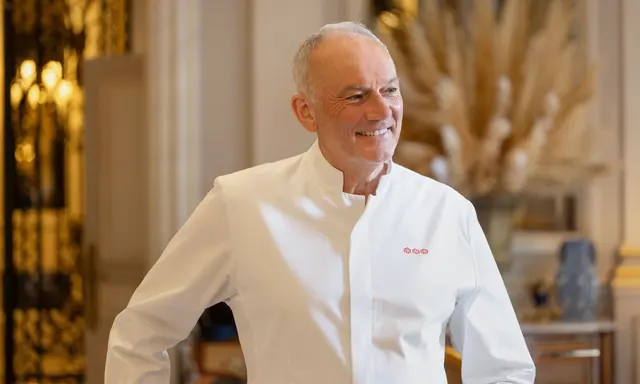
Restaurant Terrazza Danieli is led by executive chef Adriano Rausa, whose stated approach combines respect for Italian cooking with locally sourced ingredients and broader Mediterranean influences. One of the dishes singled out in the announcement is pasta e fagioli, presented with blue lobster and Lamon beans, and served from a copper pot at the table. The appeal of this idea lies in its relationship to a familiar dish rather than in the simple addition of an expensive ingredient. Beans give pasta e fagioli much of its distinctive texture and substance; lobster introduces another element into a preparation that carries associations with everyday Italian cooking. The balance of those different ingredients will determine whether the result has coherence. Tableside service also makes preparation visible to guests without requiring theatrical elements disconnected from the food itself. For readers interested in culinary travel, this is a useful illustration of how an established regional dish can form the starting point for a fine-dining experience while retaining a recognisable connection to its origins.
Seafood, Sicilian influence and the ingredients of the lagoon
Another example in the published menu is bluefin tuna belly prepared in Venetian style, paired with Sant'Erasmo onion, parsley and a red-wine sauce. The hotel relates the preparation to the chef's Sicilian background as well as the city's own culinary inheritance. The announcement also describes sea bass carpaccio accompanied by almond, caviar, lemon and capers. These choices give a sense of how the restaurant combines seafood with ingredients and flavours from different parts of Italy. They should not be read as a guarantee of the daily availability of the dishes or the origin of every fish used in the restaurant. Menus can change according to supply, season and other practical considerations. Guests with an interest in responsible sourcing can ask the restaurant about its current suppliers and fishery practices when choosing a meal. That conversation is especially relevant to people who spend considerable time at sea and appreciate the importance of maintaining healthy marine environments. Enjoying the distinctive cuisine of a coastal region need not mean treating all its resources as interchangeable.
Pastry inspired by architectural detail
Executive pastry chef Vincenzo Abagnale is responsible for the dessert programme. The hotel identifies several creations that link familiar pastry forms with unexpected textures, flavours or visual references. Its version of a vanilla mille-feuille uses a thin langue de chat biscuit instead of the conventional puff pastry, together with cream, salted caramel gel and wild strawberries. An affogato combines espresso with vanilla ice cream shaped to evoke a quatrefoil, an architectural ornament seen in Venetian palaces. A further dessert brings together Mont Blanc, blueberries and white truffle, incorporating a meringue candle presented at the table. These examples suggest a pastry menu designed to encourage guests to examine their surroundings more closely. The architectural reference in the affogato, in particular, expresses a connection to Venice without simply decorating the plate with a familiar city emblem. For a visitor who has spent the afternoon looking at palace façades and interiors, the continuation of that visual experience into a dessert may be a modest but memorable detail in the evening.
A wine programme with a regional starting point
The hotel's release describes a wine selection overseen by head sommelier Gianluca Lorusso, beginning with the lagoon and the Triveneto area before extending to other Italian regions and international producers, notably from France and Central Europe. A regional starting point can be especially rewarding for a visitor who already has access to internationally recognised bottles at home or aboard a yacht. Choosing an unfamiliar wine with the sommelier's assistance provides an opportunity to consider the food, climate and agricultural traditions of the region rather than relying entirely on reputation. Established appellations and smaller producers serve different roles in the selection. The published announcement does not identify every bottle, vintage or price, so guests planning a particular occasion should discuss their preferences and budget with the restaurant rather than assuming the availability of a specific label. A carefully chosen glass can be as meaningful a part of a meal as an elaborate tasting sequence. Non-alcoholic alternatives are also worth discussing in advance, particularly where guests have individual dietary requirements or subsequent travel commitments.
Two concepts within Bar Dandolo
Bar Dandolo occupies part of Palazzo Dandolo and is presented through two complementary service concepts: an American Bar concerned with cocktails and a Lobby Lounge centred on Italian dishes. The surrounding architectural decoration is part of the character of the venue, but the menu takes a notably accessible direction. Among the dishes described are vitello tonnato, linguine with clams and lemon-and-caviar spaghettini finished at the table. Director of Bars Stefano Ruocco has developed a cocktail programme drawing inspiration from personalities associated with the hotel's history. For a yacht guest whose shore itinerary includes galleries, churches or shopping before dinner, the two bar concepts offer a different scale of commitment from a full evening at a destination restaurant. A thoughtfully timed lunch or a shorter pre-dinner visit can allow more of the day to be spent exploring the city. Care should nevertheless be taken to establish opening hours and reservation arrangements directly with the venue, especially when visiting during periods of high demand or when the timing of transfers must be coordinated with a skipper.
Organising the evening around a Venetian visit
A visit to the Danieli is a shore-based activity, and its practicality depends on the yacht's actual berthing arrangements and the local transport available. Venice's waterways are not unrestricted approaches for visiting yachts; vessel movements must follow the applicable local requirements and the instructions of port and marina authorities. Guests should coordinate their route from their berth or other accommodation before making dinner arrangements. Building sufficient time into a programme is valuable, since the enjoyment of the city can be diminished by an overly rigid sequence of appointments. A cultural visit earlier in the day, followed by a meal that draws upon the foods of the region, provides a coherent experience without requiring numerous transfers. Guests travelling with young children, people with mobility needs or members of a party who have dietary restrictions should discuss those requirements with the relevant service providers. The objective is to ensure that the character of the destination is experienced comfortably by everyone, not simply to assemble a list of prestigious addresses.
The value of a restaurant that belongs to its city
The announced programme is ultimately an interesting example of luxury hospitality that draws its subject matter from the surrounding city. The menu includes elements that are recognisably Italian, ingredients associated with the Veneto and a terrace setting that connects the restaurant to the lagoon. The pastry programme introduces an explicit relationship with Venetian architectural ornament, while the wine list extends from local producers to a broader collection. These are distinct components of a coherent proposition rather than claims that the cuisine has remained unchanged over centuries. Readers should regard the descriptions as the hotel's account of its current programme; Luxury Yacht Guide has not conducted an independent tasting. Even so, the announcement provides a useful basis for deciding how to spend time ashore during a visit to Venice. In a destination so closely connected to navigation, craftsmanship and trade, an evening centred on the relationship between ingredients and place can complement the experience of arriving by water. The best luxury dining experiences do not need to be detached from everyday local culture: they can help guests understand and appreciate it.
Sources and lead image
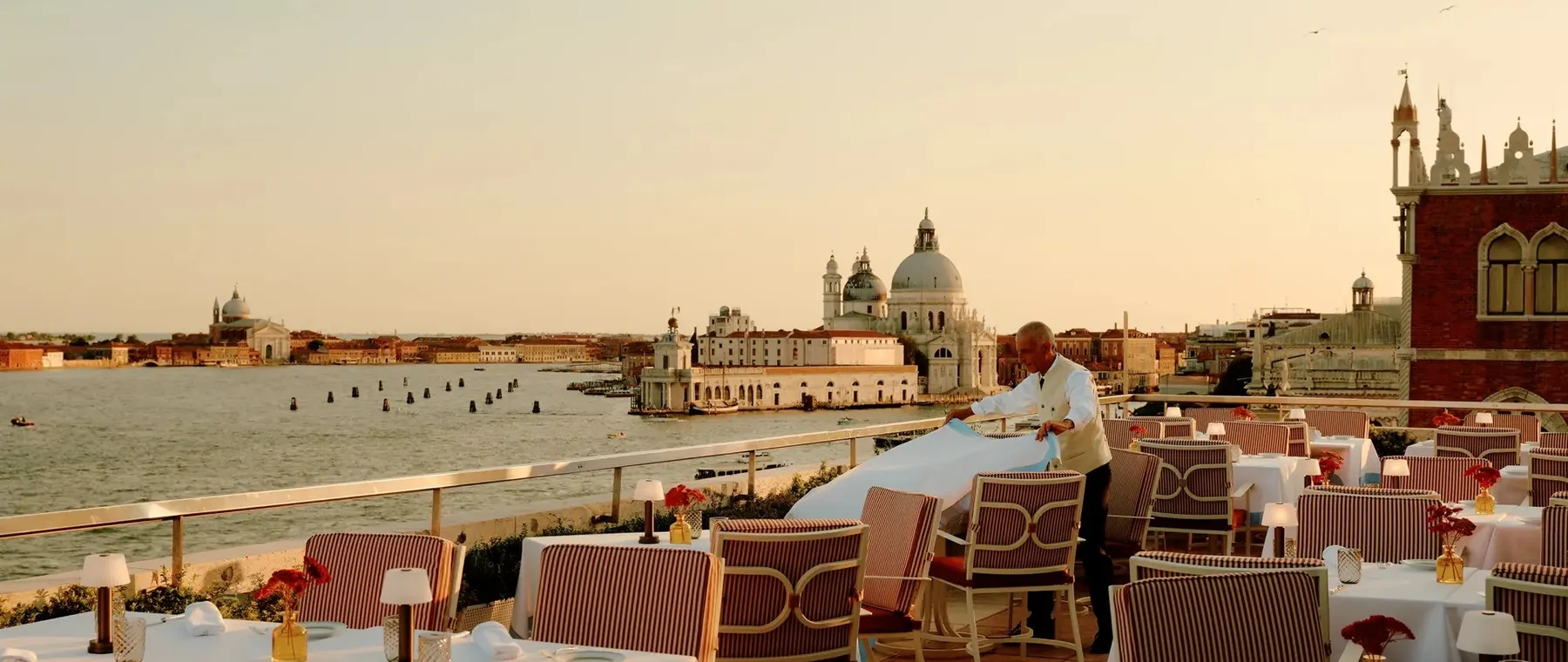
Source documentation: https://press.fourseasons.com/venice/hotel-news/2026/culinary-offering/. Lead image: Restaurant Terrazza Danieli overlooking the Venetian lagoon — Four Seasons Hotel Danieli, Venezia / official press centre. Official issuer-supplied press photograph, reproduced for editorial coverage of the specific announcement and resized for web display.