A new retreat in the Texas Hill Country
Canyon Ranch announced on 30 October 2026 that its Austin resort was welcoming guests to a substantial property overlooking Lake Travis. The opening introduces a destination combining accommodation, outdoor recreation, dining, a large spa and a programme of health-related services. A residential component extends the concept beyond the usual duration of a hotel stay. Although the setting is inland rather than a coastal cruising destination, the combination of water views, privacy and a substantial leisure estate is especially relevant to readers interested in a wider luxury lifestyle. The property is designed by the Texas architecture practice Lake Flato, and its announcement emphasises the relationship between buildings and the surrounding landscape. The fact that the resort is located beside a lake should not be interpreted as evidence that it offers private yacht berths or marina facilities; the announcement being considered here makes no such provision. Its interest lies in the design of a retreat and in the relationship between a residential community and hospitality.
Scale, landscape and the organisation of a stay
According to Canyon Ranch, the project occupies more than 600 acres of Hill Country scenery and includes approximately one and a half miles of Lake Travis shoreline. Its hotel accommodation comprises 141 rooms, with views of the hills and water. The developer describes a network of trails and extensive outdoor terrain. These figures suggest a relatively dispersed environment in which different activities may take place some distance apart. A prospective guest should establish whether convenient internal transportation and accessible routes are available, especially if members of the party have differing mobility requirements. The layout of a hotel occupying a substantial estate is a meaningful part of the experience: it determines whether visitors can move easily from their rooms to dining and leisure facilities and whether they can find places that feel quiet or private. Lake Flato's architectural involvement provides a useful context for examining how buildings frame the landscape, but the press material does not disclose every design or engineering specification. Actual experiences depend on the particular accommodation and facilities used.
The spa as architecture and hospitality
Canyon Ranch identifies a forty-thousand-square-foot spa containing forty treatment rooms as one of the resort's principal features. The building brings together bathing and thermal facilities, two pools, a salon, a retail area and several different relaxation spaces. Its size makes it possible to provide a broader range of experiences than could be accommodated on even a relatively substantial private yacht. Yet the same general principles apply: comfortable circulation, sufficient privacy, suitable ventilation and careful attention to individual service needs. The announcement presents a wide menu of conventional beauty and massage services alongside emerging wellness technologies. Consumers should not assume that the existence of a premium facility establishes the effectiveness or safety of a particular procedure. Those considering anything medically significant should obtain appropriate independent advice. The architectural interest in the spa is distinct from the claims associated with its services. A generously arranged place to rest, swim or spend time quietly may itself be an attractive part of a journey without requiring a guest to pursue an extensive programme of treatments.
Residential architecture and a substantial price point
The Ranch Home Collection is described as a series of private residences with prices beginning at $3.8 million. Canyon Ranch refers to homes ranging from 3,200 to 4,800 square feet and individual plots varying between 0.8 and 3.7 acres. The published announcement contains inconsistent totals, referring to 131 homes in one summary and 134 homesites in its detailed description. It would be inappropriate to treat either figure as a verified final inventory. The developer should clarify the precise number and status of available plots. The residences are based on three designs from Lake Flato and are intended to establish a more permanent relationship with the resort's amenities. Prospective buyers should examine the detailed specification of the particular property, including the distinction between any completed home and a future construction commitment. A starting price is not an all-inclusive cost estimate. Landscaping, service charges, maintenance, financing, insurance and the terms of access to resort facilities all need to be considered separately.
The practical distinction between visiting and owning
A residential hospitality development can appeal to people who want familiar surroundings and access to services without organising each service independently. The ownership model is nevertheless quite different from a hotel reservation. Prospective residents need to understand what forms of property rights they are purchasing, which areas are shared and what obligations accompany the ownership. Documents establishing access to leisure facilities, concierge services, parking and maintenance should be examined alongside the architectural proposal. This is analogous in some respects to the experience of yacht owners, who may appreciate the convenience of a well-managed home port while recognising that berth arrangements, maintenance services and other commitments each have their own conditions. The ease of a short holiday does not establish that a residential relationship will remain equally convenient over many years. Buyers should obtain suitable local legal and technical guidance and establish how the management arrangements may change. They should also consider whether the surrounding environment and travel connections will suit their intended use beyond the initial appeal of the opening announcement.
Dining from two distinct perspectives
The property features two restaurants within its all-inclusive resort proposition: the Flying X Café, offering a more casual format, and Estella, its fine-dining restaurant. Canyon Ranch identifies Val Cantú as culinary director and Blake Ransom as the executive chef responsible for the resort's daily menu. Cantú is associated with Californios in San Francisco, recognised with three Michelin stars. This distinction applies to that restaurant and should not be interpreted as a Michelin award for either of the new Austin venues. The contrast between the café and the fine-dining space can be valuable for guests spending several days at the estate. A long formal meal may be appealing on one occasion, while a simpler lunch can better suit a day devoted to walking or exercise. The published announcement provides an outline of the culinary programme rather than a menu with current prices and dietary provisions. Guests should confirm exactly what is included in their chosen stay and communicate any allergies or other requirements.
A broader account of exercise and wellness
The Barn is described as a twenty-seven-thousand-square-foot fitness facility encompassing a gym, studios and an outdoor activity field. The Wellspring, meanwhile, is a twelve-thousand-square-foot medical centre with clinicians and other services. The project also includes a Women's Wellness Collective, which the developer presents as a combination of education, consultations and specialist programming. The residential and hospitality aspects of these facilities can be assessed separately from any medical claim. Access to a physician at a resort does not establish that every marketed intervention is appropriate for an individual, and a guest should establish professional qualifications, clinical responsibilities and treatment costs before proceeding. The release advertises certain medical procedures and diagnostics, but no assessment of their effectiveness is provided here. The distinction is important for people planning a leisure trip because accommodation, recreational services and clinical decisions need not form a single package. Some guests may be interested mainly in the landscape, comfortable lodging and appropriate exercise, while others may have medical needs that require independent evaluation.
Arriving and living at the estate
The resort says it has partnered with Genesis to provide transportation from Austin-area airports as part of the stay. Exact eligibility and routes should be confirmed with the property because the release does not settle the arrangements for every possible point of arrival. For a luxury traveller accustomed to spending time between a yacht, a primary residence and other destinations, an inland estate offers a different form of retreat. The opportunity to walk on established trails or spend time away from the coast may complement rather than replace a maritime holiday. The strongest aspect of the announced concept is the way it combines a substantial natural setting with different scales of accommodation and recreation. Whether it is suitable as a holiday destination or as a long-term residential commitment will depend on its actual service arrangements, property costs and the preferences of the individual. Luxury Yacht Guide has not inspected the completed project or tested the advertised treatments. This opening report is based on the operator's published information, with outstanding discrepancies and questions identified for prospective guests and owners.
Sources and lead image
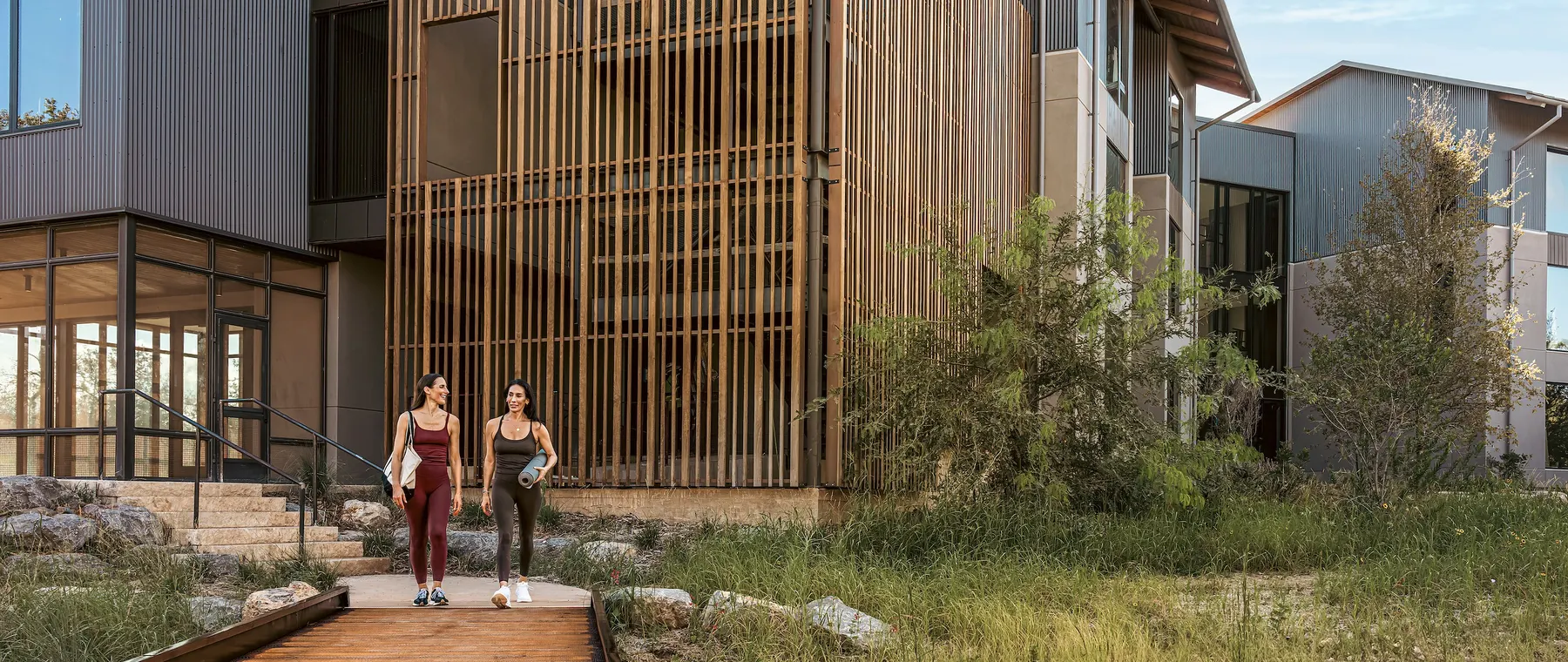
Source documentation: https://www.prnewswire.com/news-releases/inside-canyon-ranch-austin-a-first-look-at-the-future-of-wellness-302924999.html. Lead image: Canyon Ranch Austin spa building in its Hill Country setting — Canyon Ranch / PR Newswire. Official issuer-supplied press photograph, reproduced for editorial coverage of the specific announcement and resized for web display.