Hospitality starts before the lines are cast off
The most successful yacht weekend often looks effortless from the guest's perspective. Towels are where they are needed, breakfast appears at the right moment and somebody seems to know exactly when the breeze will arrive. That ease is created by careful preparation, not by the absence of planning. On a yacht between roughly 15 and 20 metres, an owner's most useful talent can be making a small working vessel feel like a generous private home while preserving safe routines.
A six-guest invitation may sound modest on land. Afloat it changes water usage, storage, sleeping arrangements, galley demand and the way people move around deck. Every personal bag takes space. Wet swimwear multiplies. Meals require refrigeration and waste must be managed. None of these realities should take the romance out of cruising. The point is to deal with them quietly beforehand so that guests can concentrate on the experience rather than its logistics.
Ask the right questions of guests
The pre-cruise conversation need not resemble an administrative questionnaire. Establish whether anyone has difficulty with steps or moving decks, whether there are dietary requirements, and whether the group includes children or inexperienced swimmers. Ask whether guests are comfortable staying overnight and whether any have previously experienced seasickness. The answers influence the itinerary far more than the size of the dining table. People often hesitate to disclose concerns because they do not want to complicate an invitation.
A welcoming owner can make disclosure easy by presenting alternatives. Someone uneasy about a long passage may still love a marina-based evening and a short calm-water cruise. A guest with limited mobility may appreciate a berth that minimises transfers and awkward gangway angles. The itinerary can be adjusted without making anybody the subject of the day. Good hospitality is not identical treatment; it is the recognition that comfort means something different to each person.
Cabin allocation is an act of diplomacy
The typical three-cabin arrangement on a mid-size luxury motor yacht offers considerable flexibility, but not every berth is equally quiet, spacious or convenient. Couples may want privacy, children may prefer to be near parents, and a guest who rises early may not wish to share a cabin with someone who sleeps late. Establish the arrangement before embarking and describe facilities accurately. Surprise is welcome in a restaurant; it is rarely welcome when discovering one's sleeping berth.
Keep luggage modest and provide useful guidance on soft bags, shoes and clothing. A cabin with clear surfaces and room to move feels more luxurious than one filled with expensive objects but crowded with possessions. Spare towels and bedding should be stored where the host can retrieve them without disturbing others. At night, show guests how to use lights, ventilation and cabin doors. An unfamiliar yacht can feel confusing in darkness even to a very experienced traveller.
The first safety briefing can be warm and clear
A friendly greeting and a proper safety briefing belong together. Explain where to sit during departures and arrivals, how to move while underway, and which areas are reserved for crew or operational work. Identify lifejackets and relevant emergency arrangements, and ensure guests know how to raise an alarm. Children should receive age-appropriate guidance that their parents understand and reinforce. Guests should know where to find basic facilities and how to report anything unusual without hesitation.
Avoid giving the impression that sophisticated equipment removes the need for ordinary caution. Modern stabilisation, joystick controls and attractive deck furniture do not change the danger posed by moving machinery, open water or unstable footing. Loose items must be secured for passages. Swimming and boarding arrangements should be explained before the first person jumps in. The most effective briefing is specific to the boat and the day, brief enough to be remembered, and serious without becoming theatrical.
Plan meals around the boat, not the restaurant menu
A small yacht can offer memorable dining without trying to imitate a commercial kitchen. The key is selecting food that suits the galley, storage and available help. A cold lunch with fresh ingredients, good bread and carefully prepared drinks may be more elegant than a complex hot meal that monopolises the host's time. Prepare ingredients before departure where appropriate, observe food safety and make sure chilled items stay adequately cold. Local provisioning can be a highlight of the itinerary if planned around opening hours and secure transport.
Meals also shape the rhythm of the trip. A late lunch after swimming might make a substantial evening dinner unnecessary. Guests may prefer to go ashore for one meal, especially after a day spent on deck. Set out enough water and non-alcoholic drinks that everybody remains comfortable in the sun. An owner who insists on fixed dining times can accidentally turn an enjoyable weekend into a schedule. Let the food support the day rather than control it.
Build more than one place to gather
Yacht marketing tends to emphasise a single magnificent social area, but guests rarely want to be together in one place all day. A cockpit for meals, bow lounge for a quiet book and flybridge for conversation can make a 17-metre yacht feel remarkably spacious. Give people permission to be alone. Not every departure from the group is a sign that someone is bored. In a close environment, a half-hour of privacy may be the difference between an enjoyable overnight trip and a tiring one.
Outdoor spaces must be used in accordance with the day's conditions. A foredeck suitable for lounging in a calm anchorage may not be safe during a passage or manoeuvre. Guests need to understand where movement is permitted, whether footwear matters and when to stow belongings. The host should make changes to the routine without apology when weather shifts. What appears as seamless luxury is often the confidence to move a gathering indoors at exactly the right time.
The swimming hour needs an operating plan
For many guests, swimming is the main reason to spend a weekend on a yacht. It also creates a demanding moment for safety and housekeeping. Confirm that the location, conditions and local regulations permit the activity. Ensure the skipper is satisfied with the boat's position and that propulsion or manoeuvring equipment will not endanger anyone in the water. Agree how swimmers will be counted and how they will return aboard. Do not permit jumping from unsuitable heights or areas merely because the water looks inviting.
Once the group is back aboard, towels, showers and wet equipment can overwhelm a small deck. Define a place for rinsing and drying items, and keep escape paths and equipment access clear. If a tender, paddleboard or water toy is involved, assess the specific hazards, operator competence and required safety gear. A beautiful anchorage should never create pressure to use equipment in conditions that are not right. The ability to say no politely is part of responsible hosting.
Leave room for weather and individual energy
It is sensible to have a primary destination and a fallback, but not to promise guests that either is guaranteed. A sea breeze that would be unremarkable on a sheltered beach may make a particular anchorage uncomfortable. Swell, visibility and traffic also influence the choice. The skipper needs full freedom to change course, shorten the day or remain in port. An owner-host can help by presenting the decision as an improvement in comfort rather than an embarrassing failed adventure.
Energy matters as much as weather. After an early departure and several hours outside, guests may be tired even when the yacht has travelled only a short distance. Offering a quiet afternoon, a simple evening meal and an early night may be more welcome than another activity. Do not force a sequence of swimming, sightseeing, shopping and restaurant reservations simply to justify the trip. Luxury is an opportunity to choose how time is spent, including the choice to do nothing.
A marina night can be the highlight
Owners sometimes regard a marina stay as inferior to an anchorage, yet a well-chosen waterfront town can provide the best evening of the weekend. Guests can explore on foot, enjoy a local restaurant and return to the privacy of their cabins. Shore power and marina services may simplify overnight life, subject to suitability and availability. For visitors who are new to yachts, the stability and straightforward boarding of a good berth can be reassuring.
The arrival should be managed as an operation, not a spectacle. Brief guests to stay clear of mooring lines and working areas. Secure bags and loose belongings before manoeuvring. Follow the marina's instructions and ensure disembarkation begins only when the vessel is safely secured. A stressful arrival is remembered longer than a beautiful table setting. A calm, prepared crew and owner help the whole evening start well.
Behind-the-scenes housekeeping is part of the experience
On a multi-night cruise, small habits determine whether the yacht remains welcoming. Return equipment to its assigned place, clear the galley after meals and manage rubbish before it becomes intrusive. Be realistic about available freshwater and waste storage, and understand the proper facilities for discharge or disposal. Guests need not monitor every tank, but they should receive simple guidance when water or power must be conserved. Good systems are easy to use because the rules are consistent.
Morning routines deserve particular consideration. Some people wake with the sun; others prefer a slow start. Coffee preparation, music and engine checks should be timed so they do not unnecessarily disturb sleeping cabins. Ensure anyone going ashore knows when the boat must depart and what arrangements exist for returning. A clear plan prevents the host from becoming a frustrated timekeeper while everyone else believes the day is still open-ended.
The return deserves as much care as the welcome
The final hours of a weekend can undo much of its charm if they are rushed. Explain the expected return time early and leave room for packing. Check the forecast, berth arrangements and fuel needs without making guests responsible for the operational workload. Encourage people to gather their belongings before the final approach so that nobody is wandering below while the yacht is manoeuvring. A warm farewell at the dock should be the last memory, not an anxious scramble for transport.
A successful invitation does not require a superyacht-scale crew or extravagant entertainment. It requires a vessel prepared for its intended use, a host attentive to people and a skipper free to make sound decisions. The finest weekends on a 15–20-metre yacht often have an almost domestic simplicity: a comfortable cabin, a meal shared at anchor and a sense that time has expanded. Thoughtful planning makes that simplicity possible, and thoughtful restraint protects it.
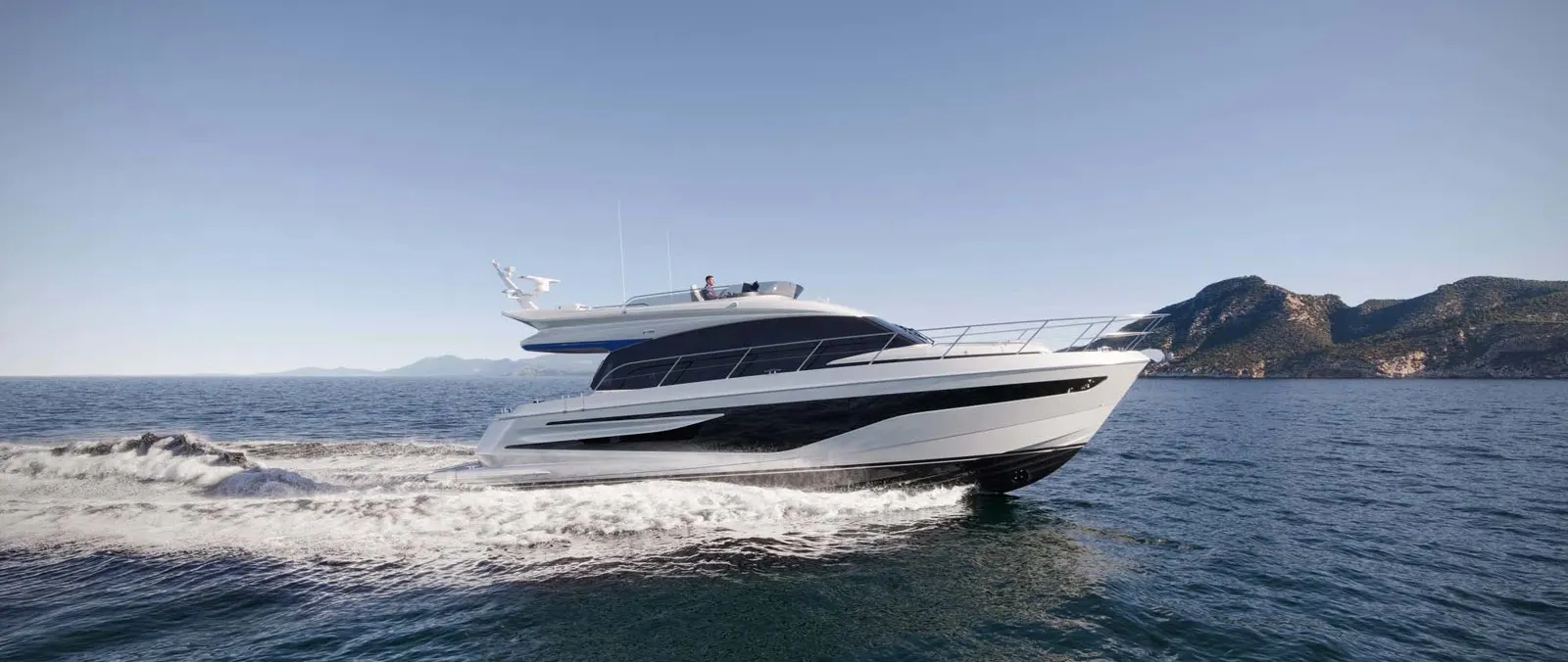
Official source: See the manufacturer information. Model information: official product details. Princess Yachts official rendering of the F55, a representative 17-metre-class motor yacht; illustrative of the hosting guide, not a documented charter.