A river weekend rather than a marina on a checklist
Dartmouth is an attractive proposition for owners whose idea of cruising includes spending time in a town rather than moving continuously from one coastal destination to another. A yacht in the 12–23.99 metre range can offer comfortable guest accommodation, yet still require choices about which river moorings are appropriate, how to get ashore and how much time to reserve for weather. The River Dart places those decisions unusually close together. Dartmouth and Kingswear face one another across the water, with the historic port on one side and transport connections on the other. The harbour is also the gateway to a wider river landscape. In 2026 the harbour authority introduced online advance reservations for selected visiting-vessel positions, adding a more predictable option for planning a stay. That does not turn every part of the river into a bookable marina. A skipper should identify the actual berth, the access arrangements and the limits of the booking before promising guests a particular waterfront experience.
Choose a position that fits the yacht
The harbour authority's visitor table is especially useful because it distinguishes the facilities on offer. Its online reservation range for the Inside Town Jetty is eight to eighteen metres, while the DA Pontoon is offered online for vessels from five to fourteen metres. The river's Mainstream Buoys include an online range of fourteen to twenty-four metres. Larger or deeper yachts may need an individual arrangement. Multihulls and other vessels with particular characteristics should discuss the booking directly with the office rather than select an apparently suitable length band. A yacht approaching the top of LYG's remit will therefore have a different set of choices from a twelve-metre cruiser. The beam and draft of the particular hull matter too. An owner should not interpret a length band as an engineering assessment or navigate to an assigned position based on a website alone. Obtain instructions from the harbour team, consult current charts and notices, and leave room for a change of plan if the proposed position is unsuitable.
Walk ashore or stay on the river?
There is an important difference between berthing at the town jetty and being assigned an island pontoon or a river mooring. Guests who are unfamiliar with boats may find walking directly ashore particularly attractive. It means they can visit shops, restaurants and attractions independently, while crew can return to the yacht at different times. An offshore position brings a different kind of pleasure: separation from the bustle of the waterfront and a changing view of river traffic. It also introduces another part of the journey. Tender availability, weather protection, landing arrangements and safe embarkation become relevant every time a guest wants to leave or return. Owners should discuss this choice before arrival, not after a restaurant reservation has been made. For guests with mobility constraints, a nominally short transfer across the river may be more difficult than a longer walk on land. The most luxurious arrangement is often the one that takes those practical preferences seriously.
Booking, charges and service expectations
The Harbour Authority's 2026 visitor information quotes nightly charges by length and mooring category. Different prices apply to different levels of facility; they should be checked against the current table and any applicable harbour dues or additional conditions. An online reservation is not necessarily a promise of one exact position. The harbour team may allocate the location on arrival and rafting can form part of busy-period arrangements. In particular, owners who expect a dedicated berth with an unobstructed route ashore should ask about that before paying. Also confirm which services are included. The Inside Town Jetty provision differs from the options that have no included water or electricity. A yacht with domestic systems designed around a reliable shore connection may need additional arrangements if the assigned position lacks that connection. Rather than arriving with empty tanks and depleted batteries on the assumption that service will be available, treat the proposed mooring as part of the vessel's energy and freshwater plan.
A November visit needs winter expectations
A late-season river visit has a very different rhythm from a busy August weekend. The harbour lists separate winter office and river-patrol hours, and these should be checked immediately before departure. Early darkness, cold water and the possibility of unsettled weather affect shore transfers as well as navigation. A comfortably heated yacht can make a quiet winter stay appealing, but domestic energy consumption may be appreciably different from that of a summer holiday. A plan that depends on late evening tender trips should include a reliable return arrangement and a realistic assessment of the guests' clothing and experience. Weather conditions may make an alternative destination more sensible. It is better to reserve a flexible shore programme than to turn an exposed passage into an obligation merely because a weekend has been booked. The authority offers official channels for queries; ask about arrival timing and local restrictions rather than relying on a published seasonal opening period as evidence that every service will be staffed.
Spend time on both banks
Dartmouth's appeal includes an established maritime identity, streets with shops and hospitality businesses, and views of the river towards its entrance. Kingswear offers a contrasting perspective and connections to railway journeys. The river itself makes a short visit more memorable, because the experience of passing from one bank to the other can be as enjoyable as an attraction reached at the end of that journey. It is worth allowing a morning simply to walk through the town rather than trying to complete a long list of places. Visitors interested in maritime architecture can plan a separate excursion towards the entrance and its defensive buildings. Verify opening hours, route accessibility and travel arrangements with the respective operators. A family group could choose different activities without everyone needing the same timetable. The point of arriving on a yacht is to use it as a comfortable base, not to pack every hour ashore with appointments. The character of town and river is worth allowing time to discover.
Dittisham, Greenway and the wider Dart
The lower harbour is only one element of the destination. Dittisham, Greenway and other communities further upriver offer a different landscape and pace. The harbour authority publishes information about the villages and some visiting mooring arrangements. A yacht owner should separate the desire to explore from the question of whether the yacht itself should proceed further upstream. Conditions, vessel dimensions, tide, restrictions and turning space can all influence that choice. A local passenger service or a suitable shore excursion might be preferable. Even when a more limited passage is technically feasible, guests may prefer to spend their time enjoying the place rather than waiting through repeated mooring manoeuvres. Establish an achievable programme with the skipper. Historic properties and seasonal transport services have separate timetables, and a winter visitor must not assume a summer schedule applies. For a group staying two nights, a day devoted to the river's quieter side can be more rewarding than trying to relocate the yacht several times.
Make the yacht a genuine base for the weekend
A successful stay depends on how comfortable people are between shore adventures. Plan a place for wet clothing near the entrance; make sure guests have somewhere to sit indoors without rearranging the entire saloon; and allow crew time for maintenance, meals and their own rest. If the weather changes, an indoor afternoon aboard should feel like a pleasure, not a failed excursion. The size of a fifteen-to-twenty-metre yacht means guest and working spaces are often close together, which makes a sensible daily routine valuable. For an owner-operated boat, that could simply mean agreeing when the skipper needs quiet time for navigation and communications. On a crewed yacht, a flexible itinerary can help avoid overlapping guest transfers, provisioning deliveries and technical tasks. The ability to enjoy a harbour slowly rather than measure success by distance travelled is one of the great attractions of cruising on this scale.
Confirm directly before committing
The Harbour Authority publishes info@dartharbour.org and the office telephone number 01803 832337. Its river team uses VHF channel 11, callsign DartNav, during staffed hours. Consult the official contact information for current procedures, emergency arrangements and notices. Include the yacht's actual length, beam, draft and preferred dates when enquiring, together with whether independent shore access is essential. Clarify the return arrangement if using a river position. The harbour's online visitor guide is a useful planning source but it does not establish real-time availability, a safe track or a guarantee of a particular night's service. The best itinerary is the one that can accommodate a different position or a different destination without disappointing everyone aboard. Dartmouth offers a compelling combination of river, shore and historic surroundings; good preparation allows that combination to be enjoyed without unnecessary operational compromises.
Sources and photograph
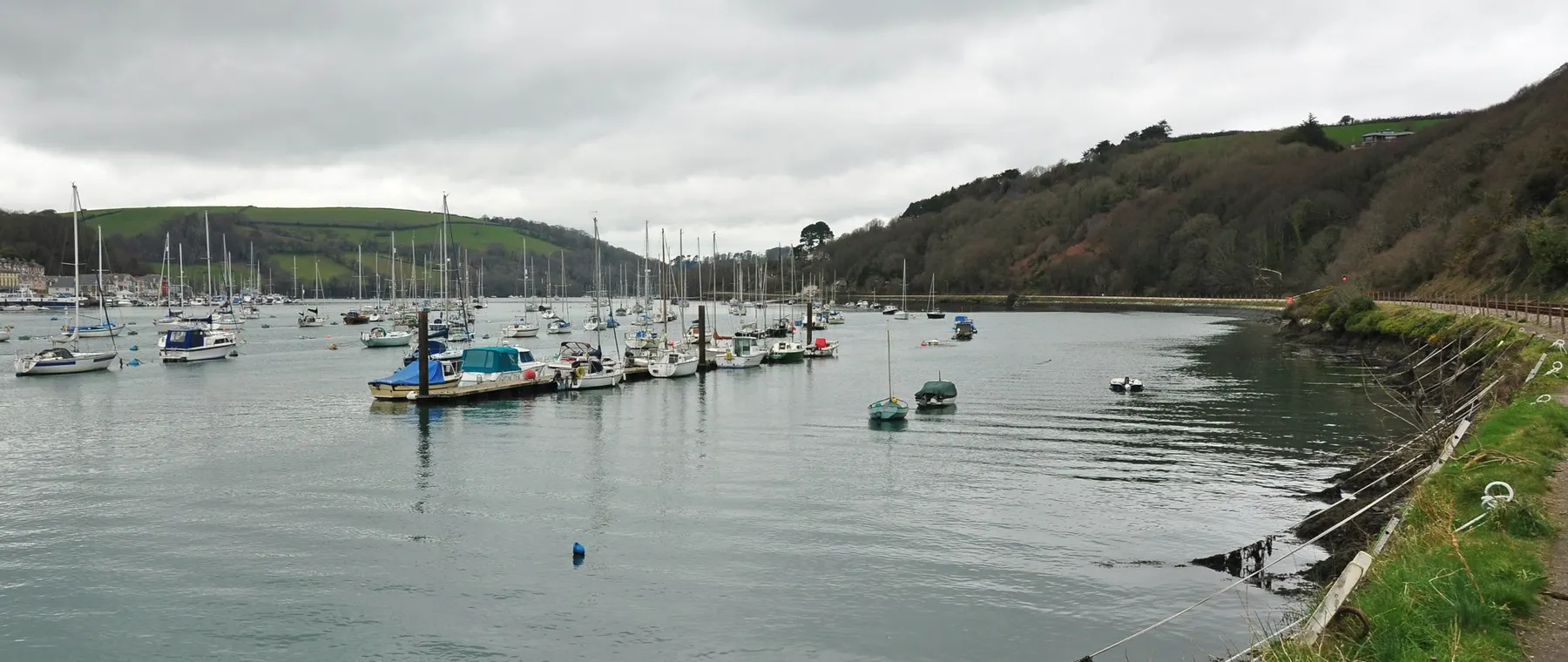
Source documentation: https://www.dartharbour.org/visitors/, https://www.dartharbour.org/contact-us/, https://www.dartharbour.org/contact-us/opening-times/. Photograph: Dartmouth Harbour viewed near Kingswear — Nilfanion / Wikimedia Commons, CC BY-SA 4.0. Resized for web display under CC BY-SA 4.0.