A different reason to look closely at Spain
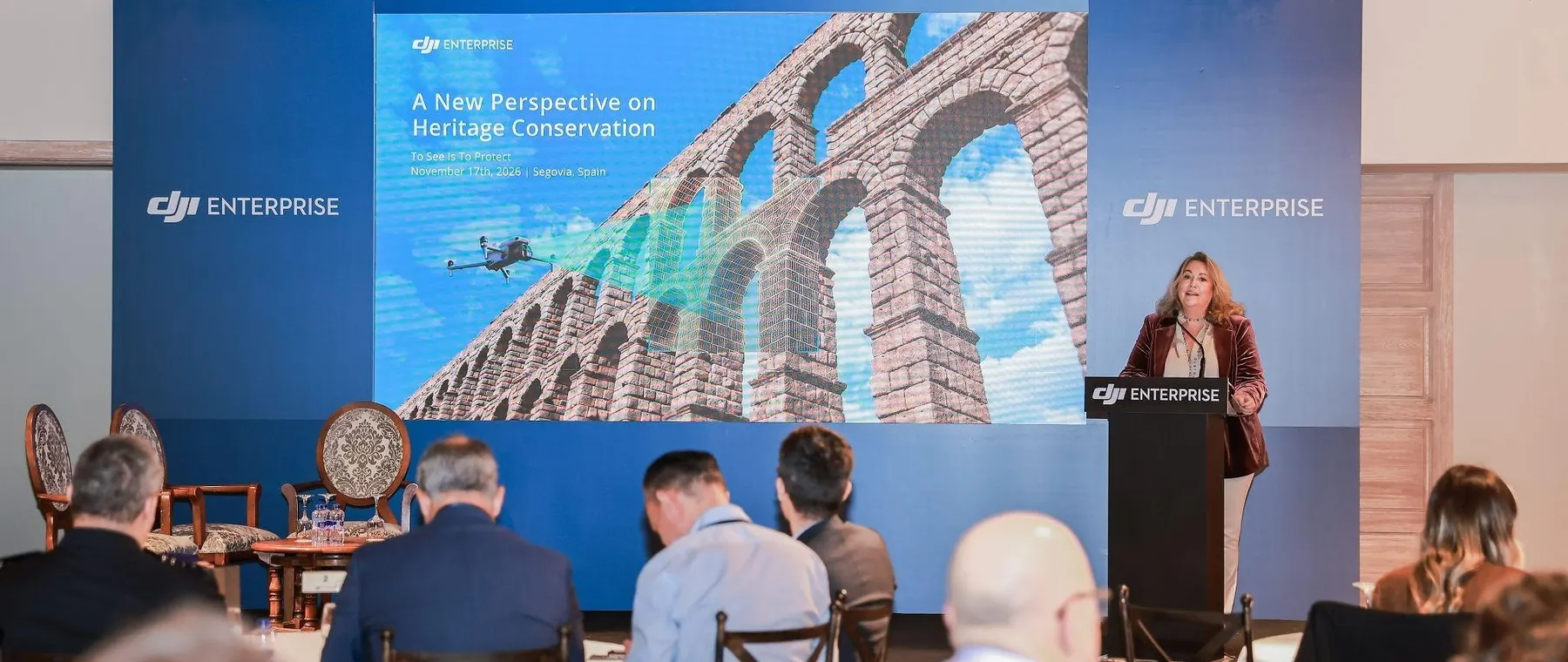
The Spanish city of Segovia served as the setting for the announcement of DJI's inaugural World Heritage 3D Conservation Initiative winners on 19 November 2026. Nearly 500 submissions from 32 countries were received, according to the organiser, including work relating to 21 UNESCO-listed sites. Twelve winning videos were presented at the ceremony. The emphasis was on digital recording of cultural and natural heritage using drone imagery and reconstruction software. This is not the opening of a new visitor attraction, nor does the announcement grant travellers access to places that are normally closed. It is instead an opportunity to examine the increasingly important relationship between the conservation of historic places and the ways visitors experience them. For owners planning a longer Spanish journey around a Mediterranean cruise, the inland heritage of the country can be as rewarding as its coast. Taking the time to understand how significant monuments are cared for can add a dimension to such a holiday that is independent of the number of destinations visited.
Segovia and the inland extension of a cruising holiday
Segovia is an inland destination and a visit must be planned separately from a yacht itinerary. Its celebrated Roman aqueduct and Alcázar were among the locations featured in the event programme through tours and examples of digital reconstruction. They are also reminders of the depth of architectural history that can be encountered away from Spain's marinas. A private touring arrangement can give a couple or family the flexibility to approach these places at an unhurried pace, but good planning is more important than attempting to compress a distant excursion into a busy day at anchor. The yacht can remain in suitable accommodation at a marina while guests continue their journey by road or rail, subject to the skipper's arrangements and the conditions of their berth. Depending on the port and time available, an overnight stay inland may be more comfortable than an ambitious return journey. The purpose of an extension is to broaden the experience, not to transform an enjoyable cruise into a race against departure times and opening hours.
Understanding a monument through its structure
A photograph of an aqueduct can reveal the repeated arches, the texture of its masonry and the relationship of the structure to the surrounding buildings. A reconstructed spatial model potentially allows viewers to examine those same features from a greater range of viewpoints. The approaches discussed at the Segovia ceremony use overlapping photography or laser-derived measurements to create digital representations of buildings and landscapes. In broad terms, the result can be a point cloud, a textured model or another form of spatial record. The value for conservation lies partly in the ability to preserve information about the condition and geometry of a place at a particular time. A record can support future surveys or provide documentation if damage occurs. Visitors are not necessarily shown these working models and the data itself may be restricted. Nevertheless, understanding the process can change the nature of a guided visit. Attention shifts from simply seeking the best photograph to observing how the monument was constructed, how it relates to the city and why recurring examination is important.
The award programme across different landscapes
Four excellence awards and eight audience-choice awards were reported by DJI. The excellence categories distinguished built cultural heritage from natural landscapes. Examples highlighted included the Las Ventas bullring in Spain and the Longmen grottoes in China in the cultural category, as well as Wulingyuan in China and the rock formations of Cappadocia in Türkiye in the natural category. These sites are dramatically different in form, purpose and conservation needs. For a traveller, that diversity is a useful counterweight to treating heritage recognition as a single type of tourist attraction. Some places are urban structures integrated into everyday contemporary life, others contain fragile carvings, and still others involve extensive landscapes in which visitors must keep to managed routes. An impressive digital presentation does not establish that every point shown is safe or permitted to reach on foot. Each destination requires attention to local access conditions, and journeys to distant locations warrant their own planning instead of being represented as simple excursions from a yacht.
What a digital survey can and cannot promise
DJI's announcement describes a workflow combining mission planning, information collection and reconstruction, drawing on several of its survey products. The company reports that its integrated system can achieve very high measurement accuracy, but actual performance depends on the equipment, methods and quality controls applied to a particular survey. Reflective surfaces, obstructed areas, movement, weather and inadequate reference information can all complicate reconstruction. Readers should therefore distinguish the manufacturer's statement about its capabilities from an independently assessed conservation outcome. Even a highly detailed virtual representation cannot stop rainfall, weathering or the loss of original material. It can be a tool for specialists who must determine how conservation work should proceed. Equally, a technically polished video should not be mistaken for a complete historical interpretation: the significance of a site may depend on records, archaeological evidence, cultural traditions and the knowledge of people connected to it. The most valuable combination is a technically informative record supported by considered human interpretation.
Personal photography and respect for the place
The popularity of drone photography among yacht owners and travellers creates a particularly relevant distinction between conservation work conducted under appropriate permissions and casual filming during a holiday. A survey flight over a crowded historic site involves different responsibilities from taking a handheld camera along a public street. Aviation rules, restrictions imposed by heritage managers, privacy requirements and the protection of wildlife must be considered for every flight. Restrictions can apply even when an aircraft is small or equipped with safety features. Travellers should use official local guidance and obtain any necessary permissions before operating a drone; the publicity surrounding a professional survey is not permission for independent recreational filming. There are many rewarding ways to record a visit without flight. Architectural details photographed from accessible locations, notes from a knowledgeable guide and a carefully selected set of views often tell a much more coherent personal story than a large collection of aerial footage. At some monuments the most respectful course is to put the camera away entirely and experience the space without interruption.
A private visit need not be an exclusive visit
The luxury of a heritage excursion can consist primarily in time and attention: a guide able to explain a building in depth, an itinerary paced to the needs of the guests, and comfortable arrangements that allow everyone to enjoy the experience. Privacy in travel is valuable, but it must not be confused with a right to unrestricted access to protected places. Private tours should be arranged through legitimate operators and site managers, particularly where fragile surfaces, religious practice or the functioning of public buildings may impose limits. Visiting outside the busiest periods, where permitted, may offer more space for appreciation without requiring a destination to change its normal rules. The same philosophy can inform a multi-day inland extension: select accommodation with convenient access to the places of interest, allow time for local cuisine and leave room to discover ordinary neighbourhoods. A city is a living environment rather than a collection of monuments designed solely for travellers. Meaningful encounters with a place frequently come from recognising that distinction.
Conservation as part of a considered itinerary
The Segovia ceremony offers an unusual starting point for planning cultural travel because its focus was recording and preservation rather than luxury consumption. Those themes are compatible with a more thoughtful approach to yachting. An owner may spend considerable effort preserving a well-designed boat through maintenance, careful handling and documentation; the stewardship of a historic city has far wider public responsibilities, but a similarly long perspective can be appreciated by visitors. A guided walk, an architectural visit or a museum collection can introduce the history that gives a destination its distinct character. Digital reconstruction may then provide another means of examining features that cannot be easily seen in person. Neither method needs to displace the other. The practical takeaway for Luxury Yacht Guide readers is to leave sufficient time for cultural destinations and seek knowledgeable interpretation, while respecting the limits imposed by the places themselves. A cruising holiday enriched by this kind of shore experience can carry lasting value long after the yacht has moved on to the next coast.
Sources and lead image
Source documentation: https://www.prnewswire.com/news-releases/dji-honors-world-heritage-3d-conservation-initiative-winners-at-ceremony-in-segovia-spain-302945566.html. Lead image: Segovia heritage conservation awards ceremony — DJI / PR Newswire. Official issuer-supplied press photograph, reproduced for editorial coverage of the specific announcement and resized for web display.