A former fishing port with a different kind of luxury
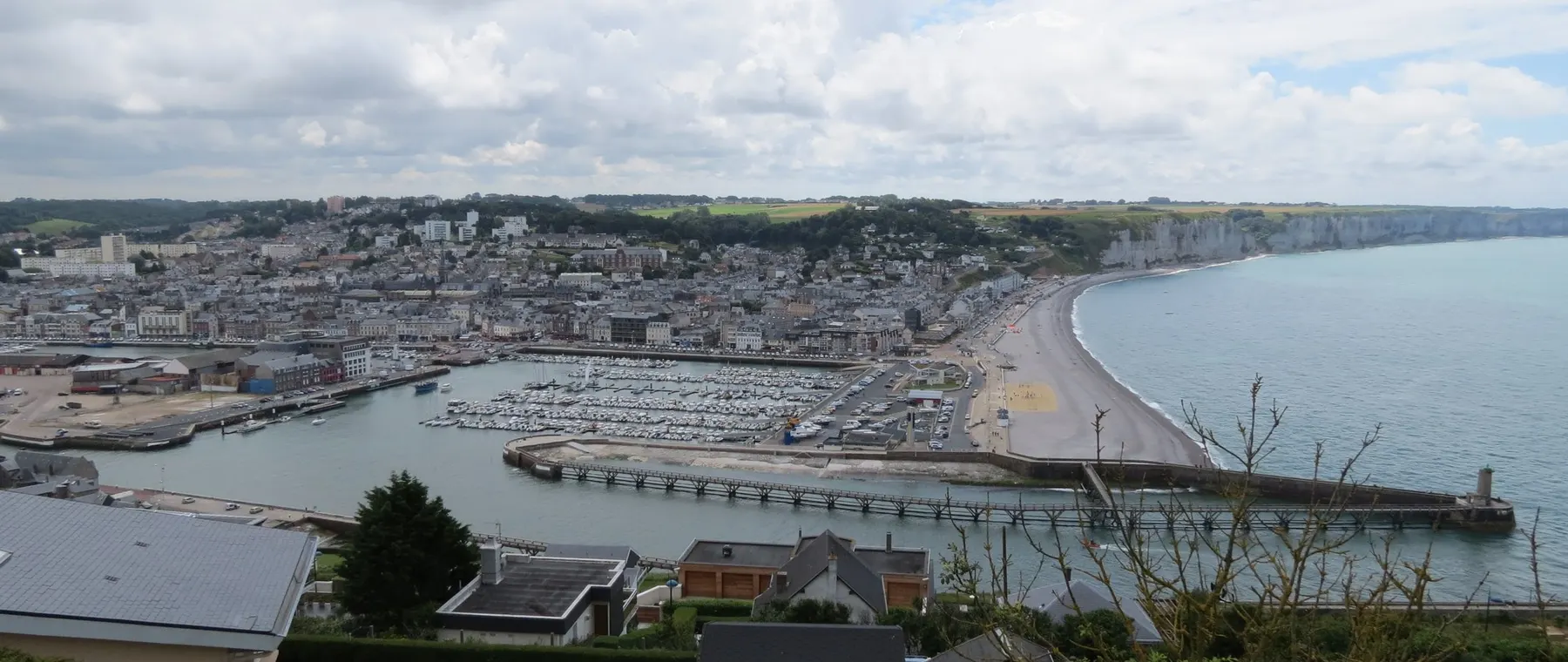
Fécamp occupies a distinctive place on Normandy's Alabaster Coast. The harbour meets the town between steep coastal landscapes, giving the visitor an immediate sense of arriving somewhere shaped by the sea. For an owner of a twelve to twenty-three metre yacht, this is an opportunity to use the vessel as a comfortable base for exploring a working coastal community rather than treating the port as another interchangeable overnight marina. Normandy's tourism authority describes an extensive port complex combining leisure, fishing and commercial activity. That mixture is central to Fécamp's identity. It also means that the captain should plan arrival with the practical requirements of a working port in mind. A dramatic photograph from the surrounding heights does not establish entrance conditions or safe berthing. A successful visit begins with accurate current harbour information and a suitable place for the actual yacht, after which the character of the town comes into focus.
The outer harbour and the visitor pontoon
TransEurope Marinas identifies pontoon C in the outer harbour as the place where visiting yachts will find reception. Its Fécamp entry specifically asks vessels of fourteen metres or more to announce their arrival. That is especially relevant to LYG readers, because a substantial part of the twelve to twenty-four metre fleet falls within that requirement. The same directory describes a depth of 1.50 metres for the outer harbour and entrance, while the regional tourism authority qualifies access at all states of tide according to draft. Neither statement should be taken as a guarantee of adequate water under a particular keel. A captain should communicate the exact yacht dimensions, expected arrival and draft to the port, then use current official charts, tides, notices and harbour instructions. An imposing motor yacht may occupy considerably more space during manoeuvring than a berth-length figure suggests. Confirm the actual position offered and the available approach before leaving the previous port.
The Bérigny basin is a separate decision
A position in the inner port is not interchangeable with one in the outer harbour. TransEurope's information describes access to the Bérigny basin as subject to availability and limited to a window beginning two and a half hours before high water and ending forty-five minutes afterwards. That is an important source-reported constraint, not a pilotage instruction for a specific passage. Local conditions and the operator's instructions must govern the visit. The captain should establish whether the assigned basin is suitable for the yacht and the intended departure time. If an itinerary depends on leaving promptly the following morning, an inconvenient access window may be a significant factor. This is particularly relevant for passengers connecting with trains or flights. The right port plan accommodates the vessel's needs and the owners' commitments without creating pressure to move at a time that is unsuitable. Ask the harbour office to confirm the arrangements before finalising the schedule.
Why the published berth numbers differ
The marina network presents a capacity of 800 berths. Normandy's official tourism profile instead describes 680 pontoon spaces, including 75 visitor places in the outer harbour, alongside 180 places on land. Those figures have different apparent scopes and should not be combined into a supposedly definitive capacity. The practical question for a visiting yacht is narrower: whether there is a suitable berth for that boat on the requested dates. Even a large installation may have few places with the necessary length, beam, depth, power and clearance. Owners should avoid confusing total capacity with available visitor accommodation. This distinction can be particularly important for power catamarans, whose beam may influence the suitability of a position more than length alone. A written confirmation from the relevant office should identify the arrangement being offered and associated charges. Where a short-notice allocation is the only possibility, include another destination in the captain's passage plan.
A useful port for routine operations
The marina network lists fresh water and electricity at the pontoons, card-operated petrol and diesel facilities, showers, laundry and waste-handling equipment. The regional tourism listing also identifies lifting and technical arrangements, chandlery, repair services and other facilities in the vicinity. These are encouraging indicators for owners making an extended coastal cruise, rather than a promise that any specific repair or service is immediately available. A skipper who needs a technician should make contact before arrival and confirm whether a job can be undertaken at the berth or requires a yard appointment. Check fuel supply arrangements, delivery options and the applicability of the stated services to the assigned position. A small maintenance task can turn into an unwelcome interruption when the appropriate part is not available locally. Fécamp's urban setting is useful for ordinary provisioning and errands, but specialist requirements still deserve individual confirmation. Allow enough time for crew to work without clashing with every guest activity.
The town and its maritime past
Fécamp's older association with the Terre-Neuvas, the crews and vessels involved in the distant-water fishing industry, provides a richer context for a yacht visit than a waterfront restaurant alone. Today's luxury cruising and the port's historic working life are very different activities, yet they occupy the same coastal setting. A walk through the town can reveal the way buildings, quays and streets relate to the harbour. Visitors interested in design and history may want to explore the museum and heritage offerings, checking their current admission arrangements before leaving the yacht. A November visit should not assume summer hours. One benefit of staying in town is the possibility of returning to the vessel between excursions. Guests with different interests need not follow one identical schedule. A relaxed morning ashore, followed by an afternoon aboard or another cultural visit, can provide a rewarding contrast to a tightly scheduled coastal passage. The town deserves attention on its own terms, not simply as the background to a marina.
The landscape beyond the waterfront
The Alabaster Coast is notable for its pale chalk cliffs and the meeting of broad coastal views with the Channel. The regional tourism authority places Fécamp relatively close to Étretat, another well-known stretch of this landscape. It is tempting to treat the two as consecutive boat stops, but a visit ashore is a different matter from navigating or finding a suitable berth nearby. A land excursion may be the more appropriate way to experience the cliffs, depending on the yacht's programme and the conditions. Guests should respect marked paths, cliff-edge safety advice and local restrictions; dramatic scenery need not be approached at the expense of safety. Wind and rain can change an outdoor visit substantially, particularly in late autumn. A captain or guest representative can investigate transfers and appropriate clothing in advance. Allow time to enjoy the view rather than require a specific photograph or outdoor lunch in weather that makes either unpleasant.
An owner-friendly way to spend two nights
A two-night stay would allow a reasonable division between arrival, a day ashore and the next departure. Following the initial mooring checks, the first evening could be reserved for a short walk near the harbour and a meal in town. On the following day, guests might choose the maritime heritage of Fécamp, the surrounding coastal landscape or simply unstructured time in the town's cafés and shops. A full programme should not be presumed available without checking opening times and transport. The yacht can remain the centre of the visit rather than become a place people only return to sleep. In unsettled weather, a comfortable saloon and appropriate heating may be particularly valuable. Owners should ensure that the galley, clothing storage and access arrangements are suited to the trip. Provide crew with time for routine tasks before departure. A memorable stay often results from a well-designed rhythm rather than a long list of paid experiences.
A useful direct contact and a realistic final check
TransEurope publishes the reception number +33 2 35 28 13 58, VHF channel 9 and fecamp.plaisance@smpsm.fr for its Fécamp enquiries. The regional tourism authority lists the same telephone number and seasonal reception hours; its October-to-December information gives morning and afternoon office sessions. Verify the current operating arrangements directly, especially for an evening arrival or departure outside staffed hours. An enquiry should include the precise length overall, beam, draft, requested dates, preferred berth arrangement and relevant electrical requirements. Request advice about depths, basin access, and the possible effect of tide on departure. No availability has been checked for a specific vessel or date, and this guide is not a substitute for navigation information. The sensible appeal of Fécamp is the opportunity to enjoy Normandy from a port with real maritime character and practical services. The visit works best when a skipper confirms the berth first and then builds a flexible shore programme around it.
Sources and photograph
Source documentation: https://www.transeuropemarinas.com/marinas/port-de-fecamp/, https://www.normandie-tourisme.fr/activite/port-de-plaisance-de-fecamp/. Photograph: Fécamp harbour viewed from Cap Fagnet — Giogo / Wikimedia Commons. Resized for web display under CC BY-SA 3.0.