A city whose waterfront is part of its culture
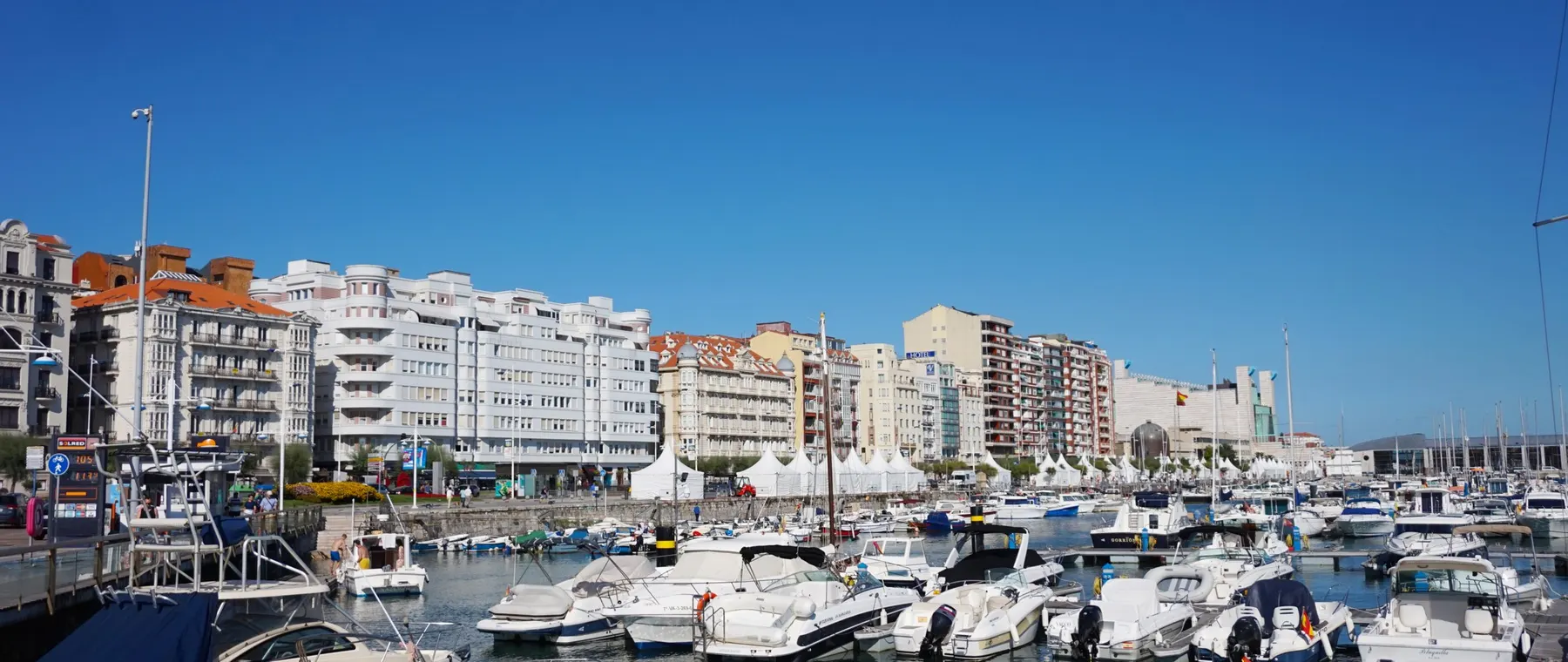
Santander offers a different experience from the Mediterranean marinas commonly associated with luxury-yacht holidays. The Cantabrian capital is organised around a substantial bay, with an urban shore that connects maritime heritage, contemporary architecture and an established beach culture. On a yacht between twelve and twenty-four metres, a visit can combine comfortable living afloat with time spent among the city's residents. An important decision is where the boat should actually stay. A photograph of Puerto Chico, near the city centre, illustrates a waterfront landmark but does not establish that a visitor can reserve a berth there. The marina facilities in the wider bay have their own booking and operating arrangements. A captain should resolve those first, then arrange the appropriate way into town. This distinction makes a Santander guide useful rather than merely decorative: the location of the vessel can shape the nature of every guest excursion, from a museum visit to an evening meal.
Where to begin the berth enquiry
Marina del Cantábrico's owners' community operates a website identifying its location in Maliaño, within Camargo, and publishes services and berth-rental information. That is a marina contact within the wider Santander bay area, not the same place as the Puerto Chico waterfront shown in this article's photograph. The community site lists rates for berth rental in 2026 but displaying a tariff is different from offering a suitable position on the dates required. Owners should contact the marina with the vessel's true length overall, maximum beam, draft, arrival dates and any unusual requirements. A visiting multihull should make its beam explicit. A captain should also request confirmation of any limits affecting the particular access or berthing arrangement. The public information reviewed here does not establish a guaranteed maximum visiting yacht size or available berth. It would be wrong to promise that a twenty-three metre yacht can be accommodated without a direct reply. The purpose of identifying the operator is to enable that practical enquiry.
Services and staying near a working marina
The community's published services directory includes cranes, travel-lift equipment, a yard, winter storage offerings and waste-disposal facilities. These are distinct from the cultural destinations near Santander's city-centre shore. An owner planning to combine a short holiday with maintenance should make separate appointments for both operations. Confirm whether the actual yacht can be safely lifted, whether the necessary technician is available, and what access rules govern work in the yard. No load rating or fit for a specific vessel should be assumed from a general service label. Technical work may also affect the timing or comfort of an onboard stay, especially on a yacht with cabins close to machinery areas. It is sensible to avoid promising guests continuous access to the boat if lifting or other work is planned. For a pure leisure stop, confirm the services at the assigned berth rather than expect every yard facility to be included automatically.
The promenade as a first introduction
Santander's official tourism organisation sets out a walk along the seafront with several reminders of the city's relationship to ships and maritime commerce. Near the Pereda gardens, the modern Centro Botín sits beside the waterfront. Further along is the restored stone crane constructed around the turn of the twentieth century, a surviving link with the movement of goods through the port. The former customs-office building likewise provides a visible connection with an earlier commercial waterfront. These features are close enough in character to form one coherent exploration rather than a collection of isolated destinations. Guests can choose to stop at the water, visit an exhibition or simply spend time in the adjacent urban spaces. The advantage of arriving by yacht is being able to appreciate the city from the water and then discover the shore from a different perspective. Check transport from the assigned marina: a bay-wide description is not a walking-distance promise.
Contemporary art and the architecture of Centro Botín
Designed by Renzo Piano, Centro Botín opened in June 2017. Santander's tourism site describes an institution with exhibition spaces and facilities for artistic, educational and cultural activity. For a visiting yacht owner who appreciates architecture, the building's relationship to the bay may be as compelling as its current exhibitions. The structure creates an opportunity to consider how a contemporary institution can inhabit a waterfront alongside the established city rather than replace the shore's older identity. Visitors interested in a particular exhibition should check the institution's own calendar and ticket arrangements. Its restaurant and other facilities may have their own times or reservations, and older destination descriptions do not provide reliable evidence of a current menu or chef. A visit can be planned around a specific exhibition or approached more casually as part of a walk. Either way, a well-designed shore day avoids treating the culture of the city as just a decorative extra to the yachting experience.
Puerto Chico and the maritime neighbourhood
Puerto Chico is a natural reference point when discussing Santander's visual relationship to the sea. The harbour photograph accompanying this feature was taken in August 2016, and records the location rather than a current view of visitor berths. Moving through the waterfront today offers the opportunity to see how the city accommodates recreational boats, public space and maritime buildings in close proximity. Santander's tourism route also highlights the Muelle Calderón and the sculptures known as Los Raqueros, recalling children associated with the historical harbour. These references help the visitor understand the waterfront as a place with social and commercial history, not merely a collection of berths. Guests interested in photography may find several changing perspectives as they walk. Respect working areas and restricted access, and avoid treating every quay as a promenade. A yacht moored elsewhere in the bay can still use Puerto Chico as the starting point for a day ashore.
A second day on the Magdalena peninsula
The Magdalena peninsula presents a particularly good contrast to the more urban part of the waterfront. Its palace was used for summer stays by Alfonso XIII and Victoria Eugenia, and the surrounding area became closely associated with the city's resort character. The official tourism route links this part of Santander with the Avenida Reina Victoria and the Sardinero district. For guests aboard a yacht, the peninsula offers the possibility of spending time in a broad coastal landscape while remaining within the context of the city. A palace visit should be planned from its current admission timetable; a walk may be more appropriate for those who prefer outdoor activity. Some paths involve changes of gradient, so accessibility deserves individual consideration. Late-autumn weather may make an outdoor programme less appealing than an exhibition or meal. Allow the itinerary to change accordingly. The palace and bay reward time spent looking and walking, rather than rushing to tick off a destination.
The Sardinero and a different sense of the sea
The Sardinero area is associated with beaches, residential architecture and the city's history as a coastal resort. An Atlantic-facing beach is a different environment from the shelter offered by an assigned harbour berth. This matters for yacht guests because the sea conditions suitable for an enjoyable promenade may not suit swimming or tender operations. A beach visit is best planned from current local safety advice, not from a summer photograph. Even in weather that rules out a swim, a walk, a coffee with a view or a visit to a cultural attraction can be satisfying. Owners who prefer a more leisurely morning may choose the city centre first and save the wider coastal route for another day. Families travelling with different ages and interests can separate their programme into several manageable activities. This is a destination where the land and water provide distinct experiences rather than requiring every excursion to happen aboard the yacht.
The practical shape of a weekend
A suggested stay could begin with arrival and an easy evening, allowing the captain to complete any formalities and crew to manage replenishment. On the next day, guests could travel into central Santander and combine the waterfront walk with Centro Botín if an exhibition is of interest. A further morning might be used for the Magdalena peninsula or the Sardinero, depending on the departure schedule and weather. None of this is a pre-booked package. Establish transport from the actual mooring, opening times and the return arrangements before making a restaurant or attraction reservation. The yacht's departure should be governed by safe passage planning rather than a commitment to a sightseeing schedule. An owner can make the visit particularly comfortable by allowing time back aboard, especially during the shorter days of the autumn season. Santander deserves a visit with enough margin for an unexpected attraction or a change of plans.
Confirm the operating arrangements before departure
The marina community publishes info@copromarinacantabrico.com and +34 942 36 92 81. Its service and tariff pages provide the starting point for a direct berth enquiry. Confirm exactly which berth is offered, the current charges, draft requirements, shore connections, access, insurance or paperwork and any arrival procedures relevant to the yacht. Use appropriate official navigation charts and notices for the bay; this article provides destination and ownership context, not pilotage instructions. Verify guest transport independently. The official city tourism pages provide an unusually useful framework for the shore visit, with the waterfront route, contemporary art and the royal-resort heritage offering distinct interests. The result can be a rewarding Cantabrian break for an owner who wants cultural activity as well as the pleasure of staying afloat. The important point is that real berthing arrangements, suitable conditions and a well-paced shore programme establish the quality of the experience.
Sources and photograph
Source documentation: https://www.marinadelcantabrico.com/copromarina/web/servicios/26, https://www.marinadelcantabrico.com/copromarina/web/servicios, https://turismo.santander.es/en/what-to-do/travelling-around-the-city/santander-seaside-city, https://turismo.santander.es/en/discover-the-city/places-of-interest, https://turismo.santander.es/en/what-to-do/travelling-around-the-city/the-magdalena-peninsula. Photograph: Puerto Chico harbour, Santander, Spain (2016) — Tiia Monto / Wikimedia Commons. Resized for web display under CC BY-SA 3.0.