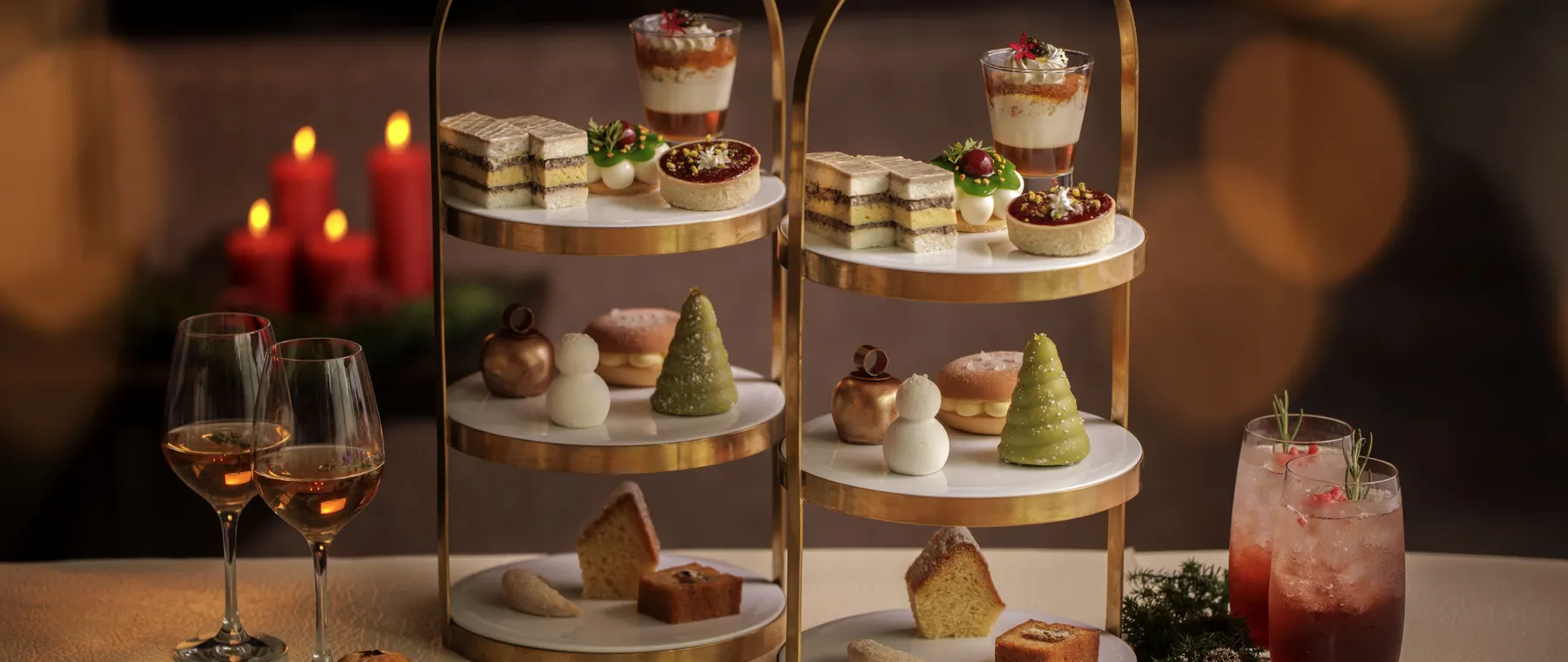
Four Seasons Hotel Tokyo at Otemachi has introduced a seasonal afternoon tea that traces a culinary journey through European Christmas traditions while remaining firmly rooted in the Japanese capital. Announced on 16 November 2026, the programme runs through 6 January 2027 at THE LOUNGE, high above central Tokyo. Italian-born executive pastry chef Michele Abbatemarco draws on festive memories from Italy, Austria and France, while executive sous chef Kensuke Kuze contributes savoury dishes. The setting brings together a panoramic skyline, views towards the Imperial Palace gardens and delicate pastries shaped like toys, Christmas decorations and winter landscapes. For travellers who appreciate luxury dining as an expression of culture, the attraction is not simply a seasonal treat but an exploration of how food carries memory across borders.
A European Christmas seen from Tokyo
The concept contains an appealing contrast. Guests look out over one of the world's most sophisticated Asian cities while tasting desserts inspired by winter celebrations in several European countries. Rather than reproducing an entire Christmas dinner, the pastry team concentrates on small forms, familiar ingredients and playful details. That allows different traditions to be experienced in one sitting without attempting to present them as identical. A traveller familiar with European festive markets may recognise certain flavours while discovering new interpretations. The setting matters as much as the menu: a generous view and an unhurried afternoon can provide welcome distance from the urgency of shopping and business. The experience remains Japanese hospitality interpreting European customs, not a claim that Tokyo has become an Alpine village.
The chef's childhood memories become ingredients
Michele Abbatemarco's Italian background informs the sweet collection, according to the hotel's announcement. Food memories are powerful because an ingredient's smell or texture can evoke a particular season and place. In the kitchen of an international luxury hotel, those memories must be translated into preparations that work consistently for guests from varied backgrounds. A miniature dessert may combine several techniques and ingredients while appearing almost effortless. The challenge is balancing recognisability with creativity. If a cake looks like a Christmas ornament but tastes too sweet or lacks structure, its novelty will not sustain the experience. The chef's approach is most interesting where visual design and good flavour reinforce each other.
A teddy bear with the taste of apple tart
The Christmas Teddy Bear is described as combining crisp green apple with the spiced warmth of tarte Tatin, the classic French caramelised-apple dessert. The idea transforms a familiar childhood object into a carefully composed pastry. Green apple can provide acidity and freshness that offset buttery or caramelised elements, while spices create a winter association. The hotel's release does not give a complete ingredient list or reveal every preparation method. It would be misleading to claim that the dessert is simply a traditional tarte Tatin served in a different shape. It is better understood as a contemporary interpretation drawing on the flavours and emotional associations of that dessert. Guests who dislike caramel or have dietary restrictions should request the exact ingredients.
A Christmas bauble with gingerbread character
Boule de Noël takes inspiration from a festive tree ornament. Its interior combines an almond crunch, fig compote and cream scented with spices associated with pain d'épices, the traditional French spiced bread. These elements create several contrasting textures: crispness, soft fruit and a creamy finish. The fig's natural sweetness can complement warm spice, while almond adds depth. The pastry's visual resemblance to an ornament is meant to introduce a playful moment before the first bite. This is the kind of design that appeals to people who collect beautiful objects but also enjoy the fleeting quality of fine pastry. Once the decoration is broken, the essential test is whether the combination remains balanced.
Snowman and Christmas Tree offer different flavours
The Snowman is a reimagined Mont Blanc, bringing chestnut together with blackberry for a contrast between gentle sweetness and sharper fruit. Mont Blanc is a well-established pastry name in European patisserie, but individual interpretations differ significantly. The Christmas Tree uses pistachio mousse, dacquoise and strawberry gelée to create another flavour combination. Pistachio can lend richness and a distinctive colour, while strawberry introduces brightness. These are not simply edible figurines: they represent decisions about texture, sweetness and how seasonal storytelling should translate into food. For a group visiting THE LOUNGE, discussing the differences can make the afternoon more engaging than treating every piece as an interchangeable sweet.
Pandoro introduces an Italian Christmas table
Among the petits fours is pandoro, a traditional Italian cake closely associated with Verona and Christmas celebrations. Its characteristic buttery, soft crumb differs from richly iced festive desserts. In an afternoon-tea service, a smaller interpretation can introduce the tradition without requiring guests to share an entire large cake. The hotel uses the pastry to connect Abbatemarco's Italian memories to the wider European theme. For visitors unfamiliar with pandoro, it can be useful to learn about the role such breads and cakes play in family gatherings. Their appeal is often associated with texture and familiarity rather than elaborate decoration. A refined hotel's version should preserve that sense of pleasure rather than bury it beneath excessive embellishment.
Austrian crescent biscuits add another texture
Lunes de Noël refers to the familiar crescent-shaped Austrian festive biscuits dusted with icing sugar. They offer a very different experience from mousse-based creations: a delicate, often crumbly biscuit designed to be enjoyed in a few bites with a warm drink. Including this form in the service gives the selection a more varied rhythm. Guests can move between intricate patisserie and something that recalls home baking. The programme's European premise is stronger because it does not rely exclusively on French pastry names. It acknowledges that seasonal food traditions are diverse, even across neighbouring countries. The hotel does not claim to document every regional variation, and visitors should see the biscuits as an introduction to a wider culinary heritage.
Savoury dishes keep the afternoon balanced
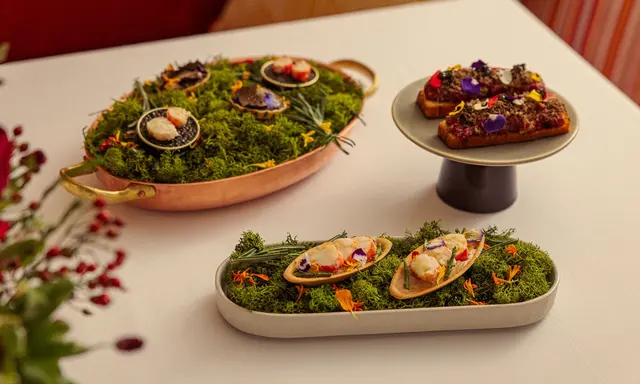
Executive sous chef Kensuke Kuze is responsible for the savoury component, drawing on European festive ideas. The hotel describes a foie gras and pain d'épices tartlet with honey cream, cinnamon and cardamom, alongside braised beef and chicken mousse in pastry with a red-wine sauce. These are substantial flavours for an afternoon tea, which can otherwise lean heavily towards sweetness. A savoury course can help reset the palate and make the service feel more like a leisurely light meal. The presence of foie gras and other animal ingredients makes careful menu checking important. Guests following vegetarian diets, avoiding alcohol or managing allergies should discuss substitutions directly rather than assume that a festive selection can accommodate every restriction unchanged.
Beverages are part of the culinary narrative
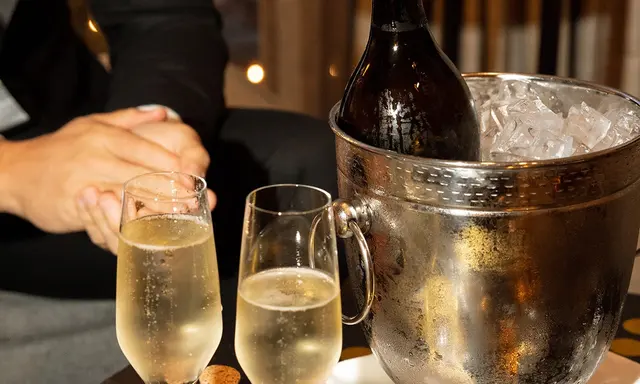
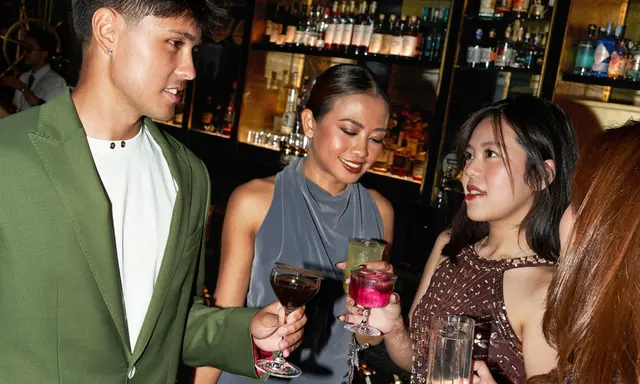
The menu includes a Scarlet Berry mocktail built around bergamot with strawberry and lemon, and Chai de Noël, which combines tea, milk, cinnamon and kuromitsu, a Japanese dark sugar syrup traditionally made with unrefined Okinawan black sugar. These drinks connect the European festive programme with ingredients and tastes associated with Japan. A non-alcoholic drink can be just as carefully composed as a conventional cocktail and can complement pastries without overwhelming them. Chai de Noël adds a warming alternative that suits the winter setting. Guests should ask whether a drink contains dairy or other relevant ingredients before ordering. As with the food, flavour balance matters more than a decorative presentation.
The city view creates an unusual setting
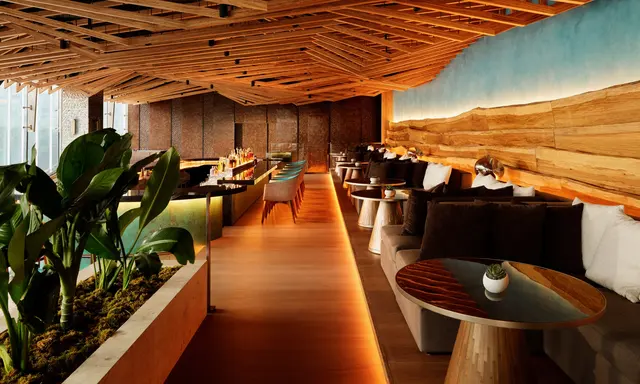
THE LOUNGE sits within Four Seasons Hotel Tokyo at Otemachi, with views towards the city skyline and the Imperial Palace gardens. That gives the afternoon tea an urban identity distinct from a traditional country-house setting. Winter daylight can be particularly striking over a dense cityscape, although visibility and exact sightlines depend on weather and the location of the table. Guests who value a particular view should request seating preferences when reserving. A premium hotel can create an elegant interior, but the relationship with the city outside gives it a memorable sense of place. Visitors can combine the experience with museum visits, walks or shopping elsewhere in Tokyo without treating the hotel as the entire destination.
An experience with published dates and prices
Four Seasons says the seasonal afternoon tea is available from 16 November 2026 through 6 January 2027, between 11 am and 7:30 pm. The press release lists JPY 9,800 on weekdays and JPY 10,800 on weekends and public holidays. Reservations should be made at least three days in advance. Those are the terms published with the announcement, and guests should verify current prices, tax and service arrangements when booking. The exact selection of pastries may also change with ingredient availability. The hotel's guidance is especially important for people planning a short stay who would be disappointed to discover that a preferred seating is unavailable.
Small-scale craftsmanship has lasting appeal
Luxury travel is often associated with villas, aircraft and exceptional purchases, yet a well-made miniature pastry can offer a distinctive experience at a much smaller scale. Its value lies in skilled preparation, fresh ingredients and the ability to share a table with someone whose company matters. The Tokyo service is especially appealing because it connects European memories with the care of contemporary Japanese hotel hospitality. A guest need not have any special connection to the European countries represented to enjoy the food, though knowledge of the traditions can enrich the experience. The best afternoon teas provide enough detail to inspire curiosity without overwhelming a conversation with technical descriptions.
A seasonal table between continents
The festive tea at Four Seasons Tokyo at Otemachi offers a considered route through European Christmas flavours: apple and spice, fig and almond, chestnut, pistachio, pandoro and crescent biscuits. The savoury menu and winter beverages add balance, while the city views distinguish the setting from the places that inspired the recipes. The published information makes it possible to plan a visit but does not replace a current reservation or allergen discussion. For luxury travellers spending December in Japan, the programme offers an opportunity to enjoy the season without leaving Tokyo. More broadly, it shows how a hotel can use pastry as a form of cultural storytelling, turning a familiar social ritual into something personal, thoughtful and memorable.
Sources and image credits
Reporting based on Official primary press announcement: https://press.fourseasons.com/otemachi/hotel-news/2026/afternoon-tea/.
Lead photograph: Festive afternoon tea at Four Seasons Hotel Tokyo at Otemachi, official 2026 Four Seasons press photograph. Four Seasons Hotels and Resorts original official 2026 press photograph provided in the responsible hotel newsroom downloadable gallery; copyright remains with the issuing rights holder and photographer. Original official image source.