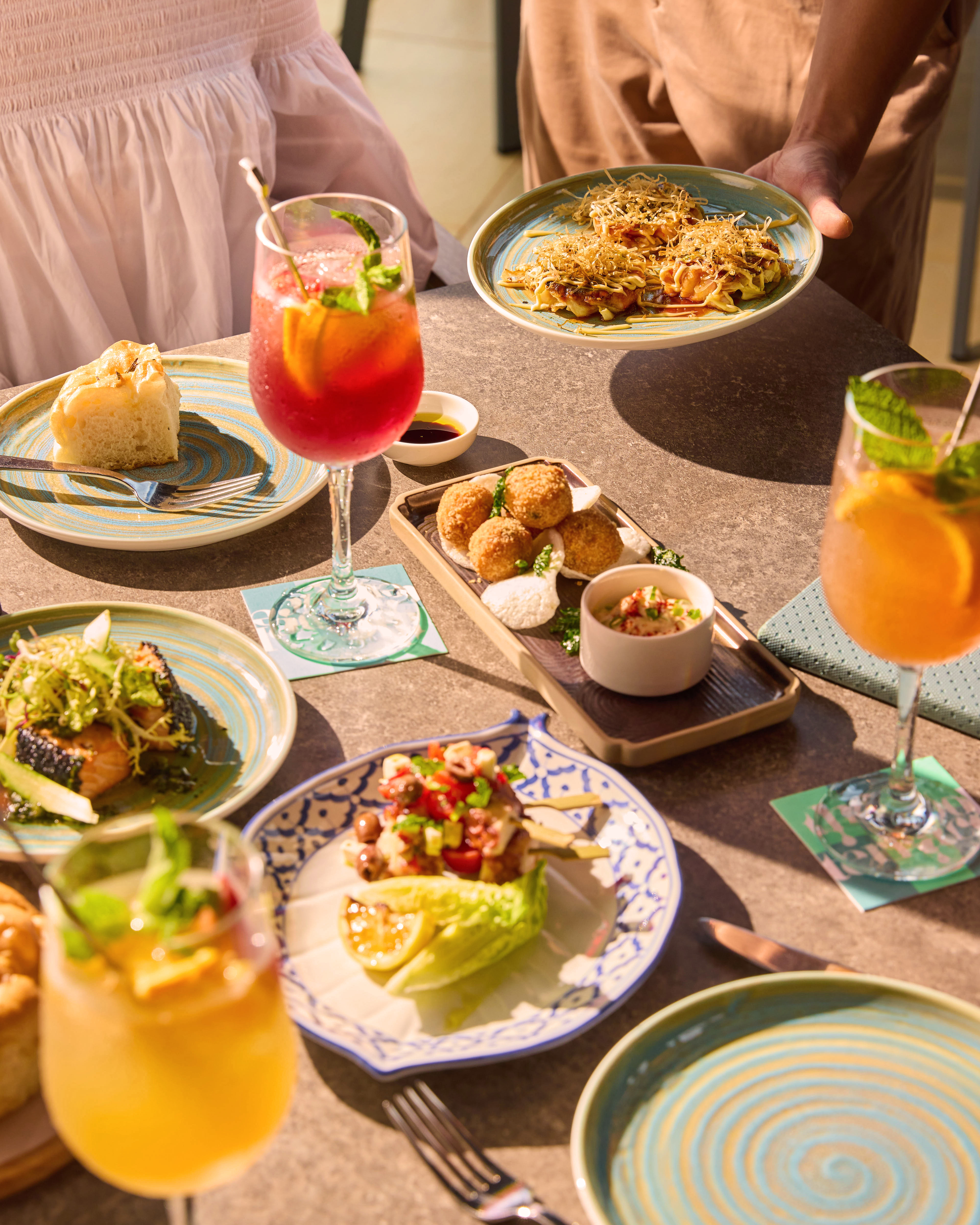
An evening terrace menu overlooking Victoria Harbour
Four Seasons Hotel Hong Kong introduced an Evening Snacks menu at its Pool Terrace during summer 2026, creating an informal outdoor dining option between 7 p.m. and 9 p.m. The hotel's official announcement described small plates, seafood, desserts and a build-your-own sangria offering against the view of Victoria Harbour and Central's high-rise skyline. Because the source concerns a summer promotion, its hours and dishes should be treated as the published seasonal arrangement rather than a guaranteed permanent menu in November. The useful story is how a hotel turns a poolside space into a dining destination without making every guest commit to a formal restaurant experience.
The transformation from daytime pool to evening venue
A pool terrace serves different purposes as the day progresses. Guests may use it for swimming and relaxation in daylight, while the approaching evening introduces softer light and the possibility of a quieter social gathering. Changing a space's function requires practical attention to seating, service, safety and the relationship with pool users. The hotel presents the evening menu as a way to enjoy Hong Kong's waterfront atmosphere rather than merely as an extension of daytime refreshments. A successful transition should feel natural, with staff able to serve food comfortably without disrupting other guests or compromising the safety of the aquatic area.
Victoria Harbour is part of the experience
Hong Kong's harbour is closely associated with its commercial history, ferry routes and dense urban skyline. Watching that activity from a terrace can offer a distinct perspective on the city, particularly as lights appear in the evening. But promotional photographs should not be treated as guarantees of clear skies or a particular view from every table. Visibility, weather and seating position can change the experience. Travellers who want a specific outlook should ask the property about arrangements before reserving. The harbour's appeal comes partly from its changing character; expecting a fixed postcard scene misses what makes an urban waterfront interesting.
Shareable plates suit an unhurried evening
The menu includes dishes intended for sharing, allowing guests to sample different flavours without following a formal sequence of courses. That format can be particularly enjoyable for friends who have spent the day exploring the city and would rather eat lightly than commit to a long dinner. It also puts pressure on the kitchen to coordinate small dishes, maintain appropriate temperatures and help guests understand portion sizes. A table of two will have different needs from a larger group. Staff who can recommend a sensible combination make the experience more comfortable than a menu that simply lists several premium ingredients and expects the party to decide without guidance.
Okonomiyaki with seafood reflects culinary crossover
The hotel's release highlights an okonomiyaki-style pancake with blue prawn, calamari, mussels and bonito flakes. The dish draws on Japanese culinary references but is presented within an international Hong Kong hotel menu. Such combinations can be enjoyable when the batter, seafood and toppings remain balanced. A name associated with a particular cuisine should not be taken to imply that the preparation reproduces every regional tradition exactly. Travellers can approach the plate as the kitchen's interpretation and judge it on flavour and technique. Those with shellfish allergies should request detailed information, since the combination contains several ingredients requiring particular care.
Salmon and octopus provide different textures
Other published dishes include pan-seared salmon cubes with sesame, asparagus and herbs, along with grilled octopus souvlaki served with Mediterranean accompaniments. These suggest a menu that mixes Asian and Mediterranean influences rather than adhering to one strict regional style. That can be effective in a city shaped by international commerce and migration, but the result depends on careful preparation. Salmon must remain appealing after being cut into small portions, while octopus can become unpleasant if cooked without proper attention to texture. The menu descriptions give an idea of the intent; they are not independent reviews of food that was actually served on every evening.
Price points should be read in context
The official summer menu listed examples such as an HKD 218 okonomiyaki dish, HKD 378 salmon and HKD 318 octopus, with a ten-percent service charge applying. Such figures help travellers understand positioning, but they are historical published menu prices and may not remain valid. Guests should request the current menu rather than relying on an archived feature. It is also wise to consider how many plates a group will share and whether drinks or desserts are included. A casual atmosphere does not always mean a low overall bill. Clear communication about prices allows diners to concentrate on the experience rather than encounter an unwelcome surprise.
Desserts can provide a lighter conclusion
The hotel's menu described cinnamon churros with vanilla ice cream and chocolate, along with a frozen lemon dessert incorporating vodka. These are distinct approaches to ending an outdoor meal: one rich and familiar, the other more refreshing and adult-oriented. Guests with dietary concerns should ask about ingredients and alcohol content. The appeal of a small-plate dinner is the ability to select a finish according to appetite rather than accept a fixed tasting sequence. A well-run kitchen should also allow guests to skip dessert without making the meal feel incomplete. Flexibility is part of the point of this style of dining.
Customisable drinks can encourage interaction
A build-your-own summer sangria was another highlighted feature, allowing guests to select fruit and other components around a chosen base. Personalisation can turn a drink into a small social ritual, but it should not be confused with unlimited service or a guarantee that every possible ingredient will be available. People who choose to drink alcohol should do so responsibly, especially when travelling in unfamiliar surroundings or planning a late journey. A sophisticated terrace should also accommodate guests who prefer non-alcoholic beverages with equal attention. The published promotion shows how the hotel sought to make drinks more interactive, not that alcohol is essential to enjoying the waterfront.
Weather and seasonality determine outdoor comfort
Hong Kong's summer conditions can be humid and occasionally affected by heavy rain or storms. An open terrace needs clear arrangements for bad weather, especially when guests have made a reservation for a special evening. Outdoor seating may become unsuitable even when a venue remains open, so the hotel's current policy should be confirmed. The source's published 7–9 p.m. window relates to the specific summer menu and should not be projected onto the entire year. Travellers may find that a different season changes both the comfort of the space and the food offered. Flexibility is important when a dining experience depends on weather and a view.
A practical alternative to formal dining
Not every luxury traveller wants a lengthy restaurant booking after a demanding day. A shorter terrace meal can create space for conversation and for enjoying the city without a strict dress or service sequence. The attraction is particularly strong when the venue offers a distinctive outlook and a compact menu. Yet a casual format still requires professional service: guests need water, accurate descriptions, timely dishes and a clear bill. A relaxed atmosphere should never mean careless attention. The hotel's experiment with evening snacks illustrates a broader hospitality trend toward giving guests more control over when and how they dine.
How this fits a Hong Kong itinerary
A traveller can combine the harbourfront with galleries, shopping, cultural sites and neighbourhood food experiences elsewhere in the city. The hotel terrace may make a comfortable end to a day but should not replace exploration of Hong Kong's broader dining culture. Markets and independent restaurants offer perspectives that a luxury hotel cannot fully reproduce. Yacht owners may find the harbour's commercial and recreational marine activity interesting, but the restaurant announcement does not provide information about private-yacht berthing or port permissions. Those require separate current advice. The value of the terrace is the city view and hospitality rather than an implied maritime service.
The role of the hotel team in a shared space
Serving food near an active pool can be operationally complicated. Staff must coordinate movement, protect glassware and keep surfaces safe while supporting guests who want a relaxed evening. An outdoor menu also puts demand on kitchen timing because dishes may need to travel farther than they would in a conventional dining room. The hotel describes a curated selection rather than an unrestricted full restaurant menu, a sensible approach for a distinctive location. Travellers should assess how comfortably the staff manage the arrangement rather than concentrate only on the menu's celebrity ingredients. Service makes the difference between an enjoyable terrace and a crowded novelty.
What the original announcement establishes
The verified source documents the summer 2026 launch of Evening Snacks at Pool Terrace, the stated hours, specific sample dishes and published prices. It does not confirm that the same menu is currently available in November or guarantee an identical view from every table. The official press photograph is first-party hotel media and should be credited, not used as evidence of a guest's actual dining experience. A current booking requires checking today's hours, menu, fees and weather policies. This distinction allows the seasonal concept to be reported accurately while giving travellers useful guidance rather than presenting archived promotional details as live availability.
A different way to enjoy an urban harbour
The evening menu is interesting because it makes Victoria Harbour an active part of a small social occasion. A guest does not need a formal banquet to appreciate the view or the city's atmosphere. Shareable plates and shorter service can provide a pleasing middle ground between a poolside drink and a full restaurant dinner, provided the kitchen and staff maintain consistent standards. For travellers accustomed to dining on the aft deck of a yacht, a harbour-facing terrace offers a recognisable combination of water, conversation and informal food in a very different urban setting. The enduring idea is flexibility, even if the precise summer menu changes with the season.
Sources and image credits
Reporting based on New Evening Snacks at the Pool Terrace, Al Fresco Dining at Four Seasons Hotel Hong Kong.
Lead photograph: Hong Kong Pool Terrace Makes Evening Snacks an Al Fresco Ritual — official Four Seasons first-party press photograph. © Four Seasons Hotels and Resorts, original property press photograph Original official image source.