Four neighbouring cities, four distinctive food cultures
A new Four Seasons culinary travel guide explores how Guangzhou, Shenzhen, Hong Kong and Macao express different identities through food despite their geographical proximity. The company's official 2026 feature combines advice from chefs, bartenders and concierge teams with references to neighbourhood restaurants, markets and hotel dining. The story is valuable for travellers because it resists treating the Greater Bay Area as one undifferentiated destination. Cantonese tea culture, regional migration, seafood traditions and Portuguese influences each have their own history. A carefully planned itinerary can make those differences visible without requiring visitors to reduce the trip to a checklist of fashionable restaurants.
Why a short distance does not create one cuisine
Cities connected by trade and transport often share ingredients and techniques, yet local tastes may evolve along distinct paths. Climate, migration, family traditions and the availability of fresh produce can shape how a dish is prepared. In the Greater Bay Area, an international traveller may encounter a formal Cantonese banquet in one location and an informal noodle shop or diverse regional restaurant in another. Neither is necessarily more authentic or valuable. The difference is what the food reveals about the people who use the place every day. The Four Seasons guide encourages an approach based on curiosity rather than the assumption that prestige dining alone will define the region.
Guangzhou and the ritual of yum cha
Guangzhou's tradition of taking tea alongside dim sum provides a natural starting point. Yum cha is a social occasion rather than simply a list of steamed dumplings, and it can unfold at a slower pace than a typical sightseeing meal. The company highlights the Xiguan area, including Panxi Restaurant near Liwan Lake, as one place to appreciate this tradition. A visitor may encounter shrimp dumplings, water-chestnut cake and congee, but the deeper attraction is observing how families and friends gather. Travellers should understand that busy restaurants may have particular customs for ordering, sharing tables or choosing tea. Polite curiosity and local advice can make the experience more comfortable.
Bamboo-pressed noodles and the craft of texture
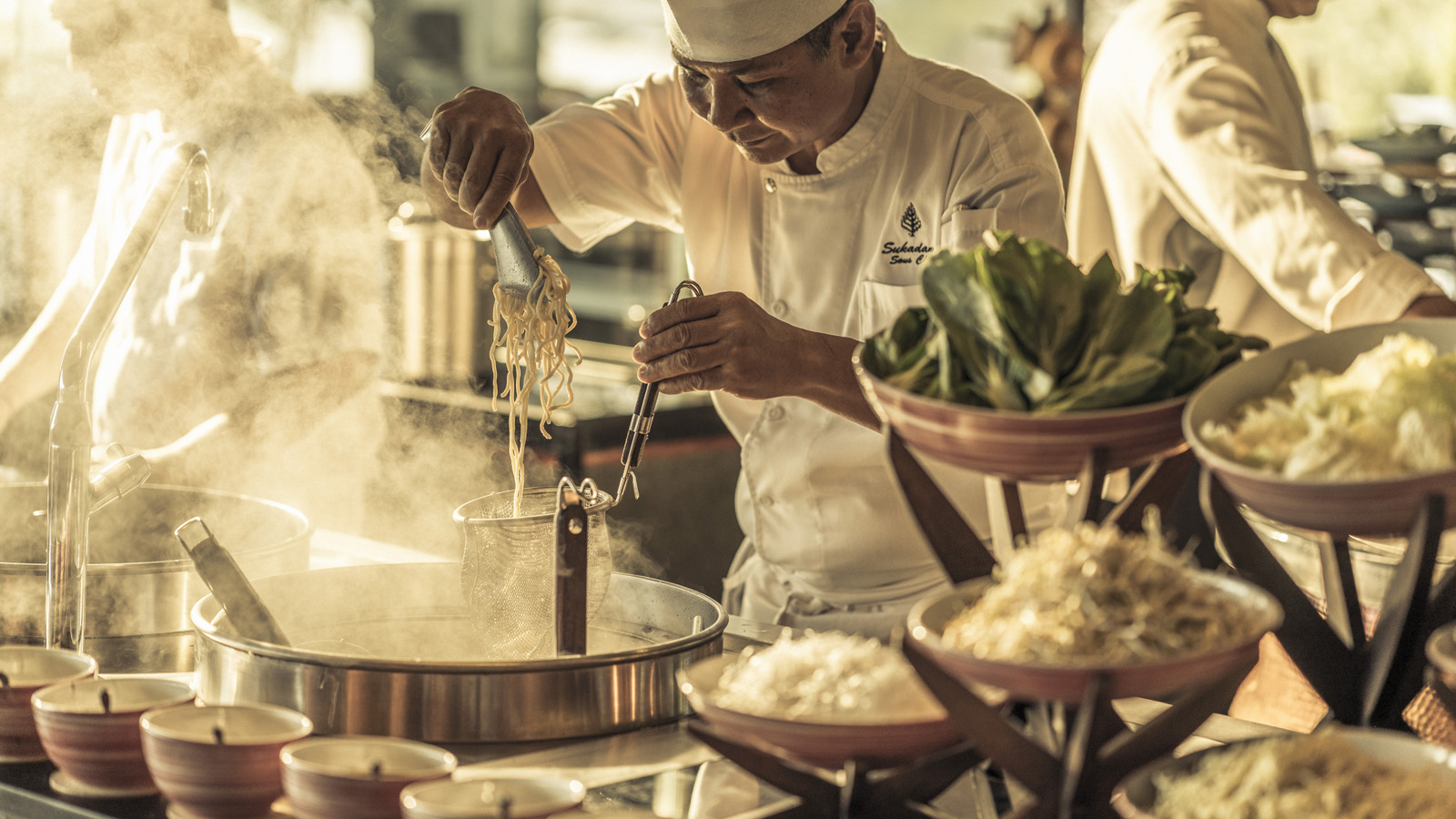
The company's itinerary also refers to a bamboo-noodle shop in Xiguan, where an established technique gives noodles a distinctive texture. Such preparation demonstrates how something apparently simple can involve substantial inherited skill. A tourist may see only a bowl of noodles and wanton, while a local diner notices the precise bite, broth and balance between ingredients. Visitors interested in culinary craft can ask why the method differs from more modern production and whether preparation is visible. The value of a neighbourhood food stop is not measured by décor or price alone. A humble dish can reveal a technique that a large international restaurant might not reproduce in the same way.
Historic lanes make food part of a walking itinerary
The Guangzhou guide connects eating with places such as Yong Qing Fang and the heritage surroundings of Xiguan. That creates a useful alternative to travelling directly between restaurants by car. Walking allows visitors to understand how shops, homes, temples and food businesses fit within a neighbourhood. A well-planned route includes pauses and respects the needs of residents rather than treating streets as an outdoor exhibition. It also helps to be realistic about weather, mobility and the time needed to reach particular establishments. Concierge advice can provide context, but guests should allow room for personal observation instead of following a rigid sequence designed only to maximise the number of stops.
A contemporary return to Cantonese technique
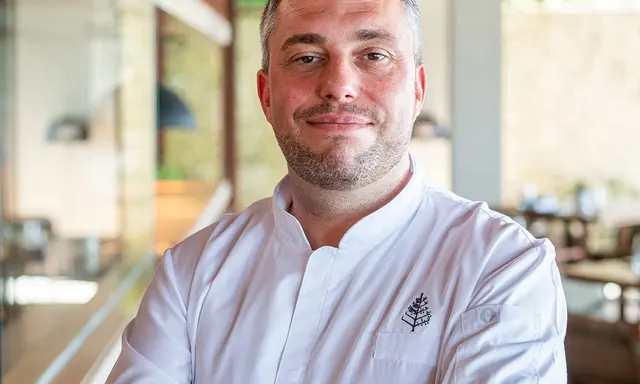
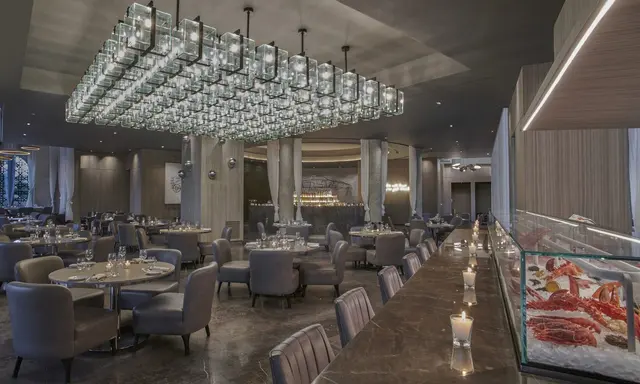
Back at Four Seasons Guangzhou, Yu Yue Heen has been redesigned with references to Cantonese opera by AB Concept, according to the company's feature. Executive Chinese Chef Yulu Cai's dishes reportedly revisit regional traditions through modern presentation. The connection between interior design and cuisine is worth exploring: architecture can place a meal within a cultural narrative, but it cannot make an indifferent dish taste better. Guests may find the most satisfying experience when traditional flavours are treated with respect and any contemporary additions have a clear purpose. A restaurant renovation should be judged by its service, food and atmosphere rather than simply by the prestige of the designer involved.
Shenzhen's food scene reflects movement
Shenzhen's rapid growth and its role as a city shaped by migration have brought together culinary influences from many Chinese regions and beyond. The Four Seasons guide mentions food from Sichuan, Hunan, Northeast China, Chaozhou and other traditions. Visitors can encounter several distinct approaches in a relatively short stay, but they should not expect one dish to represent all of Shenzhen. The company's suggested stops include the Shuiwei cultural district, where different communities and kitchens form part of a wider urban scene. A rewarding itinerary might compare a regional rice preparation with a lighter seafood meal and ask how those choices became part of the city's everyday eating.
Markets are valuable when visited respectfully
The guide points to Shekou Seafood Market as a way to encounter ingredients and coastal food culture. Markets can be lively places where residents and professional buyers conduct ordinary business, not simply attractions built for tourists. Visitors should respect vendors, avoid blocking working areas and ask before taking close photographs of people. Food hygiene, seasonality and local purchasing customs also differ from those in a formal hotel dining room. Travellers curious about preparation methods can benefit from a knowledgeable local guide who explains the role of particular fish and shellfish without turning market activity into a performance. This is particularly appealing to yacht owners accustomed to discussing fresh provisions with chefs.
The challenge of ordering across regional styles
A city with many culinary traditions invites experimentation, but it can also overwhelm visitors who are unfamiliar with menu terminology. Sharing several dishes is often a better way to understand a kitchen's range than ordering the most heavily promoted item alone. It is worth communicating preferences for spice, texture and ingredients, especially in a group with dietary restrictions. The best dining experience is not necessarily the one involving the most adventurous choice; it is the one that allows everyone to participate comfortably. A concierge can help translate names and customs, though guests should retain enough flexibility to respond to what looks appealing on the day.
Hong Kong's own combination of everyday and formal dining
Hong Kong connects Cantonese traditions with a history of international trade and dense urban neighbourhoods. Visitors may enjoy a traditional tea house, a waterfront seafood setting or a highly technical restaurant on different days. These should not be treated as interchangeable categories. Informal cafés and market food can reveal daily habits, while fine dining may highlight a chef's personal interpretation of regional ingredients. The Four Seasons feature presents the city as one of four distinct food cultures; it does not establish a ranking that places Hong Kong above or below its neighbours. A useful journey allows the visitor to compare rather than judge by status alone.
Macao's culinary identity deserves separate time
Macao's Portuguese connections have left a distinctive imprint on its food culture, alongside established Chinese traditions and local adaptations. A visitor may encounter baked goods, cafés and preparations that differ markedly from those in Guangzhou or Shenzhen. It would be a mistake to reduce this history to a single famous dessert. Exploring the city through food can also invite questions about architecture, language and migration. The company's guide frames Macao as a fourth chapter rather than an optional extension of a Hong Kong trip. Travellers seeking cultural depth should allocate time for independent exploration and a meal that reflects the city's varied heritage.
Crossing between cities requires planning
The Greater Bay Area is geographically connected, but international travellers should not assume that every transfer is equivalent to moving between neighbourhoods within one city. Entry requirements, border procedures, transport services and document rules may differ by nationality and route. A dining itinerary becomes much less enjoyable if it ignores the time needed to cross between jurisdictions. Visitors should verify current official travel rules and transport schedules before making restaurant reservations on opposite sides of a border. A private car or concierge arrangement may improve comfort but does not remove legal requirements. Practical planning is part of experiencing the region's variety rather than a distraction from it.
Choosing independent establishments alongside hotels
Four Seasons' feature naturally includes its own properties, but it also recommends neighbourhood venues and markets. That broader approach is one reason the guide is useful. Travellers can compare the reliability and service of a fine hotel restaurant with the atmosphere of a smaller business that local diners frequent. Good concierge advice should respect the visitor's curiosity and avoid suggesting that only an expensive dining room can deliver authenticity. Independent establishments also deserve considerate behaviour, especially when guests arrive in large groups or wish to photograph food preparation. The privilege of discovery carries a responsibility not to disrupt the places being visited.
A yacht traveller's approach to the region
An owner of a luxury yacht may be interested in Hong Kong's coastal connections or in using the cities as part of a wider Asian travel itinerary. Nevertheless, visiting by yacht and visiting by air are different logistical undertakings, and the dining guide should not be read as confirming berthing or immigration services for private vessels. Anyone planning a cruising route needs separate official information on ports, clearance and local regulations. The cultural value of the food itinerary is independent of the mode of arrival. Whether a traveller spends four days or several weeks in the region, an emphasis on distinctive neighbourhoods can make the journey more memorable.
What the source supports
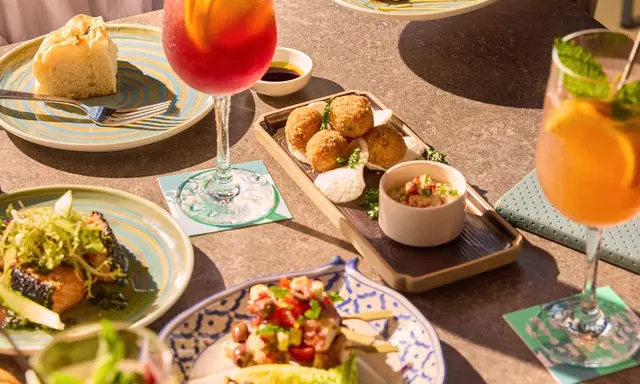
The first-party Four Seasons feature establishes the four-city concept and identifies named markets, neighbourhoods, dining traditions and hotel venues. It combines the company's own recommendations with comments from staff; it is not an exhaustive independent guide to all restaurants in the region, nor a guarantee of current opening hours. This article's advice about respectful market visits, cultural context and cross-border planning is editorial guidance. The official press image illustrates a location or dining experience used in the feature and should be credited as the company's media. Travellers should verify restaurant availability and travel requirements directly before turning the suggested route into a fixed programme.
The enduring value of a food-led journey
The greatest reward of travelling through Guangzhou, Shenzhen, Hong Kong and Macao may be the recognition that shared geography does not erase differences in culture. Food reveals those distinctions through technique, ingredients, habits and the places where people gather. Luxury can support that understanding when it provides knowledgeable guidance and enough time to appreciate what is encountered. A carefully planned four-city itinerary might include a market breakfast, a humble noodle shop, a formal Cantonese meal and a Portuguese-influenced café, with space for discoveries in between. That variety is more valuable than the claim that any single restaurant represents the Greater Bay Area as a whole.
Sources and image credits
Reporting based on Four Cities, Four Food Cultures: Eating and Drinking Through the Greater Bay Area With Four Seasons.
Lead photograph: Four Cities Reveal the Greater Bay Area's Diverse Food Cultures — official Four Seasons first-party press photograph. © Four Seasons Hotels and Resorts, original property press photograph Original official image source.