Three generations find different reasons to enjoy Kyoto
Four Seasons Hotel Kyoto has outlined a family travel programme aimed at grandparents, parents, teenagers and younger children sharing one journey. The property's official 2026 feature brings together connecting rooms, residential-style accommodation, a historic pond garden, cultural activities, dining and wellness facilities. Rather than presenting multigenerational travel as a problem of finding enough beds, the hotel describes ways to accommodate differing interests and energy levels. This is particularly relevant to luxury-yacht owners who sometimes bring several generations together aboard a vessel, where shared time can be rewarding but privacy and flexibility are essential. Kyoto provides a cultural setting in which those choices can be explored without demanding that everyone follow one schedule.
Space is the starting point for family harmony
A group spanning several generations may include people who rise early, children who need quiet afternoons and adults who would like a late evening. A suite or set of connecting rooms can allow family members to remain near one another while preserving independent routines. The hotel also describes residence rentals with kitchens and dining areas, which may suit a longer stay. The important question is how the space will function for the actual group, not simply how luxurious it appears in a photograph. Guests should confirm bed configurations, accessible bathrooms and the possibility of separating sleeping areas before making a commitment.
A historic pond garden forms a common meeting place
The hotel highlights an approximately eight-hundred-year-old pond garden as a central feature of the property. Gardens can be particularly effective for mixed-age travel because they invite observation at different levels of interest. An older visitor may enjoy the design and seasonal atmosphere, while a child is drawn to water, fish or birds. The hotel's description mentions koi, carp, turtles and herons in the setting. Such wildlife is not guaranteed to appear on command, and visitors should respect the garden's rules. The real advantage is having a calm place where family members can spend time together without purchasing or scheduling another elaborate activity.
Children can learn through observation and play
The hotel identifies children's fish-feeding opportunities and traditional games among its family activities. Play can introduce cultural practices without overwhelming younger travellers with explanations intended for adults. The important part is to balance curiosity with respect: children should be guided not to disturb wildlife or damage historic grounds. Parents should also understand which activities are supervised and whether particular age limits apply. A travel programme designed for families works best when the experience feels natural, rather than when every moment is filled with structured instruction. Time to explore and ask spontaneous questions can be as valuable as a formal workshop.
A cultural ambassador gives context to traditions
The hotel's Cultural Ambassador Nao Yokoyama is described as helping families engage with Kyoto's heritage through practical experiences. Such guidance can be valuable because visitors may otherwise encounter ceremonies, craft and historic spaces without understanding their meaning. A knowledgeable host can explain etiquette, answer questions and adapt material for different ages. Yet private access should never be confused with ownership of a cultural tradition. Guests have a responsibility to approach artists and practitioners respectfully and to ask before taking photographs in sensitive settings. The best guided experiences allow local knowledge to remain central rather than treating culture as a decorative accessory to luxury travel.
Kimono, photographs and personal memory
The family programme includes support for wearing kimono and a photography experience in the hotel's garden. A shared photograph can become a meaningful record of a journey, particularly when several generations are together infrequently. It is important that the activity be presented with care, including guidance on appropriate wearing and the cultural context of the garment. Participants should feel comfortable and not pressured to take part simply for a picture. The most memorable results often emerge when a family understands why an object or custom matters rather than treating it as a costume. Clear arrangements for timings, sizing and photographs can help make the activity relaxed.
Kintsugi as an introduction to Japanese craft
A kintsugi workshop, described in the release as a way to explore pottery repair with gold, offers a particularly rich starting point for conversation. It can introduce ideas about restoration, material value and the care invested in an object over time. The precise techniques used in a workshop may differ from traditional professional repair methods, and a short visitor session should not be mistaken for mastery of the craft. The educational value lies in learning to look at repair and imperfection differently. Such an activity may appeal equally to older travellers interested in craft history and younger visitors who enjoy making something tangible.
Shared meals create another form of learning
The hotel outlines a sushi class associated with Sushi Ginza Onodera and family dining at other venues, including EMBA KYOTO GRILL. Food provides a route to culture that is accessible to many ages, though menus and dietary preferences vary. Learning to handle rice and understand preparation can turn a familiar food into something worth considering more closely. For counter dining, the hotel specifies a minimum age of eight in its release, a detail families should confirm when booking. Not every child will enjoy a long omakase sequence, and a good itinerary should offer alternatives. Shared enjoyment matters more than requiring everyone to participate in the most formal culinary experience.
The value of a residence kitchen on a city trip
A residential-style kitchen can provide flexibility when travelling with young children, older relatives or guests with specific dietary routines. Breakfast can take place before the group heads out, and a light meal may be more welcome than an elaborate restaurant dinner after a demanding day. The property promotes residence rentals for longer stays, but guests should verify what cooking equipment and provisions are included in the particular unit. A kitchen is not automatically a guarantee of private-chef service. Its main benefit may be the freedom to organise meals around family life rather than around fixed restaurant hours.
Separate activities protect the quality of shared time
One common problem in multigenerational travel is assuming that everyone must do everything together. A grandparent may prefer a quiet tea overlooking the garden while teenagers visit a digital art installation, and younger children may need a less demanding programme. The hotel's proposal includes adult spa treatments, indoor swimming and activities for children, offering opportunities to divide and regroup. This can strengthen rather than weaken the family experience. A practical daily plan might identify one shared meal and one common activity, with enough free time for individuals to pursue their own interests. Respect for different needs is a form of hospitality in itself.
Kyoto's contemporary attractions belong beside its heritage
The property recommends options such as teamLab Biovortex, a contemporary immersive art experience, and the Kyoto Railway Museum. Their inclusion shows that a cultural trip need not consist solely of temples and historic gardens. Younger visitors may respond more readily to interactive digital art or engineering displays, while adults can discover unfamiliar aspects of the city through the same activities. A sensible itinerary can alternate between quieter heritage settings and more energetic contemporary experiences. Transport times, ticketing and crowd conditions should be checked in advance, particularly for families with limited stamina or particular accessibility requirements.
Japanese baths and wellness need careful guidance
The hotel describes a wellness area with an indoor pool, Japanese-style baths, saunas and a relaxation lounge. These facilities can be valuable on a family holiday, but customs, access conditions and age limits may differ from those at home. Guests should follow local etiquette and the property's instructions, especially in shared bathing spaces. Not every treatment or high-temperature environment is suitable for every person. Individuals with medical concerns should seek appropriate advice. The presence of several facilities offers choice; it does not create a universal wellness prescription for all generations. A good family stay recognises when someone would rather rest than participate.
Walking routes deserve realistic planning
Kyoto rewards exploration on foot, but historic streets, steps, uneven surfaces and busy public spaces can pose difficulties for some travellers. A group should consider distances and accessibility before confirming a route. Shorter, well-chosen visits may be more satisfying than a demanding itinerary that leaves everyone exhausted. Guides and hotel staff can suggest alternatives, but family members should be invited to express preferences without feeling they are inconveniencing others. The aim is to enjoy the place, not to achieve the maximum number of photographs by evening. Flexible transport and a comfortable midday pause can make a significant difference.
Photography should not dominate the experience
Kyoto's gardens, architecture and traditional dress create compelling photographic opportunities, yet excessive attention to images can disrupt the quiet atmosphere that attracted the family in the first place. Visitors should respect restrictions around temples, people working in traditional professions and other culturally sensitive settings. Children can also benefit from times when phones are put away and the focus is on observation or conversation. A thoughtfully organised family photo session may be more effective than constantly trying to capture an ideal image during every activity. The lasting memory of a shared trip often comes from moments that cannot be fully represented in a photograph.
What the hotel release establishes
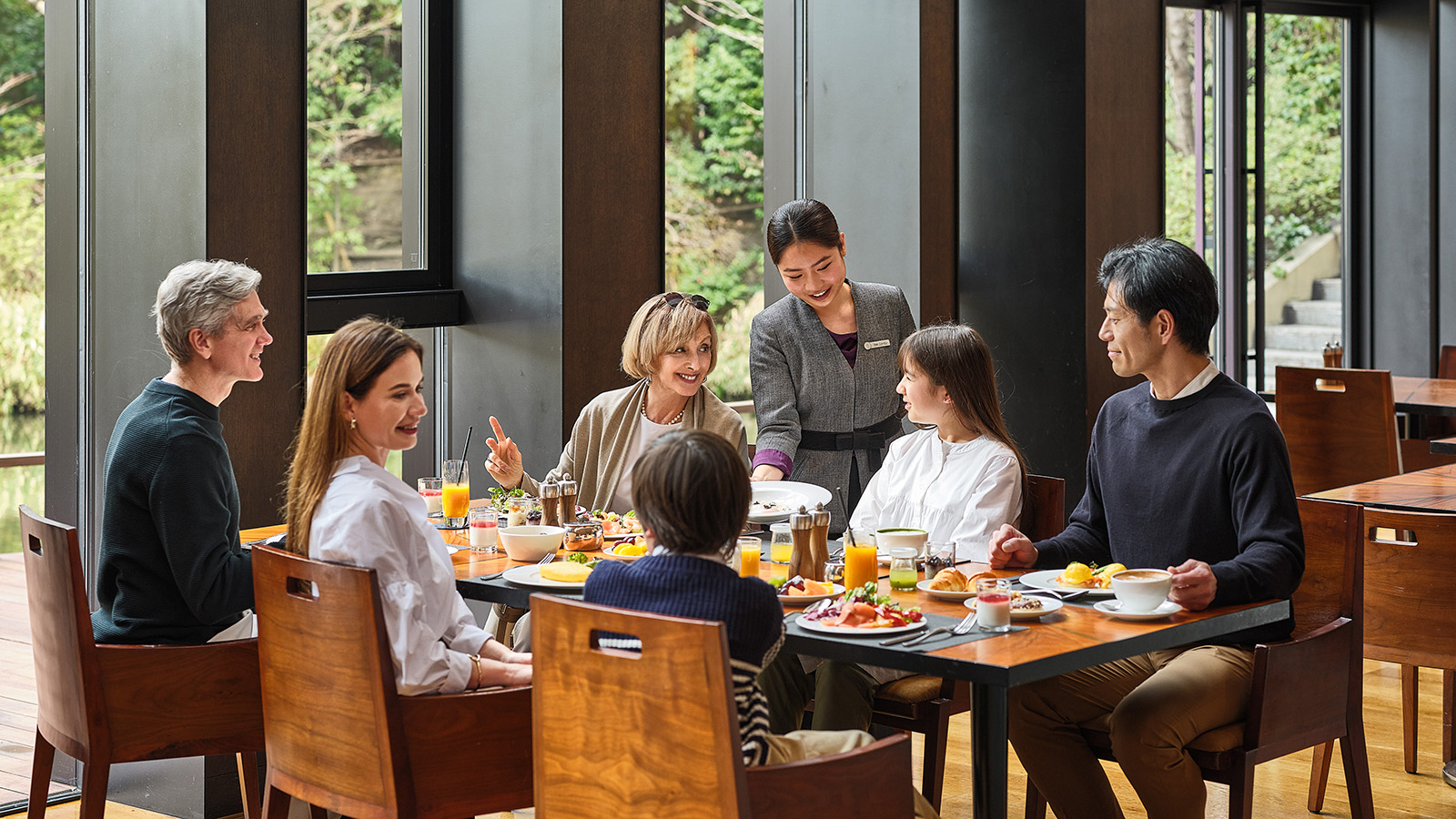
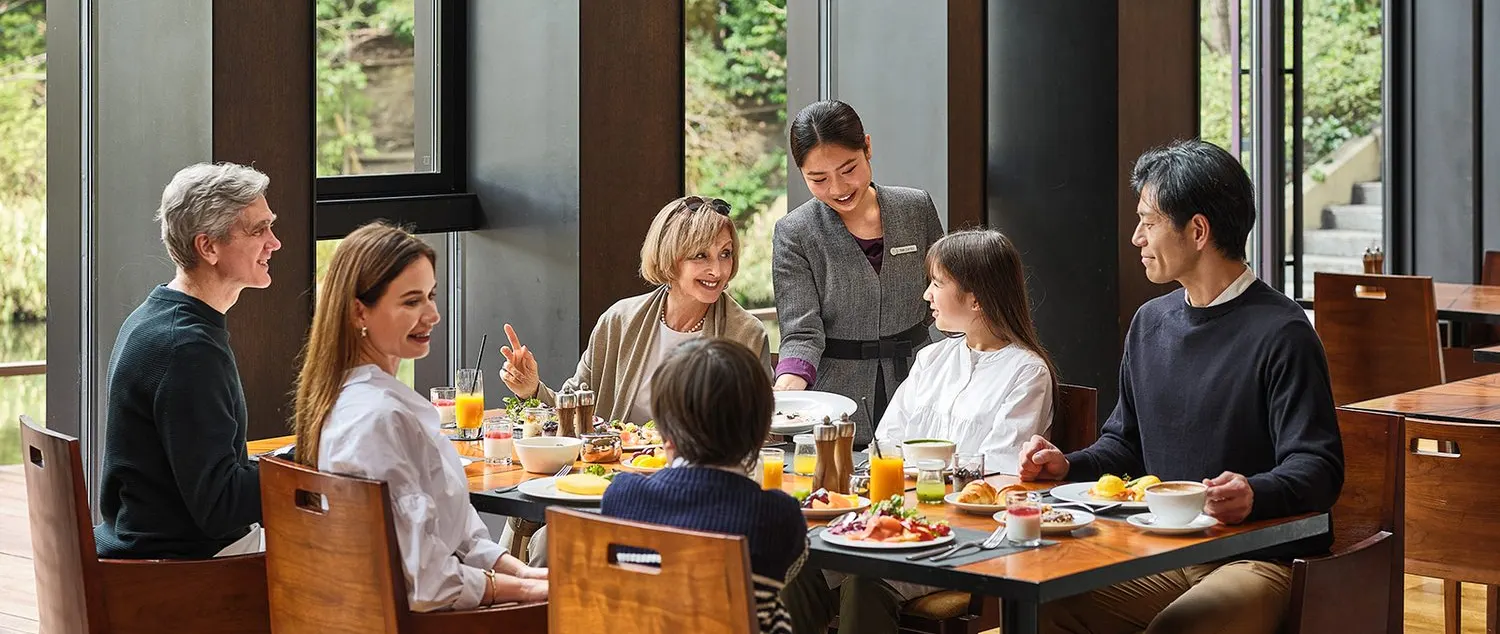
The official source describes the historic pond garden, connecting and residential accommodation options, Cultural Ambassador activities, dining experiences and wellness facilities. It does not guarantee that every activity is always available, that a named practitioner leads every session or that all facilities are appropriate for every age. The original press photograph is hotel-supplied media illustrating the property or family experience. Prices, reservations, age limits and seasonal programme details require current confirmation. The editorial lesson is that multigenerational luxury travel depends on thoughtful planning and consent as much as it does on access to appealing places.
A model that applies beyond Kyoto
The hotel's programme illustrates a wider principle familiar to yacht-owning families: shared space creates opportunity, but enduring enjoyment requires room for different interests. Kyoto contributes particularly rich cultural and sensory experiences, from gardens and craft to food and contemporary art. A family that alternates joint activities with quiet personal time may leave with stronger shared memories than one driven through an exhaustive list of attractions. The value of luxury hospitality here is not simply an attractive suite or a curated tour. It is the ability to help several generations meet one another where they are, discover something new and return to a common table with stories worth sharing.
Sources and image credits
Reporting based on Three Generations, One Timeless Journey at Four Seasons Hotel Kyoto.
Lead photograph: Kyoto Family Stays Connect Three Generations With Culture — official Four Seasons first-party press photograph. © Four Seasons Hotels and Resorts, original property press photograph Original official image source.