A designer's childhood memories reshape an Athens beach
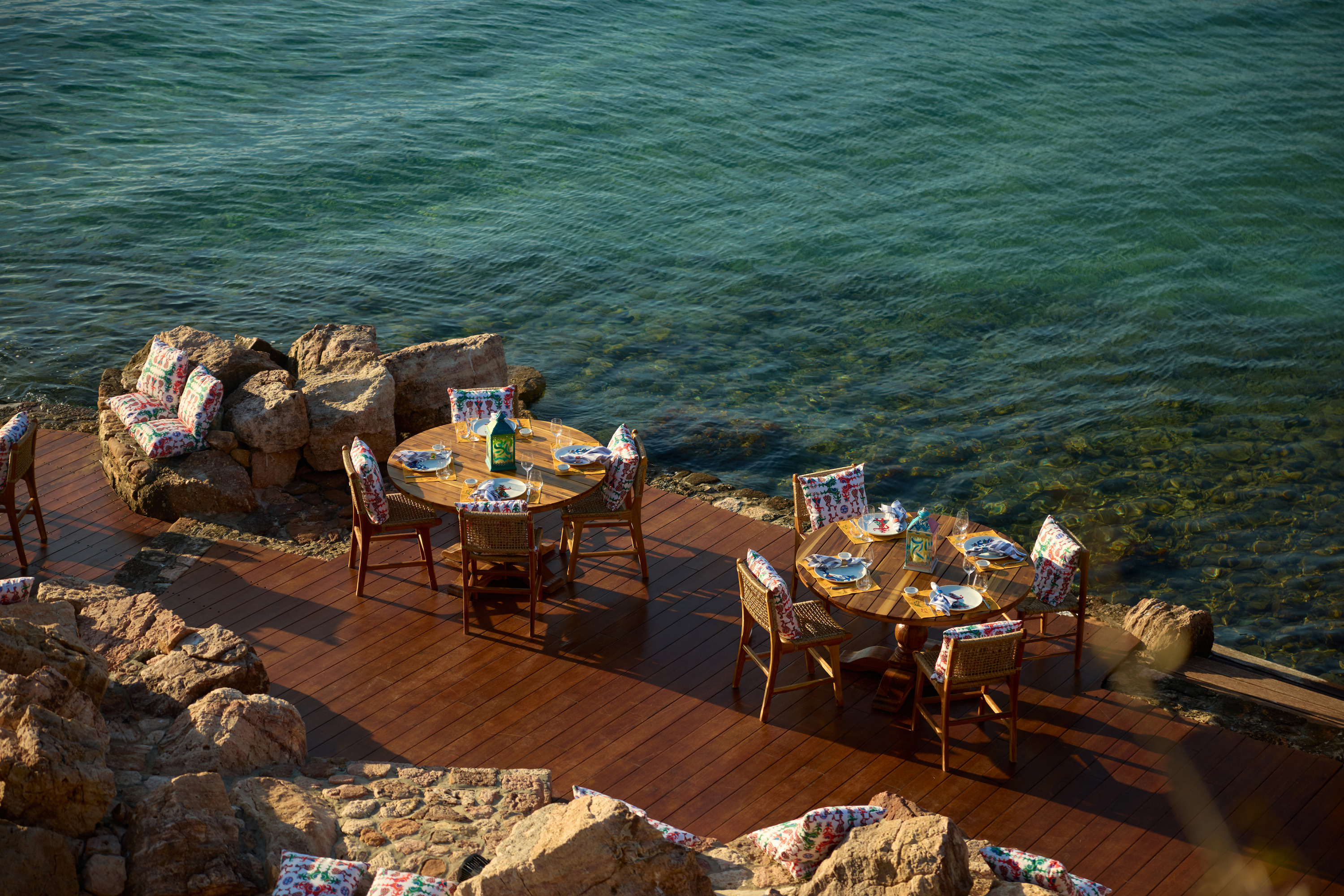
Four Seasons Astir Palace Hotel Athens reimagined its Zolotas Beach dining setting for the 2026 summer season through a collaboration with Athens-born designer Rianna, founder of RIANNA + NINA. The hotel's official release described a small, open-air restaurant bringing together bold textiles, Greek coastal traditions and flame-led cooking by Chef Thodoris Papanikolaou. The summer programme began on 18 June, with evening service generally scheduled from Thursday to Monday for only twenty to thirty guests. Since the date is now November, this story examines the documented seasonal project rather than suggesting the June-to-summer reservations remain available. Its significance lies in how a place's personal history can become the organising idea for a luxury hospitality experience.
A beach with a personal narrative
Rianna's family background is closely tied to the hotel and the Astir peninsula, according to the company's announcement. Childhood experiences of swimming, eating and spending long days by the sea formed part of her inspiration for the design. That personal connection matters because it gives the project a narrative beyond a generic Mediterranean palette. Many beach clubs use familiar motifs of stripes, wicker and pale timber; those can be attractive but need not evoke one precise place. The Zolotas approach attempts to translate memories of particular meals and summer routines into the surfaces, colours and atmosphere encountered by guests. Its success should be judged by the coherence of that translation.
Fashion design enters the beach restaurant
RIANNA + NINA is associated with expressive patterns, rich colour and an approach to textiles that combines different visual references. Bringing such a sensibility into a restaurant can create a setting that feels more intimate and less formulaic. The hotel describes custom curtains, cushions, vintage rugs and tableware, with blue-and-white stripes alongside brighter Mediterranean motifs. Yet visual energy must be balanced against the practical demands of a seaside venue. Cushions must withstand daily use, fabrics need appropriate cleaning and furniture should remain comfortable in outdoor conditions. A designer's signature aesthetic becomes valuable to hospitality when it is supported by engineering and service, not merely by a striking photograph.
A deliberately small dining audience
An evening capacity of twenty to thirty guests changes the rhythm of a restaurant. Staff may have more opportunity to understand preferences, serve courses at an unhurried pace and create a sense of shared occasion without the noise of a large dining room. Small scale also raises practical considerations: reservations may be harder to obtain, weather disruptions can affect a high proportion of available seats and cancellations have greater impact. Diners should confirm conditions with the hotel rather than assume that the intimacy advertised for summer 2026 applies to every future event. Scarcity is not automatically quality; it is the attention given to the limited number of guests that matters.
Open-flame cooking creates a sensory focus
Chef Thodoris Papanikolaou's summer menu was built around ingredients prepared on an open-flame parrilla. Fire can contribute aroma, texture and a visible sense of preparation, making it suitable for a relaxed coastal meal. Yet live-fire cooking requires control over heat, smoke and the timing of individual plates. A restaurant on the shore must also consider the comfort of guests who may be sitting nearby. A well-executed grilled dish allows the ingredient to remain recognisable rather than masking it in smoke. The hotel's menu included simple preparations intended to recall family gatherings, a choice that can feel more personal than an elaborate sequence designed to display technical complexity.
Pita, tarama and the idea of a shared beginning
The official menu described charcoal-grilled pita with sea salt, oregano and tarama as a starting point for the meal. Such a preparation illustrates how food can express a place through a small number of familiar ingredients. Fresh bread, herbs and a savoury accompaniment invite guests to share and settle into conversation. There is no need to claim that one restaurant has invented or perfected these traditional elements. Their value is in the quality of preparation and the context in which they are served. A traveller interested in Greek cuisine can use such a course as an invitation to explore smaller local establishments as well as the hotel's seasonal restaurant.
Family memories on the menu
Lamb kontosouvli and kakavia, a traditional fish soup, were among the dishes linked to Rianna's memories in the release. Those choices matter because they root the meal in habits of communal cooking and the availability of ingredients rather than only in luxury signifiers. Fish soup in particular can express a relationship with a working coastline, where the quality and character of the catch shape the final dish. The hotel's account is a personal recollection, not a historical claim that these preparations are unique to its kitchen. Diners may appreciate hearing the story while also asking how the menu has been adapted for modern service and seasonal produce.
Dessert can carry as much nostalgia as a main course
The menu included ravani, a semolina-based cake familiar in Greek cooking, reinterpreted with roasted pineapple and coconut ice cream. The combination brings a traditional reference into conversation with tropical flavours and a modern restaurant setting. Whether that works depends on sweetness, texture and the balance between warm and cold elements. A guest who knows the dish from family cooking may have different expectations from someone tasting it for the first time. The point of the adaptation is not to replace the original, but to demonstrate how a chef can honour a memory while producing something that belongs to a specific dining occasion.
The role of colour on the Athenian Riviera
Blue and white are deeply associated with imagery of the Greek islands, but they can become clichés when used without restraint. Rianna's richer textiles and hand-drawn patterns offer an opportunity to make the palette more personal. Against sea views and late-afternoon light, colours behave differently than in a showroom. A vivid cushion may provide a playful counterpoint to natural stone, while too many competing surfaces can distract from the landscape. The designer's challenge is to allow the restaurant's identity and the shoreline to coexist. The resulting setting should feel like a place to inhabit rather than a stage built solely for social-media pictures.
Craftsmanship and the objects guests can take home
The hotel's spa boutique was described as offering selected pieces created for the collaboration, including towels, placemats and tableware. Such items can extend the design story beyond the restaurant, but they should be considered on their own merits. A souvenir becomes more meaningful when its quality, origin and suitability for use are clear. Travellers can ask whether a textile is made by a particular workshop, how it should be washed and whether it can be repaired. The connection to a hotel does not in itself establish a product's collectible value. For yacht owners, durable coastal textiles may have a practical appeal, provided they meet the requirements of the vessel's environment.
A pop-up is not a permanent promise
The release specifically framed the arrangement as a 2026 summer beach dining programme. There is no basis to assume that exactly the same menu, seating, hours or decorative installation will operate in a subsequent season. A traveller planning an Athens visit next summer should check the property's current offering rather than rely on archived information. Limited-time projects can be influential without continuing indefinitely: they allow a hospitality team to experiment with design and cuisine in a defined setting. Evaluating the project as a completed seasonal collaboration is more accurate than describing it as a newly open restaurant in November.
How a yacht itinerary relates to the Riviera
The Athenian Riviera is a familiar area of interest to many private-yacht owners cruising the eastern Mediterranean. A coastal restaurant might form part of a shore day, though the precise access arrangements and available berthing would need separate confirmation. A visitor should not assume that a beach hotel can accept a tender or private yacht merely because it fronts the sea. Where access is arranged, a thoughtful schedule can allow guests to enjoy the region's scenery and cuisine without rushing. A hotel-based evening offers a contrast to dining aboard, but the attraction should be the experience itself rather than the assumption that all premium seaside venues are interchangeable.
The practical limits of intimate outdoor dining
Weather, seating and exposure are especially important in an open-air setting. An attractive sunset photograph cannot guarantee comfortable conditions on every evening. Staff should explain arrangements for wind, rain or unusual temperatures, particularly when a guest has planned a special occasion. Small groups also benefit from clarity about children's attendance, dietary requirements and the duration of service. None of these matters diminishes the creative ambition of the project. They help determine whether the design can be enjoyed as intended. A memorable coastal meal often depends on the small practical decisions that support guests' comfort and allow the food to remain the focus.
Evidence and editorial interpretation
The verified source is Four Seasons Astir Palace Hotel Athens' official 2026 announcement describing Rianna's collaboration, the seasonal service period, limited seating, design elements and menu highlights. The original photograph is first-party press media and should be credited accordingly; it does not prove independent acclaim or a future permanent operation. The broader discussion of hospitality design, food culture and yacht travel is editorial context. Readers interested in a future visit should seek current information from the hotel. The project's lasting interest lies in demonstrating how design and cuisine can make a familiar Mediterranean shoreline feel personal through memory, craft and carefully chosen scale.
Sources and image credits
Reporting based on The Art of a Greek Summer: Four Seasons Astir Palace Hotel Athens Unveils a Reimagined Zolotas Beach.
Lead photograph: Athens Zolotas Beach Reimagines Greek Riviera Style — official Four Seasons first-party press photograph. © Four Seasons Hotels and Resorts, original property press photograph Original official image source.