Seward opens a different kind of luxury cruise
Seward is the natural gateway to the marine landscape of Kenai Fjords National Park, where mountains descend into the sea and tidewater glaciers occupy remote inlets. For an owner of a well-equipped luxury motor yacht, a journey here offers something more memorable than a conventional harbour itinerary. Protected Resurrection Bay can provide a manageable beginning, while more exposed waters toward the national park demand a suitable vessel, experienced crew and genuine respect for Alaska's weather.
Guests can move between a cosy saloon and a deck alive with coastal scenery, spending the day observing the geography rather than visiting a succession of commercial attractions. The National Park Service points out that much of Kenai Fjords is accessible primarily by water. That makes a yacht a privileged platform for discovery, but it also means shore access, suitable overnight shelter and available support cannot be assumed merely because a cove is shown on a chart.
Begin with a properly planned Seward stay
A successful voyage starts before the yacht leaves Seward's harbour. Berth arrangements, fuel, provisions, weather information, safety gear and route alternatives deserve the same attention as guest menus or photography opportunities. Visiting owners should check harbour services for the vessel's actual length, draught and electrical needs and confirm how emergency support would be organised after departure. A calm day alongside is a useful time for the captain to brief the party on the region's conditions.
Resurrection Bay also provides a gentler introduction for guests who are uncertain about longer passages. The park notes that shorter local tours remain in more protected water, whereas full-day trips to tidewater glaciers venture farther into the exposed coast. A private itinerary can adapt the same principle. If the Gulf of Alaska forecast is unhelpful, quality time in protected water or ashore in Seward is often preferable to an uncomfortable attempt to reach a distant glacier.
Aialik Bay and the idea of a glacier day
Aialik Bay is among the area's best-known glacier settings, and the National Park Service documents the appearance of Aialik Glacier in historical and modern photography. The region's ice is fed by the Harding Icefield, whose glaciers have been studied through repeated images. For guests, a slow approach toward distant glacial scenery can reveal layers of rock, ice, weather and seasonal change in a way that a single postcard view cannot convey.
A glacier-viewing day should always be a safe-distance observation programme, not a challenge to manoeuvre a yacht close to a wall of ice. Tidewater glaciers can calve suddenly, sending waves and floating debris into surrounding water. The captain must understand local conditions, maintain a conservative distance and avoid putting tenders into exposed or ice-cluttered positions. The most dramatic moments are often better appreciated from the secure deck of the yacht with long lenses and binoculars.
Rock-bound coastline and sea stacks
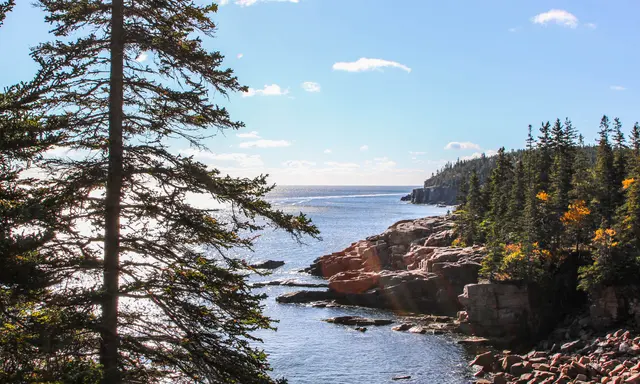
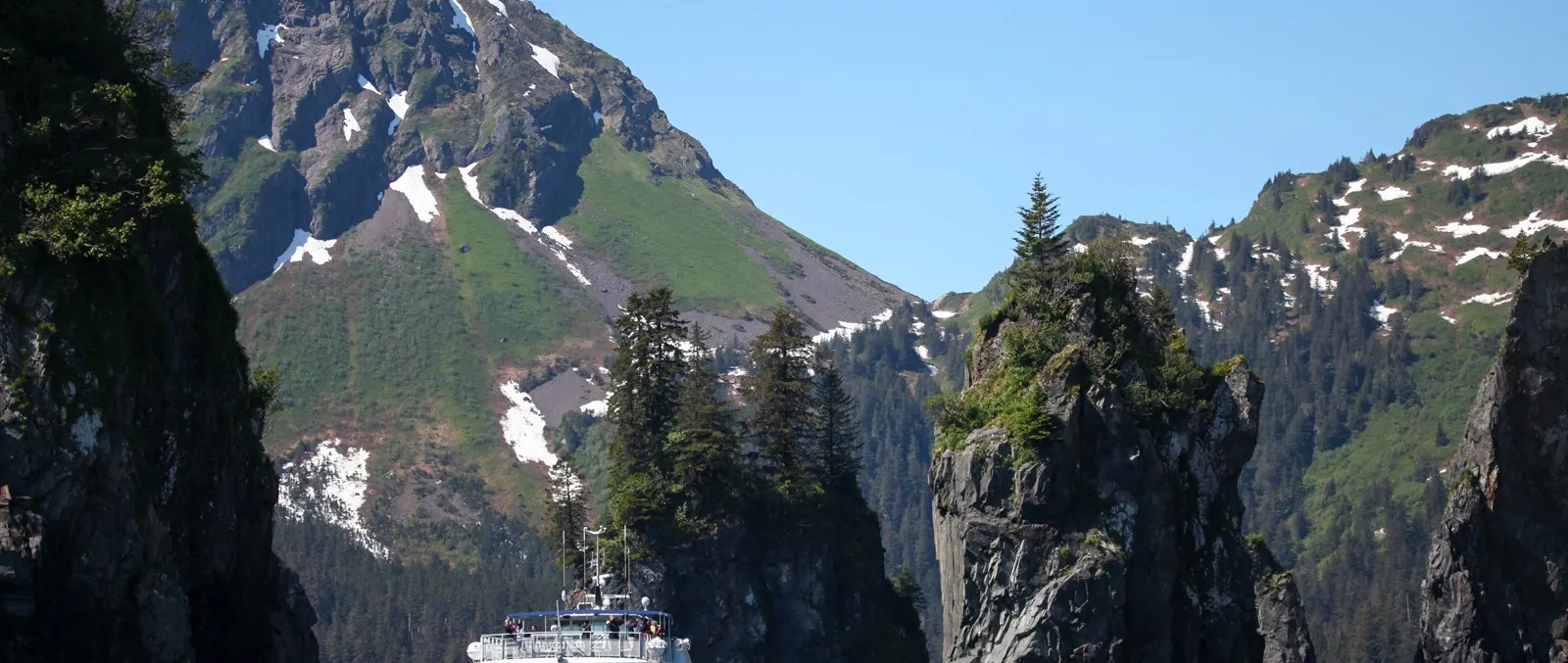
Kenai's seaward margins are shaped by immense geological forces. Forested headlands, steep rock faces, narrow coves and sea stacks create a succession of visual scenes as the vessel proceeds along the coast. The National Park Service uses photographs of large vessels approaching stacks to illustrate the distinct character of the place. These formations are compelling to photograph from open water, where the changing angle of view reveals their relationship to waves, birds and shore.
The proper photographic route keeps plenty of sea room and accounts for hazards that are not obvious in a beautiful image. Rocks may extend underwater, and swell can rebound from sheer walls. A skilled captain should never steer closer merely to improve the framing of a photograph. With thoughtful timing and a suitable lens, a distant position often produces a more convincing picture while protecting passengers, hull and wildlife.
Whales and seabirds without the chase
The region's productive marine waters support birds and marine mammals, which the park highlights as a major reason to explore the fjords. Guests may be fortunate enough to observe whales feeding or birds gathering over food, but sightings are never scheduled events. A good naturalist can explain what an animal is doing and why different habitats attract it, turning even a distant encounter into a compelling lesson in the marine ecosystem.
Responsible operators should follow the current federal and Alaska rules for observing marine wildlife, avoid sudden close approaches and never attempt to cut across an animal's course. Tender operations and drone use, if contemplated, require their own legal and environmental assessment. On a private yacht the best viewing can be quiet and unhurried: guests seated securely, engines managed gently when conditions allow and no expectation that wildlife must perform for the itinerary.
Glacier change gives the journey perspective
Kenai Fjords offers an unusual opportunity to combine scenic pleasure with direct evidence of environmental change. The National Park Service's repeat-photography programme compares historical views with later images taken from similar locations. It demonstrates how portions of the ice landscape have altered over decades. This material can form an engaging illustrated conversation aboard, especially when guests have just viewed the same coast from the water.
A yacht's bridge team should not promise to reproduce an exact historic camera position, because wind, current and navigational constraints can make that inappropriate. Instead, use the official images as a starting point to discuss ice, sea level, geology and the value of long-term monitoring. Avoid reducing the experience to isolated statistics without context. Observing the relationship between mountain valleys and present-day ice offers a more lasting understanding than a simple before-and-after caption.
Prepare for cold water in every season
Even on a sunny summer day the air on an exposed deck can be surprisingly cold. The park advises warm layers, waterproof outer garments and appropriate hats and gloves for boat trips. A well-appointed yacht makes it possible for guests to retreat indoors, warm up and return to the deck when a particularly interesting view appears. That balance can make a long day on the water comfortable without pretending the climate is mild.
Tender safety needs particular attention. Cold water sharply limits the margin for recovery after an unexpected immersion, and waves or wind can make guest transfers risky. The master should determine whether a launch is necessary at all, insist on appropriate flotation and communications equipment and cancel an excursion when the conditions are unsuitable. The safest glacier visit may be the one made entirely from the yacht's deck.
Choosing where to pause
Kenai Fjords should not be approached as if every indentation in the coastline were a marina. A charted cove may still be exposed to swell, falling wind, tidal current or unpredictable local conditions. Anchoring plans need to consider depth, holding ground and swinging room, along with a reliable exit route. The crew should treat an overnight stop as a navigational decision based on current weather, not simply as a guest preference for a particularly scenic view.
Spending a night near protected wilderness also calls for restraint. Keep unnecessary deck lighting low where safety permits, retain refuse aboard, avoid contaminating water and respect the peace of the shore. Guests may find a quiet evening in the saloon, with the outline of mountains still visible, more memorable than a heavily programmed social event. The value of the yacht is its ability to provide comfortable shelter while leaving the surrounding landscape largely untouched.
Local expertise makes the experience richer
A knowledgeable local captain, pilot or marine naturalist can add far more value than a printed list of points of interest. The National Park Service makes clear that it does not itself operate a tourist-boat concession in these waters, so visitors must independently evaluate private providers. An owner considering a guided experience should confirm qualifications, insurance, operating permissions and the exact services promised before making arrangements.
Onboard interpretation can range from maritime history and wildlife identification to conversations about glaciers and local communities. The best experts respond to the animals and weather that are actually present rather than repeating a predetermined speech. Such flexibility makes the cruise feel more personal. It also helps guests understand why a particular inlet may be unsuitable today even if the original voyage plan described it as a highlight.
Seasonality and the luxury of discretion
Kenai Fjords trips are commonly concentrated in the summer, when daylight is generous and local services are more readily available, but conditions can remain demanding. The park advises visitors to check forecasts and prepare for cold, windy deck conditions. An owner arranging a multi-day cruise should leave enough time for unexpected delays and should avoid tying the entire holiday to a fixed glacier visit that may be unsafe on the planned day.
Luxury at this latitude means having options: a shorter excursion in Resurrection Bay, a museum or guided activity ashore, a longer sheltered harbour stay, or a different cruising day once conditions improve. These are not second-best choices when they are made thoughtfully. They are evidence that the guest experience has been designed around safety, local reality and lasting enjoyment.
A journey worth remembering
Kenai Fjords rewards patience because its drama is real and largely beyond human control. A successful yacht visit might include distant whales, sea stacks in changing light and the unforgettable sight of glacier ice against high mountains, yet none should be treated as a guaranteed item on a timetable. The captain's skill lies in choosing good conditions and respecting the place's natural limits.
For owners of mid-sized luxury yachts, the voyage can show why expedition cruising is less about conspicuous comforts than about what those comforts make possible. A warm cabin, a prepared crew, thoughtful hospitality and the ability to observe wilderness without intruding upon it create a genuinely exceptional experience. The most valuable souvenir is an understanding of the coast and the assurance that the yacht travelled through it responsibly.