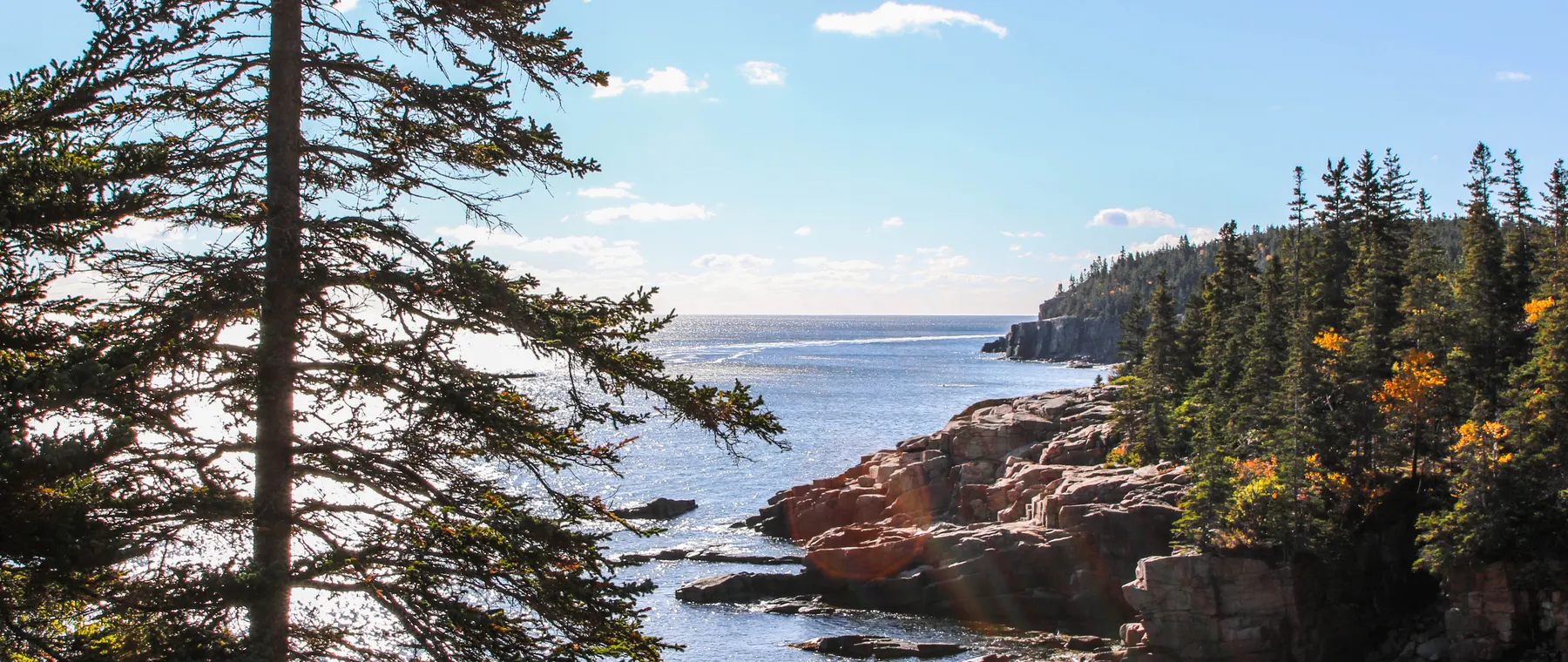
Maine from the water: a different view of Acadia
Acadia National Park occupies parts of Mount Desert Island and nearby stretches of the Maine coast, and its dramatic granite shore looks especially compelling from the deck of a well-handled yacht. The coves of Frenchman Bay, the forested slopes and the working waterfront of Bar Harbor give visitors the kind of natural and cultural contrast that makes a short coastal cruise feel substantially richer than a resort stay. It is a destination for guests who appreciate the opportunity to move between an elegant cabin, a seafood lunch ashore and a windswept national-park headland.
Unlike a private island resort, Acadia does not package its coastline into an organised superyacht arrival experience. Harbor space is governed by municipal and commercial operators, while park roads, trails and visitor facilities have their own rules and seasons. An owner who treats these systems separately can enjoy a remarkably fluid visit; one who assumes every attractive inlet comes with a berth or unrestricted tender landing may be disappointed.
Late October brings the possibility of beautiful autumn colours but also fewer operating services, colder water and shorter days. The National Park Service posts specific 2026 opening and closing dates for facilities, including several campgrounds that have already closed by October 25. The smartest booking may therefore be an early-season trip next year, with a late-autumn call considered only after confirming the actual facilities needed.
Bar Harbor, Northeast Harbor and the question of where to berth
Bar Harbor is the obvious base for guests who want to walk directly into a lively coastal town. The town's Harbor Division oversees mooring assignments and local harbour rules, and its municipal waterfront includes the Town Pier as well as neighbouring privately operated facilities. For a visiting luxury yacht, advance contact with the harbormaster is essential to establish which moorings, dock arrangements or tender services are presently available for its precise dimensions.
The official harbor office offers a reservation route for slips, docks and moorings, but this should never be read as proof that a particular long or deep-draught yacht will fit. Ask about length overall, beam, draft, seasonal occupancy, holding conditions, water and electrical supply, waste disposal and how tenders may land. A large boat may be better served by an agreed mooring or a different harbour, and the best answer depends on the actual boat and weather.
Northeast Harbor and Southwest Harbor on Mount Desert Island provide alternatives worth investigating, especially for an itinerary that prioritises a quieter berth or easy access to another side of Acadia. These are working harbours with local marine activity, not automatically available yacht-club marinas. Booking and navigation should be arranged with their operators individually, and the tender route should be checked as carefully as the overnight position of the mother ship.
Frenchman Bay deserves professional respect
The sheltered appearance of a Maine harbour can be misleading when fog, swell or strong tidal streams arrive. The National Park Service notes that the range between high and low tide on the coast can approach twelve feet, a reminder that rocks, ledges, gangways and tender landing steps will change character through a day. Even an experienced captain should consult current NOAA marine forecasts, appropriate charts and actual tide predictions rather than treating a tourist map as a navigation aid.
Fishing craft, excursion boats, ferries, sea kayaks and visiting yachts all share Frenchman Bay. Slowing down well before busy harbour entrances helps crews spot fixed gear, commercial traffic and smaller water users who can disappear against the surface in poor light. Offshore islands create tempting photographic viewpoints, but the route between them should be defined by charts, soundings and local regulations rather than aesthetic appeal.
A tender excursion needs its own safety brief, suitable lifejackets and a clear landing agreement. Cold-water immersion is a serious risk in Maine, especially outside summer, and the park cautions that Atlantic kayaking in this region is for experienced participants because of fog, rough water and cold temperatures. For guests, guided kayaking with a reputable local operator may be a better way to appreciate the shoreline than improvising an independent paddle from the yacht.
Ashore: cliffs, forest, carriage roads and seasonal access
Acadia rewards guests who exchange deck shoes for walking shoes. The Park Loop Road threads through a sequence of coastal and wooded landscapes, while the carriage-road system offers a different, more contemplative way to experience Mount Desert Island. Drivers, cyclists and walkers have different access requirements, so the day's plan should distinguish a private vehicle transfer from a guided excursion or a walk beginning at the nearest suitable access point.
Cadillac Mountain is a popular goal, but the National Park Service operates a timed vehicle-reservation system for Cadillac Summit Road during the main season. The published 2026 reservation window and facilities schedule should be checked against the exact proposed visit. Guests should not be promised a summit drive simply because the yacht has secured a mooring or because they can see the mountain from the harbour.
One appealing programme combines a gentle morning walk with a more ambitious afternoon view, leaving space for the weather to determine the order. On a fair day, the granite coastline is beautiful in low-angle light; in a sea mist, forest paths and a long lunch ashore may be the better choice. Acadia is a place where an adaptable timetable often delivers a more luxurious experience than a rigid list of stops.
The outer islands and the value of choosing less
Acadia extends beyond the main island, including the Schoodic Peninsula, Isle au Haut and smaller coastal islands. According to the park, Baker Island and the Cranberry Isles can be approached through authorised passenger services or private boats where appropriate, with historic coastal landscapes providing a strong counterpoint to Mount Desert Island's busier attractions. All landings must respect private property, conservation restrictions and local waterway conditions.
Schoodic Peninsula offers a particularly satisfying change of perspective, with forest, granite shoreline and a more understated atmosphere. A professionally planned luxury-yacht itinerary might use one harbour as the secure base while guests take a carefully arranged excursion to the peninsula. The key is not to assume that a visually close point on the chart offers a safe or lawful berth for the mother ship.
Isle au Haut and the outer islands ask for even more preparation. The park identifies ferry access to some islands, but remote landings, exposed approaches and limited services make them poor improvisations in deteriorating weather. The value of an island visit lies in its quiet and sense of place, not in ticking off the maximum number of shorelines during an already ambitious cruise.
An elegant itinerary built on good seamanship
A two-night visit gives crew members time to establish the berth, test tender arrangements and fit shore activities around a genuine weather window. On the first afternoon, guests could explore Bar Harbor and settle into the maritime rhythm of the town. The following day might be devoted to Acadia's viewpoints and trails, with dining and transport reserved in advance rather than left to chance in the shoulder season.
For a longer stay, a change of harbour can be rewarding, but moving a yacht only makes sense when the next berth and navigation conditions are confirmed. Owners should also consider provisions, fuel availability, shore power where required, and the practical cost of extending the visit if the weather turns. A captain who briefs guests honestly about alternatives protects both their safety and the quality of the holiday.
Acadia's real luxury is not extravagant infrastructure; it is the ability to watch coastal weather move across granite cliffs and then return to a comfortable yacht with the whole day still open. Official National Park Service guidance, the Bar Harbor municipal harbor office and up-to-date NOAA marine forecasts should form the basis of every visit. The best itinerary remains flexible enough to let the coast take centre stage.