Freycinet by yacht: Tasmania's granite coast
Freycinet National Park is a remarkable setting for a private-yacht passage along Tasmania's east coast. Pink-grey granite forms the Hazards range, clear water curves into beaches that seem almost impossibly white, and the coastline alternates between sheltered bays and exposed headlands. The freedom of a yacht lies in reaching this landscape at an appropriate pace, then choosing which elements to experience ashore without turning a protected national park into a private resort.
The destination requires capable seamanship as well as an appetite for beautiful scenery. Weather can transform a pleasant anchorage into an uncomfortable or unsafe overnight stop, and the ideal bay for a tender landing is not always the one visible from an iconic photograph. An itinerary around Freycinet is strongest when its anchorages are selected from current marine information and reassessed as wind, swell and guest plans evolve.
Coles Bay, the yacht's practical gateway
Coles Bay offers a base for exploring the Freycinet Peninsula and adjoining Schouten Passage. Marine and Safety Tasmania's official east-coast cruising guide identifies a public jetty for passenger pick-up and drop-off west of the boat ramp, alongside other small-craft access facilities. That is useful for tenders, but a large yacht must still confirm local restrictions, suitable anchoring or moorage and whether the landing can be used at the intended time.
The same authority lists two public cruising moorings in Coles Bay, identified as PM1 and PM4. A listed public mooring should not be taken as a guarantee that it can accept an arbitrary yacht displacement, length or wind load; confirm the authority's rules and mooring specifications before attaching any vessel. If the yacht is too large for those facilities, the captain should devise a charted anchorage and tender arrangement based on actual conditions and permissions.
For a luxury voyage, Coles Bay's value is logistical as much as visual. Crew can arrange supplies, local guiding and passenger transfers before the vessel moves into quieter waters, reducing repeated disruption at popular visitor sites. A short, efficient shore stop may leave more time for the quality of experience guests have actually come for: a peaceful horizon, a thoughtful walk and a relaxed meal back aboard.
Wineglass Bay, the Hazards and getting ashore
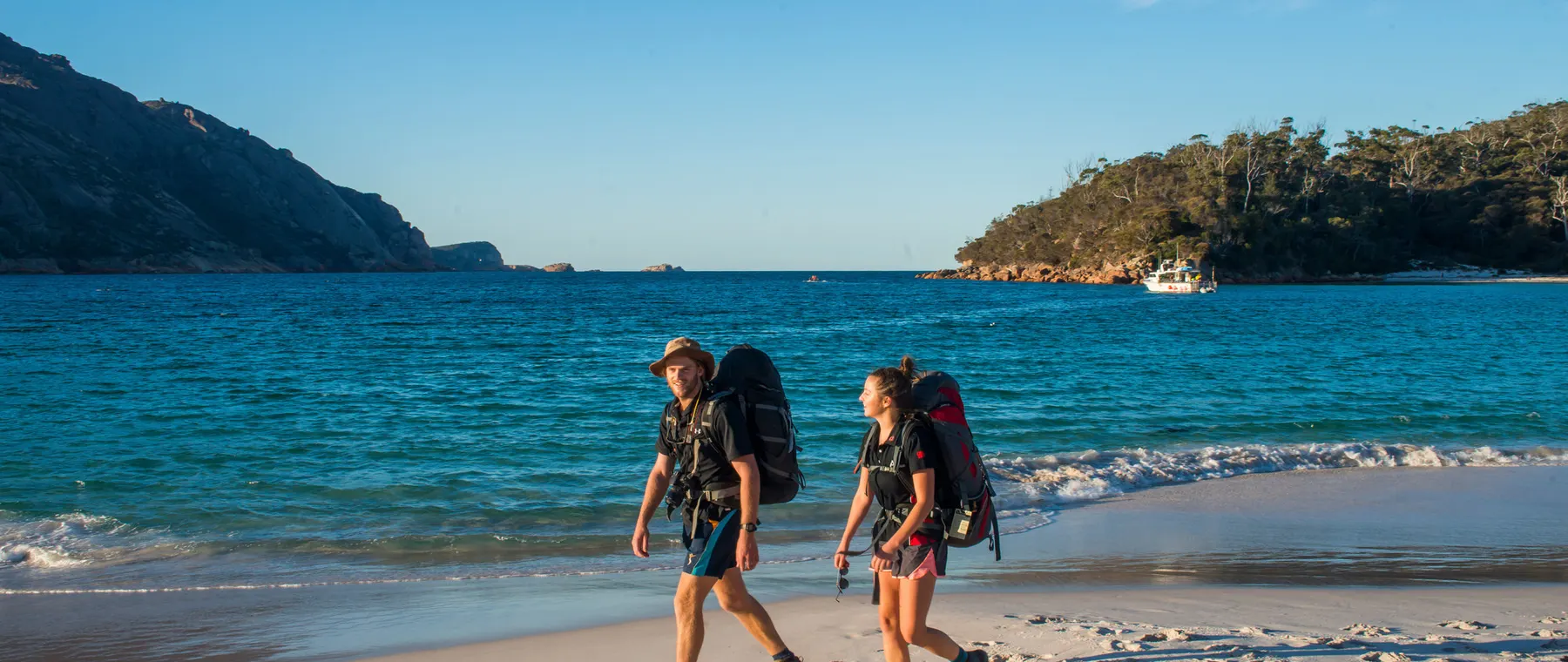
Wineglass Bay is the image many visitors associate with Freycinet, but its appeal is more than an aerial crescent. Tasmania Parks and Wildlife Service describes a demanding walk from the main lookout route down to the beach, with steep sections and roughly a thousand stairs. Its published Wineglass Bay walk is approximately six kilometres return and generally takes two and a half to three and a half hours, so guests should not mistake a famous beach for an effortless stroll.
Arriving by yacht presents a different approach, but no permission to bypass national-park rules or land anywhere that looks inviting. Captains must judge swell, surf, tender safety, seabed, wildlife and any restrictions on shore access. Some guests may prefer to admire the beach from a comfortable viewing position on board or join a properly planned shore outing rather than attempt a wet landing for the sake of a photograph.
The Parks and Wildlife Service also notes that Wineglass Bay has limited facilities and that visitors should carry away all rubbish. A park pass is required for national-park entry, and drinking-water availability is limited. For a yacht party, these are easy matters to organise in advance: water bottles, dry bags, appropriate footwear, a guide familiar with the route and a clear plan for everyone to return to the tender safely.
Schouten Island and a choice of anchorages
Marine and Safety Tasmania's cruising notes add depth to a Freycinet itinerary by describing a sequence of anchorages around Schouten Island and the passage to its north. Moreys Beach is presented as offering protection in certain easterly, southerly and westerly weather, while Gravelly is described as sheltering a different range of winds. The authority specifically cautions about holding at Gravelly because granite can lie beneath sand, so a skipper should never infer that a picturesque bay guarantees a secure anchor.
Hen and Chicken Bay, south of Schouten, is another place the official guide highlights, but it notes limited room. Bryans Corner on the Freycinet side of the passage is described as popular when a north-easterly sea breeze develops. These descriptions are starting points for informed passage planning, not coordinates, depth guarantees or real-time weather assessments; suitable choices depend on the individual yacht and current navigation conditions.
The cruising authority also places Wineglass Bay within reach of Schouten Passage and notes Cooks Corner as another anchorage option near the peninsula. A professionally operated yacht may be able to move between contrasting settings in a day, yet there is little virtue in maximising the number of anchorages visited. A calm overnight stay and a single well-run shore excursion can be a more luxurious outcome than repeatedly relocating to satisfy a rigid schedule.
Conservation, Aboriginal heritage and the October fire restrictions
The Parks and Wildlife Service asks visitors to recognise the Freycinet Peninsula's ongoing significance to Tasmania's Aboriginal community. Official park information places the peninsula and Schouten Island within a broader Aboriginal cultural landscape, and visitors should treat that history as living and enduring. A locally informed guide, respect for significant places and restraint around photography can turn a scenic stop into an experience of genuine context.
Fire safety is especially pertinent for trips beginning at the end of October 2026. Tasmania Parks and Wildlife Service announced seasonal campfire bans beginning at 2am on Monday, October 26, on reserved lands in numerous municipalities including Glamorgan-Spring Bay, which covers Freycinet. Its October 23 statement says the ban includes campfires, pot fires and other solid-fuel stoves, while gas stoves and gas barbecues may be permitted under the stated seasonal restrictions. Individual sites can impose stricter fuel-stove-only conditions, so check the exact rules before any shore cooking.
Freycinet's official visitor guidance already restricts fires and prohibits drones in Tasmanian national parks and reserves. Those limitations apply to guests arriving by private tender just as they do to visitors arriving by car. A responsible shore programme needs no beach fire, drone flight or improvised barbecue to feel special; the landscape, natural light and careful hospitality already provide an exceptional setting.
Wildlife and vegetation protection should shape every landing. Keep food secure, pack out waste, avoid damaging plants and use recognised tracks where appropriate. A yacht's resources make it particularly easy to minimise pressure on fragile shore locations: dine aboard, keep groups small, carry water and remove every item brought ashore.
An unhurried three-day Freycinet programme
Day one can be planned around arrival in the Coles Bay area, with current forecasts, passenger landing arrangements and any permitted mooring checked before the yacht settles. Guests might enjoy a guided introduction to the peninsula and its Aboriginal and natural heritage, followed by a leisurely dinner aboard. The emphasis should be on becoming familiar with the environment rather than beginning with an ambitious itinerary before the weather is understood.
For day two, select one principal experience: a guided Wineglass Bay walk for fit and well-equipped guests, or a calm-water tender and shore programme with suitable access elsewhere. The captain's weather assessment remains decisive, and the ability to turn back should be treated as an operational strength. Guests who remain aboard can still enjoy the changing granite coastline and the comfort of a well-positioned yacht.
Day three might explore Schouten Passage and one anchorage appropriate for the day's wind, drawing on Marine and Safety Tasmania's descriptions and up-to-date chart work. An attentive crew can provide wildlife observation, a quietly served meal and time to appreciate the contrast between forest, rock and sea. Any campfire rules, land access restrictions and waterway notices should be rechecked if the itinerary changes.
The lasting luxury of Freycinet is the privilege of time in a protected place, not exclusive ownership of it. Good seamanship, careful visitor behaviour and sensitivity to a living landscape allow the yacht to act as a comfortable platform for discovery. When those priorities lead the journey, Wineglass Bay and the lesser-known coves of the peninsula become more than beautiful photographs; they become a credible, richly rewarding experience.