A country estate within reach of the city
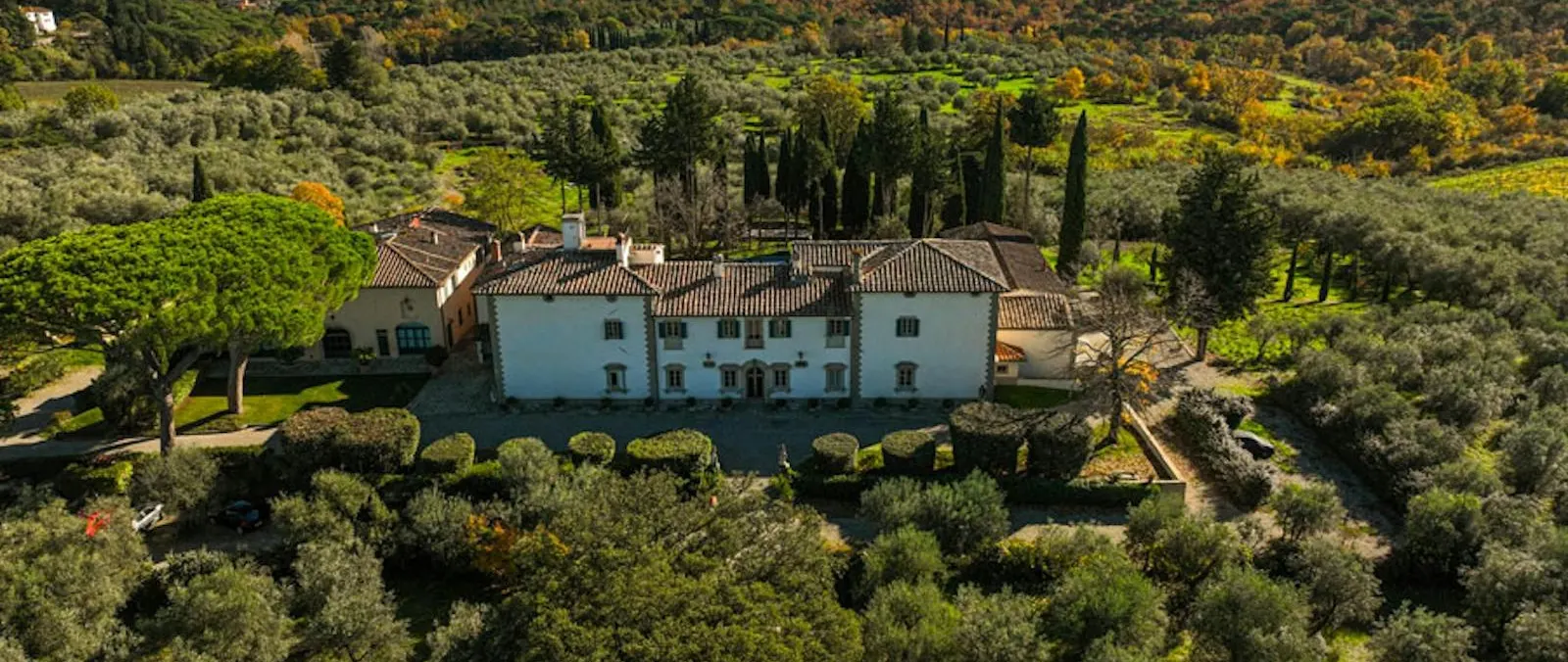
John Taylor's Tuscany property presentation describes an estate in the hills of San Casciano, overlooking countryside near Florence and the Chianti region. The first-party article identifies eighteen hectares of vines, olive trees and landscaped grounds, with approximately 2,600 square metres of accommodation distributed among four buildings and thirteen bedrooms. The presentation is a property offering, not an account of a recent sale or a verified public exhibition. It therefore provides a factual basis for discussing the estate's arrangement and architectural character without inventing a transaction price, buyer or completion date. For international travellers who enjoy spending time in Italy, such a residence offers a different pace from a city hotel or a coastal villa. The location is inland, and the relationship to yachting is one of a possible shore residence or destination within a wider itinerary, not direct berthing access. A meaningful evaluation must consider the practical responsibilities associated with a substantial property as well as the appeal of its setting.
A cypress avenue sets a sense of arrival
The official description begins with a cypress-lined avenue leading to a palazzo, with a view toward the dome of Florence Cathedral in the distance. A view of an identifiable landmark can provide emotional appeal, but it is also highly dependent on orientation, season and the exact point from which the photograph was made. A visitor should establish how the setting feels at different hours, how the approach road is maintained and what privacy the landscape offers. A dramatic arrival sequence may be suitable for entertaining, but everyday use depends on reliable access and services. The estate's position near San Casciano places it in a region where agriculture and tourism share the countryside. A responsible ownership plan should recognise both the surrounding working landscape and the needs of local residents. Photographs can convey the atmosphere of the avenue; a site visit is needed to understand distances, neighbouring properties and the practical experience of moving through the land.
Four buildings tell different parts of the story
The main palazzo is accompanied by a Colonica, Foresteria and former Tinaia, according to John Taylor. The Tinaia once held wine vats and is now presented as an art gallery. These names suggest structures with different historical functions, although their present condition, legal classification and permitted uses require detailed examination. Reusing a former agricultural building as a gallery can create an engaging relationship between a property's working past and its cultural present. It also raises questions about lighting, climate control, accessibility and the protection of artworks. A historic building is not automatically suitable for storing fragile paintings or sculpture simply because it has attractive walls. The other buildings may support guests, family members or staff, but the listing does not establish their individual room counts or the terms under which they may be rented. A prospective buyer should request plans and documentation before making assumptions about how the different spaces can be occupied.
Thirteen bedrooms and a variety of settings
The estate's thirteen bedrooms are spread across the four-building complex, providing flexibility that may suit extended family visits or private gatherings. However, the total does not specify how many suites are accessible without stairs, whether rooms share bathrooms or what degree of independence exists between buildings. The official account emphasises a balance between more intimate spaces and rooms suitable for entertaining. That arrangement can be valuable when a household wants visitors to spend time together without sacrificing every opportunity for privacy. Yet a large residential property may require extensive staff support, seasonal maintenance and careful management of utilities. An owner who lives overseas for much of the year should consider how the buildings will be monitored when unoccupied. The size of the estate is a measure of potential, not a guarantee that it will be easy or economical to operate. A thoughtful assessment combines lifestyle preferences with the obligations of stewardship.
Restored materials and the quality of light
John Taylor describes stone, terracotta and wood that have been restored to bring more light into the interiors. These materials can give a Tuscan property a sense of continuity with regional building traditions, but they must also be examined as part of the property's physical structure. Stone walls may have different thermal characteristics from modern construction, while old timber and roof details can need specialist care. The article's description does not provide a structural survey, energy rating or evidence of every historical intervention. Visitors should therefore avoid assuming that a beautiful restoration photograph establishes the absence of future maintenance. A successful renovation can respect original character while allowing comfortable contemporary living, but the balance depends on materials, workmanship and ongoing care. For an owner interested in design, the relationship between daylight and traditional surfaces may be as important as the overall area. It deserves close attention in person rather than a judgement formed entirely from a gallery image.
An art gallery within a former wine building
The conversion of the former Tinaia into a gallery is among the property's more distinctive features. A building once associated with winemaking has been repurposed for the display of contemporary art, offering a connection between local agricultural history and modern cultural interests. That concept may appeal to collectors who want works to be part of daily life rather than stored elsewhere. But a gallery imposes responsibilities: light levels, temperature, humidity and security need to suit the objects displayed. Some historic buildings can be adapted effectively, while others have limitations that require specialist intervention. The listing does not state that the gallery meets museum standards, and that should not be implied. An art collector may wish to examine electrical supply, wall loadings and whether display areas can accommodate large pieces safely. The potential is real, but it is a potential that needs careful technical consideration and a realistic operating budget.
Vineyards and olive groves are working landscapes
Eighteen hectares is a substantial area to care for, particularly where vines and olive trees are part of the estate. Cultivated land can be beautiful, but it is also a productive environment shaped by weather, soil, water, plant health and specialist labour. The official property article does not provide agricultural yields, wine labels, commercial contracts or detailed cultivation records. An owner should not assume the estate generates a particular level of income or produces wine of a given appellation without evidence. Even if the land is maintained primarily for private enjoyment, it will require professional attention. Irrigation arrangements, access roads and equipment storage may be as important as the appearance of trees in photographs. In a region known for wine and olive oil, the opportunity to live within a working landscape can be rewarding, but it carries real obligations. The distinction between lifestyle and agricultural business should be made clearly before a purchase.
Terraces, a pool and outdoor living
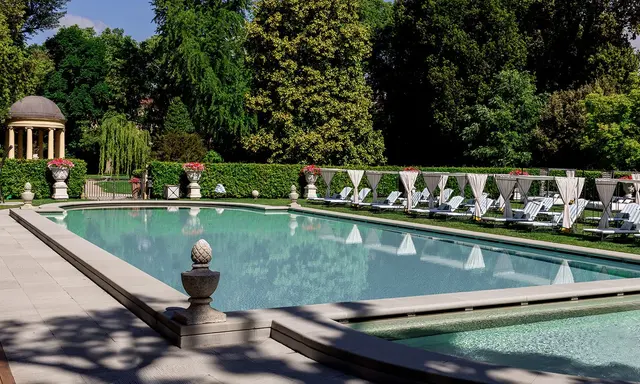
The description identifies stone terraces and a swimming pool that connect the buildings to the surrounding gardens. Outdoor spaces can become central to the way a Tuscan estate is used, particularly during family gatherings and long summer evenings. The design challenge is to provide comfortable areas for both sun and shade, while considering safety and accessibility for different ages. A pool requires regular water treatment and equipment maintenance, even when the home is unoccupied. Historic terraces may need drainage and structural inspection, especially where stone surfaces have been altered over time. The official publication does not establish pool dimensions, heating capacity or current operating costs. Those details can materially affect an owner's enjoyment and should be checked. A landscape that looks effortless in a promotional photograph is usually the result of sustained professional work. Outdoor beauty and practical maintenance must be considered together.
Florence, San Casciano and regional travel
The property is described as being near Florence, with a contact address for John Taylor Tuscany in the city. The precise travel time between the estate and a particular destination cannot be established from broad wording alone. Road conditions, season, traffic and the chosen route will affect travel, particularly during busy cultural periods. A traveller might divide time between Florence's museums and the quieter countryside, or arrange visits to other towns and vineyards. Such an itinerary can be appealing for guests who value both cultural activity and private space. But the estate's inland position should not be confused with direct sea access. Travellers continuing to a yacht on the Tuscan coast need a separate journey and transport plan. For international residents, proximity to an airport or railway station can also influence practical use. The estate's location is part of its identity, yet the details of access warrant verification rather than assumption.
Viewing a residence as a long-term responsibility
A large historic property is both a lifestyle choice and a substantial commitment. A buyer should commission appropriate legal, technical and financial checks, including title, planning permissions, land boundaries, restoration documentation, energy systems and recurring maintenance requirements. The John Taylor article does not disclose every piece of that information, nor does it constitute a survey. It presents the estate's main features and aesthetic appeal. Buyers who intend to welcome large groups may also need to understand fire safety, insurance and whether any commercial use is permitted. For artworks and historic interiors, specialist conservation advice may be appropriate. An attractive description of a wine cellar or gallery does not substitute for those steps. A property of this scale may offer extraordinary privacy and flexibility, but only if the owner has a realistic view of the work involved in maintaining it. Long-term stewardship helps preserve the very qualities that make a historic estate desirable.
What the official presentation establishes
The first-party John Taylor and Artcurial listing describes a San Casciano estate near Florence with eighteen hectares of land, four principal buildings, around 2,600 square metres of living space and thirteen bedrooms. It identifies a former wine building now used as an art gallery, restored traditional materials, terraces, a swimming pool and views toward the city. Those are attributable features of a property offering, not independently surveyed measurements or proof of a completed transaction. Luxury Yacht Guide includes the estate as an example of the intersection of architecture, landscape, art and international residential travel. The accompanying first-party photograph is sourced from the official publisher, with the photographer and original image rights acknowledged. Any acquisition would require professional verification of condition, title and permitted use. The appeal of this estate lies in the relationship between its buildings and land, a combination that can be appreciated without overstating what the public listing confirms.
Sources and image credits
Reporting based on Artcurial first-party official 2026 announcement or auction catalogue for John Taylor Presents an 18-Hectare Tuscan Estate near Florence.
Lead photograph: John Taylor Presents an 18-Hectare Tuscan Estate near Florence — official Artcurial media illustration, Luxury Yacht Guide 25 November 2026. © Artcurial and original photographer, artist, designer or publisher; first-party image from the credited official Artcurial announcement or catalogue. Any artwork copyrights remain with rights holders. Original official image source.