A December collecting event returns to Marrakech
Artcurial is preparing another edition of A Moroccan Winter, its auction programme scheduled for 30 December 2026 at La Mamounia in Marrakech. This year's event has a particular historical focus: the house says it will mark the fifteenth edition of its Majorelle & his Contemporaries sale. The announcement introduces artworks by Jacques Majorelle and other painters associated with Morocco, alongside modern Moroccan artists and a broader selection of African contemporary work. The event is still forthcoming as of 25 November, so no completed auction total or winning bid can responsibly be reported. Instead, the official catalogue preview provides a detailed view of what collectors will be able to examine. A sale organised in Marrakech, rather than simply offering Moroccan art in another country, has a geographical meaning of its own. Yet that does not automatically make every work representative of the city's culture: the programme spans different periods, artistic intentions and relationships with North Africa.
Majorelle's place within the selection
Jacques Majorelle occupies a prominent position in the first part of the planned auction. Artcurial says roughly twenty works by the painter will be offered from various private collections and highlights his importance within its earlier sales. A strong auction-house history with an artist can be useful in understanding its specialist experience, but it does not establish the market value of an individual picture before a sale. Different periods, materials, provenance and conditions have a substantial effect on the price a particular work may command. Majorelle's artistic relationship with Morocco has made him a familiar name to many travellers, although familiarity with the famous garden that carries his name is not a substitute for understanding his paintings. The auction creates an opportunity to examine his work as a painter in the context of contemporaries and successors. Its cultural interest lies in that wider encounter, not simply in a recognisable signature.
A distinctive picture from the early 1930s
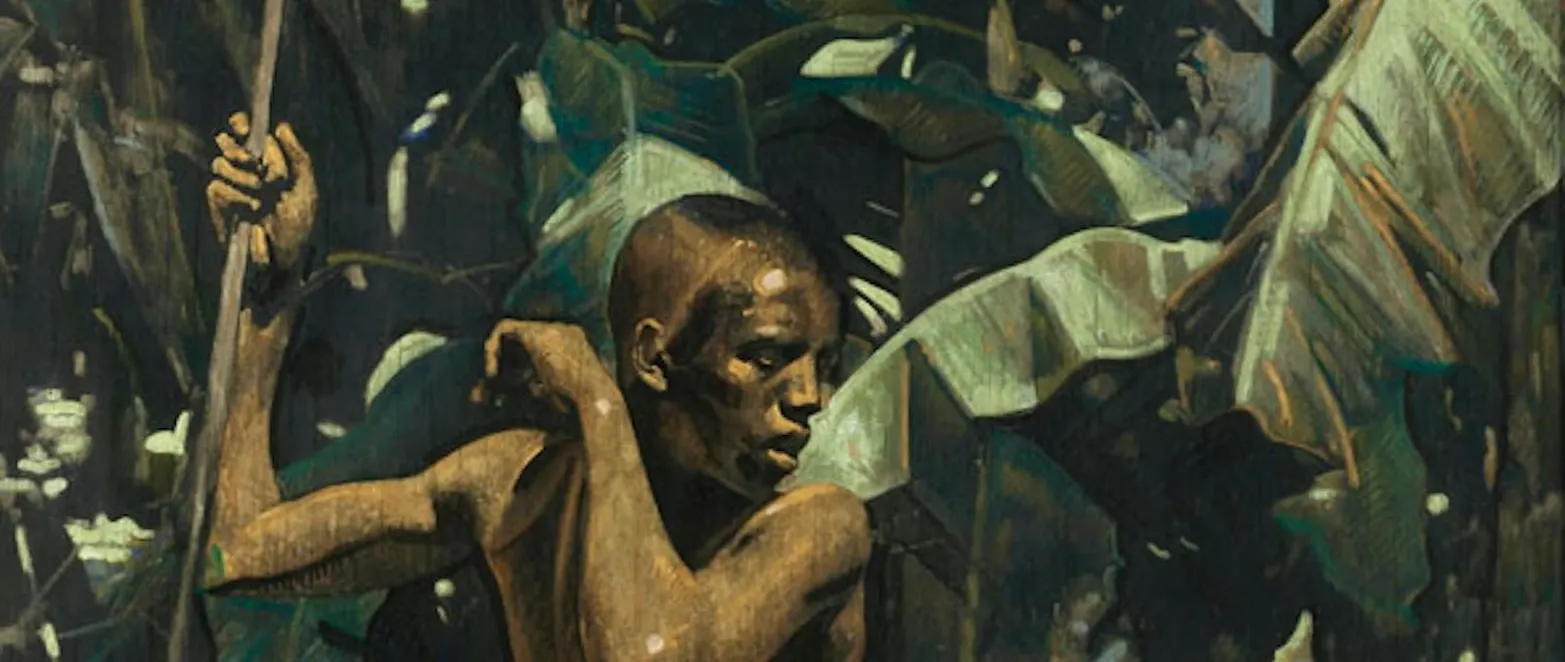
One highlighted work is Majorelle's À l'affût, dated to approximately 1930. The official description identifies mixed media with metallic powder on panel, measuring 100 by 72 centimetres, with a presale estimate of €80,000 to €120,000. Artcurial says the picture has remained in the same family for more than ninety years. Those are the auction house's stated catalogue details, and prospective buyers should examine the actual documentation and condition report. A painting made with more than one medium can pose specialised conservation questions. Metal-powder effects, paint layers and the support itself may age differently or respond differently to environmental changes. The work's association with a particular moment in Majorelle's career may make it attractive to a specialist, but neither age nor provenance guarantees a future return. The estimate is not a realised sale price. A collector should distinguish the painting's artistic character from the excitement surrounding an imminent auction.
Bernard Boutet de Monvel and the rooftops of Fès
Artcurial also identifies Bernard Boutet de Monvel's Fès, les toits de Fès el Bali, painted around 1917, among the sale's important works. The oil on canvas measures 65 by 56 centimetres and carries an estimate of €120,000 to €180,000. The house describes the artist's period in Morocco from 1917 to 1919 and his interest in recording views across the city. The image of rooftops can invite a traveller to recognise the physical structure of a historic urban environment, but it is also a highly selective interpretation made by one painter. A work of art is not an objective architectural survey. Collectors may be drawn to the geometry, colour and composition as much as the depicted location. Understanding how a modern artist represents a familiar place can enrich travel, especially when viewing a city through both its streets and its visual culture. The official account provides the work's date, medium and estimate; closer study requires an exhibition visit or specialist catalogue.
Nineteenth-century travellers and their visual records
Another part of the programme reaches back to nineteenth-century painters associated with Orientalist art, including Eugène Flandin, Eugène Girardet, Frederick Arthur Bridgman and Arthur von Ferraris. Artcurial highlights Flandin's La Mosquée Châh-Zâdèh à Constantinople, an oil on canvas depicting the city now known as Istanbul. It gives a presale estimate of €90,000 to €120,000 and describes its relationship with an image published in the artist's 1853 book L'Orient. These works can provide evidence of historic artistic interests and ways of seeing, but contemporary viewers should recognise the assumptions and unequal power relationships that sometimes shaped nineteenth-century European representations of other societies. An attractive painting may reveal the painter's choices more clearly than the everyday experience of the people depicted. The auction offers an opportunity to consider such works critically rather than treating them as literal guides to a place. Their history, visual quality and context are distinct aspects of responsible collecting.
Moroccan modernism has its own voice
The second part of the announcement moves beyond the perspective of visiting artists to work by Moroccan modernists. Farid Belkahia, Chaïbia Talal, Hassan El Glaoui and Abdelkebir Rabi are named alongside other artists whose work reflects different approaches to material and image-making. Belkahia's Série Les Sept saints, dating from 1990, is identified as a unique piece in Corten steel, with a presale estimate of €30,000 to €50,000. The number seven refers to the popular association of Marrakech with seven patron saints, according to Artcurial's account. The cultural reference matters, but an editorial description should not reduce a complex sculptural practice to a single symbol. Belkahia's exploration of materials and Moroccan artistic identity belongs to a broader story of modernism that cannot be told solely through auction prices. His work introduces a different perspective from the earlier European depictions, making the sale more than a single period or style.
Chaïbia Talal's colour and independence
The official preview presents an untitled painting by Chaïbia Talal, dating to approximately 1965, with a presale estimate of €40,000 to €60,000. Artcurial describes her as a self-taught artist whose vivid palette and subjects helped create a distinctive language within Moroccan modern art. The term self-taught should not be interpreted as a lack of sophistication. Artists may develop their methods outside conventional academic institutions, drawing on personal experience and sustained experimentation. For collectors, the painting is an opportunity to appreciate a different form of visual storytelling than the formalism of early twentieth-century architectural views. Yet an image on a press page cannot establish colour fidelity, surface condition or the quality of a particular restoration. Prospective purchasers need to study the work itself and the detailed catalogue. The estimate is an indication of the auction house's current expectations, not evidence of an achieved price or a prediction of future demand.
Contemporary African art expands the conversation
The broader selection includes artists such as Barthélémy Toguo, Billie Zangewa, Abdoulaye Konaté and Pascale Marthine Tayou, with works associated with different contemporary practices. Bringing artists from varied backgrounds into one Marrakech programme can broaden the audience's understanding of the region's cultural connections. At the same time, it would be inaccurate to describe African contemporary art as one coherent style. Artists work with different political, social and formal questions, and their media can range considerably. The value of an auction preview is that it can introduce names and works to viewers who may want to explore exhibitions, museum collections and the artists' own statements in more depth. A collector should avoid purchasing solely because an artist has been placed within a fashionable category. The right questions concern authenticity, provenance, condition and a genuine engagement with the work. Commercial presentation can facilitate discovery, but should never replace critical judgement.
Exhibition plans and travel arrangements
Artcurial says the Marrakech exhibition will run at La Mamounia from 26 to 30 December. A previous preview in Paris was scheduled for 1 to 7 October at the Hôtel Marcel Dassault; those dates are already in the past and should not be listed as upcoming visits. As of 25 November the Moroccan exhibition and auction remain ahead. Visitors should verify the final schedule, access arrangements and whether any lots have been withdrawn. A trip to Marrakech can include gardens, historic architecture, contemporary galleries and culinary experiences, but a single auction does not define all of the city's cultural life. A traveller combining the sale with a private-yacht itinerary would still need separate transport to Marrakech, which is inland and has no direct superyacht marina. The opportunity here is to visit a cultural event in a historic city, with the practical travel details established independently of the auction house's promotional announcement.
Practical responsibilities when collecting internationally
Buying paintings or sculpture at an auction involves more than submitting a bid. A buyer needs to review the sale conditions, premiums, taxes, export rules and shipping arrangements. Some older works and certain materials may trigger additional documentation requirements when crossing borders. In a private collection, conservation conditions matter: humidity, light, physical handling and secure mounting can affect the long-term preservation of an object. These issues are especially relevant when owners divide their time between homes in different climates or consider displaying art aboard a vessel. A yacht's movement and salty environment can make ordinary domestic installation methods unsuitable. None of this means that works must remain unseen, but thoughtful planning helps protect their material integrity. A published estimate can also be very different from the final cost of acquisition after fees and transport. A credible collecting strategy starts with the individual object, not the headline anticipation surrounding a sale.
What the announcement confirms
The official Artcurial release establishes that A Moroccan Winter is scheduled for 30 December 2026 at La Mamounia, with an exhibition planned from 26 December and a fifteenth-anniversary focus on Majorelle and his contemporaries. It identifies specific works, materials and presale estimates, alongside selections spanning Moroccan modernism, nineteenth-century painting and contemporary African art. These are attributable catalogue facts, not completed results. Luxury Yacht Guide reports the event as a distinct cultural and collecting destination for the end of the year. The accompanying art image is sourced directly from Artcurial's first-party presentation with its original publisher and artwork rights acknowledged. Future reporting may assess actual sale results only once verified figures are available. The immediate story is the depth of the planned programme and the chance to view work from different artistic traditions in Marrakech, without flattening that variety into a single marketing phrase.
Sources and image credits
Reporting based on Artcurial first-party official 2026 announcement or auction catalogue for Artcurial Plans A Moroccan Winter with Majorelle and African Art.
Lead photograph: Artcurial Plans A Moroccan Winter with Majorelle and African Art — official Artcurial media illustration, Luxury Yacht Guide 25 November 2026. © Artcurial and original photographer, artist, designer or publisher; first-party image from the credited official Artcurial announcement or catalogue. Any artwork copyrights remain with rights holders. Original official image source.