Two sessions explore the material culture of interiors
Artcurial has scheduled a Mobilier et Objets d'Art auction for 16 and 17 December 2026 in Paris, with a first-party catalogue listing more than five hundred lots across two sessions. The early entries include seventeenth-century storage furniture, Louis XIV and Régence pieces, silver-gilt boxes, ceramics and historic lighting. This is a future sale as of 25 November, so the advertised estimates are expectations rather than confirmed transaction prices. The selection is of interest to collectors and people involved in carefully considered residential interiors because furniture carries several types of significance at once. A cabinet can be a useful object, a demonstration of technique and evidence of a past household's taste. Yet the term decorative arts spans many materials and historical circumstances. A buyer should examine individual works and documentation rather than assuming that pieces within the same catalogue will share quality, authenticity or practical suitability. The auction is a specific opportunity for investigation, not an endorsement of every object offered.
Louis XIV furniture carries the first lot number
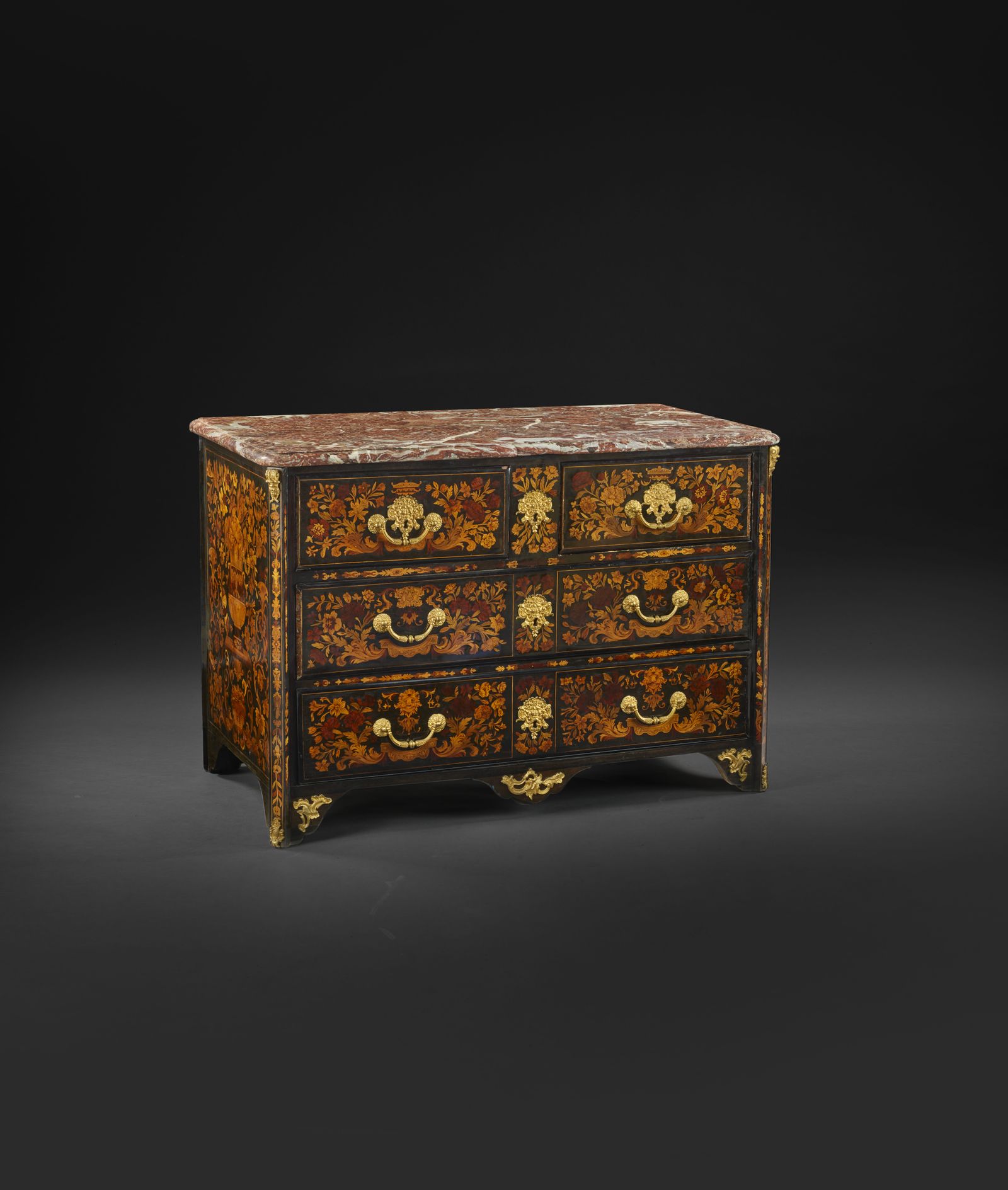
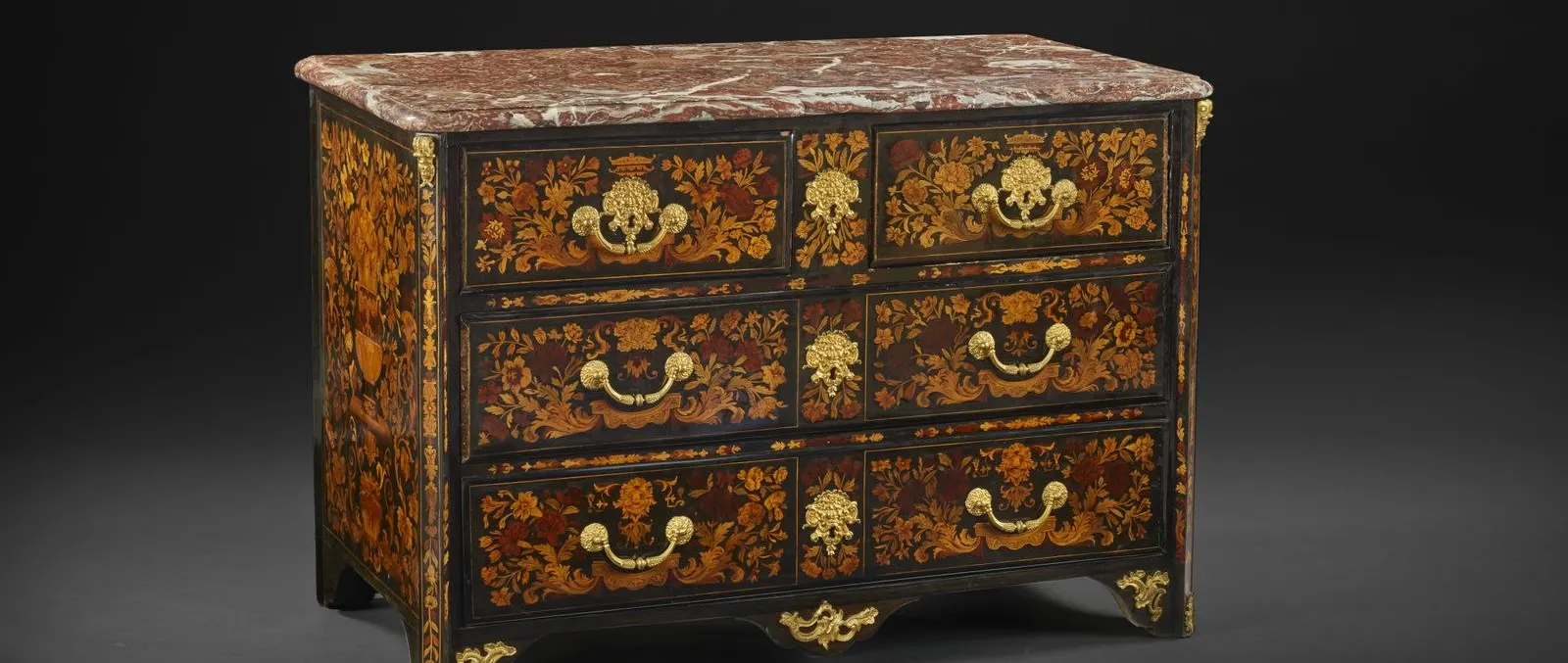
The displayed catalogue begins with a commode described as from the Louis XIV period, with a presale estimate of €5,000 to €8,000. A commode may be recognised as a storage cabinet, but an old example can embody demanding cabinetmaking and metalwork. Period labels are useful for orientation, yet they do not tell a buyer whether every component is original or whether the piece has undergone substantial restoration. Wood species, veneers, mounts and construction methods need careful inspection. Dimensions also matter, as historic furniture may not suit a modern room in the way a photograph suggests. A collector considering a commode for an interior should understand both its visual character and the demands of responsible care. The auction estimate does not include every potential acquisition cost or represent an independent replacement value. An informed decision involves the individual object's craftsmanship, condition and ownership history.
A late seventeenth-century chest suggests domestic history
Another early lot is a chest from the end of the seventeenth century, carrying an estimate of €10,000 to €15,000. Chests once served practical functions involving storage and security, but older pieces are also material records of construction and social habits. The catalogue title alone does not establish who originally owned the object or where it was used. Those questions require documentary and technical evidence. Hardware and locks may have been changed during the life of a piece, while timber may show wear or repair. Such changes need not eliminate historical interest, but they should be understood and documented. In a modern interior, a chest may be appreciated as a visual object even if regular opening could place strain on fragile parts. Its weight and proportions can influence safe placement. A buyer should balance the appeal of an early date with the practical requirements of keeping the object in good condition.
An English cabinet attribution invites closer study
The sale includes a cabinet described as probably English, from the late seventeenth or early eighteenth century, with a presale estimate of €2,500 to €4,000. The qualifier probably is important. A confident-sounding title should not remove the uncertainty that the auction house itself preserves. Furniture can move across borders, be modified over generations or share construction features with work from neighbouring traditions. Attribution may therefore depend on materials, joins, decoration and expert comparison. A collector should read the full lot report and examine the physical object where possible. The cabinet's function may appear familiar, but historic dimensions and storage arrangements can differ from modern expectations. Such a piece may be visually compelling without being the most practical option for daily use. The value of buying historic furniture can lie in its material history, provided the purchaser is prepared to accept and manage its limitations.
A silver-gilt box connects furniture with metalwork
Artcurial also lists a vermeil box with an estimate of €20,000 to €25,000. Vermeil generally refers to gilded silver, a material that requires different care from wood or ceramic. A small box can involve intricate metalwork and decorative methods, but its exact date, maker and purpose must be established through the catalogue rather than inferred from a brief title. Historic gilded surfaces may be vulnerable to inappropriate polishing, and later repairs can influence both appearance and interpretation. A buyer who wishes to display a box among other decorative objects should consider appropriate supports and the security of small valuable items. Its function as a container should not automatically encourage regular use. A particularly elaborate object may be most safely enjoyed through close viewing rather than handling. The presence of metalwork alongside substantial furniture shows how a household's material culture can be understood through objects of very different scale.
Régence candlesticks and lighting traditions
A pair of candlesticks associated with the Régence period appears with a presale estimate of €1,500 to €2,000. The catalogue also includes a Baroque chandelier described as Dutch work, estimated at €5,000 to €8,000. Lighting devices are an important part of the history of interiors, but their original functions do not make them immediately suitable for modern electrical installations or even regular candle use. Old surfaces, joins and mounts may require conservation, and a hanging chandelier needs a professionally assessed support. Converting historic lighting for contemporary use can alter its integrity and may create safety issues if performed without appropriate expertise. A collector should understand whether an object is intended for display, whether earlier modifications have been made and what forms of use are compatible with its preservation. The auction preview makes these objects available for consideration, not certified ready for installation.
Delft and Rouen ceramics bring colour and craft
The early lots include eighteenth-century Delft faience, such as a group of five vases, and a covered tobacco pot attributed to Rouen around 1725. Ceramics bring different technical challenges from the metalwork and wood furniture elsewhere in the catalogue. Glazed surfaces may look robust while concealing chips, cracks or historic repair, and old pottery should not be treated as ordinary kitchenware. A collection of matching vases might once have formed part of a decorative arrangement, but the exact original setting requires research. Delft and Rouen also point to different craft centres and traditions, which deserve individual examination rather than being merged into a generic European ceramic style. Auction estimates can vary for reasons of scale, completeness and condition. A buyer should inspect the glaze, body and any evidence of later restoration. Displaying historic ceramics securely is especially important when objects are moved between properties or placed in a busy household.
Italian and regional pieces broaden the selection
Artcurial's catalogue lists an Italian faience ewer from the late nineteenth century and a pair of Italian Baroque consoles, probably of Roman origin, among the early lots. Such descriptions demonstrate that a decorative-arts auction may bring together objects from several countries and historical periods. A term such as Italian is often a broad classification; the specific regional workshop or date may require closer examination. The ewer's material and purpose differ from the structural and decorative questions posed by a large console. A collector who values a coherent interior might combine different origins, but should do so with an understanding of historical context rather than simply matching colours and shapes. Provenance, repairs and present function remain separate issues for every piece. The catalogue's descriptions are commercial records with varying degrees of certainty, and those qualifications should be preserved in editorial reporting.
Historic furniture is more than decorative style
Labels such as Louis XIV, Régence and Baroque can evoke recognisable periods, but decorative history is not a sequence of fixed styles applied identically everywhere. Furniture reflects patronage, available materials, skilled workshops and the changing practical needs of households. A collector can learn much by studying how a chest is joined, how a cabinet is supported and how decoration relates to construction. Such details may not be clear in online photographs, making an exhibition visit valuable even for someone who does not intend to bid. The sale provides an opportunity to compare different functions and scales within one setting. A room arranged entirely from historic pieces can be visually impressive, yet the practical result depends on dimensions, comfort and conservation needs. A thoughtful private collection does not require treating every object as furniture for everyday use. Sometimes preserving the original surface or mechanism is more important than restoring convenience.
The complexity of managing a historic collection
Collectors who acquire antique furniture and decorative objects need to plan for long-term care. Wood can respond to changes in humidity, gilding may require specialist cleaning and ceramics can be damaged by impact. Some pieces include mixed materials with different rates of expansion or wear. A large chest or cabinet may require several people and special equipment to move safely. For an owner with residences in different countries, shipping and customs documentation should be considered before bidding. Display aboard a yacht adds another layer of complexity through motion, vibration, marine humidity and structural requirements for securing heavy pieces. A historic chandelier may pose risks that differ from those of a low table, while an ornamental vase can need carefully designed restraints. Professional conservation advice can help protect objects without altering their historical identity. The purchase price is only one part of responsible ownership.
Two sessions create different viewing and bidding decisions
The official sale listing divides the auction into two sessions on 16 and 17 December, with more than five hundred lots in the combined catalogue. A collector should pay attention to which session contains a particular object, rather than assuming that every lot will be offered on the first day. Timings, order and availability may change, so the current official catalogue and conditions should be checked. Some people may attend the exhibition primarily to examine the range of material, while others will focus on a small number of lots. In either case, planning matters. Condition reports, export requirements, fees, taxes and specialist shipping arrangements can take time. A presale estimate may not reflect the total amount eventually payable, and some items may not sell at all. The opportunity to compare objects in person can be culturally valuable even without entering the bidding process.
Choosing pieces for a contemporary interior
Historic objects can bring texture and continuity to a modern home, but a successful interior should not depend on displaying more material than the space can safely accommodate. A large cabinet may dominate a room, while a small gilt box can reward close attention. Lighting must be appropriate to sensitive surfaces, and furniture should not obstruct movement. Owners sometimes combine antiques with modern architecture and contemporary art, creating an engaging conversation between periods. That approach can be effective, but it requires careful consideration of scale and conservation. The catalogue offers many possibilities without prescribing one decorative formula. An object's historical integrity should take priority over alteration merely to match a current trend. A thoughtful collector may prefer fewer well-understood pieces to a larger group chosen only for recognisable period labels. Long-term enjoyment depends on knowledge as much as visual appeal.
The verified December decorative-arts event
Artcurial's official catalogue confirms Mobilier et Objets d'Art as a Paris auction scheduled across 16 and 17 December 2026, with historic furniture, metalwork, lighting and ceramics distributed between two sessions. The early displayed lots include Louis XIV storage furniture, a late seventeenth-century chest, silver-gilt work, Régence candlesticks and eighteenth-century faience. The figures cited here are official presale estimates, not confirmed results or independent appraisals. Luxury Yacht Guide covers the event as a specific encounter with historic interior craftsmanship, using a first-party Artcurial catalogue lot photograph that has been checked against its original source and the wider newsroom image archive. All underlying photograph and artwork rights remain with the credited holders. Future results require a separate post-sale verification. The lasting interest is the variety of objects and the responsibility that comes with preserving functional art across generations.
Sources and image credits
Reporting based on Artcurial first-party official 2026 announcement or auction catalogue for Artcurial’s December Sale Brings Historic Furniture and Objects Together.
Lead photograph: Artcurial’s December Sale Brings Historic Furniture and Objects Together — official Artcurial catalogue lot photograph, LYG 25 Nov 2026. © Artcurial and original creator or photographer; first-party auction catalogue photograph of a lot in the decorative arts sale, original rights acknowledged. Original official image source.