A new reason to explore Baja's marine world
Four Seasons Resort and Residences Los Cabos at Costa Palmas has announced a partnership with the research and conservation project Whale Shark Mexico. From the coming holiday season, the East Cape resort says guests will be able to arrange a trip to La Paz to experience whale sharks under local operating rules, while also supporting the researchers through an optional adoption programme. The announcement was made on 5 November 2026. It describes a future guest activity, not a report that a particular excursion has already taken place.
The initiative is especially interesting to travellers who approach Baja California Sur from the water. Costa Palmas has a private marina and a sheltered resort setting on the Sea of Cortez, creating a natural connection between shore hospitality and marine exploration. Yet the resort's announcement should not be misunderstood as a promise that visitors can simply take their own vessel up to a whale shark. Wildlife interactions require regulated local operations, suitable weather and respect for the animals.
What Four Seasons and Whale Shark Mexico are offering
The resort says the Adopt a Whale Shark programme will allow guests to make a donation beginning at US$100, with proceeds directed to Whale Shark Mexico. Contributors are to receive an adoption certificate and other commemorative items. The adoption is symbolic support for research and monitoring, not ownership of an animal or a right to approach it. Importantly, Four Seasons says a guest can make a donation without booking a wildlife excursion.
That distinction separates the conservation contribution from the leisure product. Someone who cannot swim, prefers not to travel to La Paz or finds the sea conditions unsuitable can still support the programme. Conversely, booking a guided activity should not be confused with making a scientific donation unless that is explicitly included. The two decisions deserve separate consideration, particularly when families are planning a holiday budget or comparing activities.
La Paz and the seasonal encounter
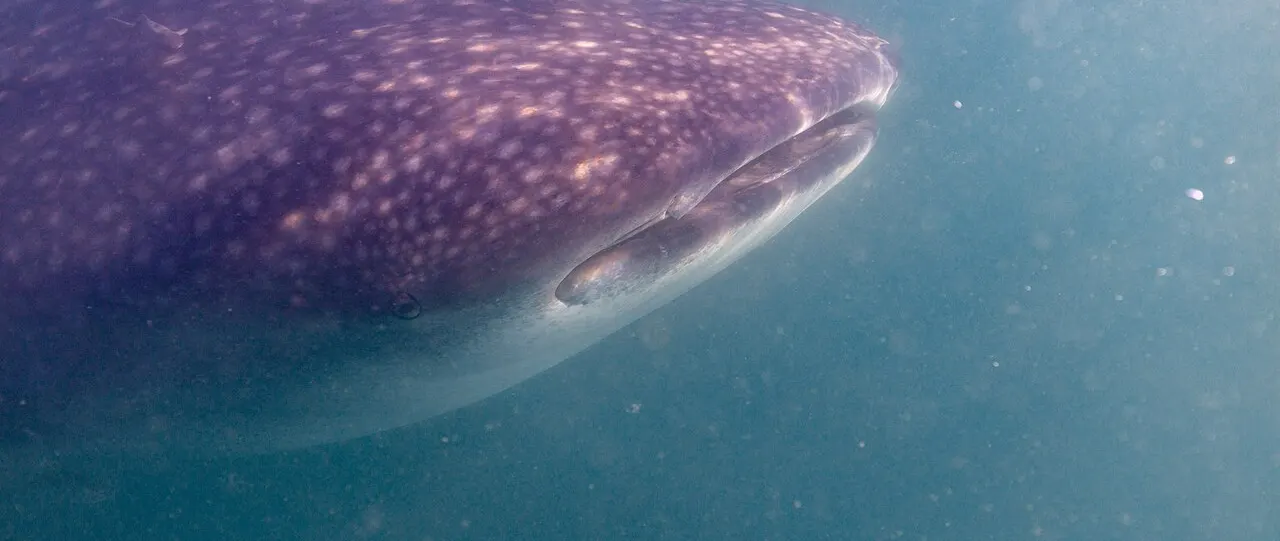
Whale sharks are the largest living fish, not whales, despite their common name. They are filter-feeding animals often seen moving slowly near the surface. The Four Seasons announcement places the seasonal opportunity around La Paz, where the species is associated with a period from roughly November to April. The relevant body of water is the Gulf of California, also called the Sea of Cortez; it is not the Gulf of Mexico. Local conditions and authorised seasonal openings determine when visitor encounters can be arranged.
An animal's presence is never guaranteed. Whale sharks are wild and their distribution responds to food, environmental conditions and movement between habitats. A responsible operator may change course, postpone an activity or cancel it entirely. Holidaymakers should see that flexibility as evidence of care rather than as poor service. A good natural-history excursion is built around what the sea permits, not around a photograph promised in advance.
The science behind a memorable holiday
Whale Shark Mexico researches the species and the threats it faces in the La Paz region. Four Seasons says the donation programme will help the team continue monitoring individuals, studying behaviour and improving understanding of risks. The resort does not provide an audited measure of how many additional surveys a particular guest contribution will fund, so claims about exact outcomes would be premature. The credible point is the direct link to an identified conservation organisation and its ongoing field work.
For visitors, the strongest learning opportunity may come before entering the water. Guides can explain how whale sharks are identified, why coastal conditions matter and why vessel movement must be controlled. Understanding the difference between observing an animal and disturbing it changes the experience. It encourages patience, careful photography and a willingness to leave a sighting when the operator judges that the animal needs space.
Costa Palmas as a base rather than the encounter site
The resort is on the East Cape of Los Cabos, while the whale shark experience promoted in the announcement is at La Paz. These are different locations and should not be conflated. Guests need to discuss road transfers, departure points, excursion duration and accessibility with the resort concierge. The press release does not specify a guaranteed journey time or the type and length of the vessel used for the wildlife visit. It would be misleading to invent those details.
Four Seasons describes Costa Palmas as having a swimmable beach, seven pools, spa, dining and golf, together with direct access to a private marina. Those amenities help make it a flexible base for a journey that may be weather-dependent. Visitors can plan quiet days on the East Cape around an excursion rather than treating the resort purely as somewhere to sleep before an early departure.
Why the marina connection matters
Coastal resorts with marina access appeal to owners and guests of luxury motor yachts in the 12-to-under-24-metre range because they make shore services part of an itinerary. Dining, accommodation for friends, concierge support and local excursions can complement rather than replace time aboard. Costa Palmas is one example of that connection. Its announced wildlife programme does not, however, establish berth availability, harbour depth or a specific permission for visiting private craft.
Anyone arriving aboard a yacht should make independent arrangements with the marina and check navigational information, formalities and local operating restrictions. A private yacht berth is not an entitlement to conduct commercial whale shark activities. The correct service provider, seasonal rules and guide requirements belong to the wildlife programme, and the resort's concierge is the obvious place to confirm the current arrangements.
An experience with clear boundaries
Close encounters with large marine animals can inspire genuine wonder, but they also place obligations on visitors. Guides may impose limits on swimmer numbers, distances, time in the water and behaviour around the shark. Participants should comply with all instructions and avoid attempts to touch, chase or obstruct an animal. Underwater photography is secondary to allowing the wildlife to move naturally, especially when other boats or groups are present.
The resort and its research partner position the programme as conservation-oriented. Luxury Yacht Guide treats that as the organisers' stated intent, not an independently measured environmental result. Guests can ask how funds are administered and how research progress is communicated. Transparency and modest claims are more valuable than promotional promises of transformation from a single booking.
A family itinerary with different levels of participation
Not every traveller is comfortable with an open-water swim, and no family should feel compelled to choose the same activity. The adoption option creates a route for children, older relatives or less confident swimmers to engage with the conservation story without entering the water. Educational reading, discussions with knowledgeable staff and shore-based exploration can be meaningful additions to the trip.
For participants who do go afloat, suitable swim ability, medical considerations, exposure to sun and wind, and a clear understanding of the day's schedule are important. The package details should be confirmed at booking. Luxury service can smooth transfers and equipment arrangements, but it cannot eliminate sea conditions or substitute for the judgement of a competent guide.
A wider Baja itinerary
The East Cape and La Paz offer contrasting perspectives on Baja California Sur. One is a resort-oriented setting with a marina, beaches and managed amenities; the other provides access to the whale shark research and wildlife activity described in the announcement. Linking them can create a trip with a clear purpose beyond moving between picturesque places. A visitor may return with a better understanding of the region rather than simply a collection of resort images.
It is important to respect that the two areas have different local communities and operating structures. Booking through a resort does not remove the value of local researchers, boat crews and guides. Their field knowledge is central to the encounter. Asking who conducts the visit and how the programme supports the destination is a sensible part of planning.
How to arrange the programme
Four Seasons directs interested guests to its Costa Palmas concierge for information about the adoption and wildlife outing. At the time of the announcement, the starting donation is US$100, but the release does not supply a complete price list for transfers, guiding, swimming trips or related services. Nor does it provide a promise of sightings. Travellers should request the current terms, operator details and contingency policy directly before committing.
A particularly practical question is whether a conservation contribution is included in any excursion price or remains wholly separate. Other useful details are minimum age, physical requirements, insurance arrangements, seasonal permits and alternatives when wildlife observation is suspended. Clear answers prevent a memorable trip from turning into an avoidable disappointment.
The value of a well-explained encounter
The strongest aspect of the Costa Palmas proposal is that it links an extraordinary animal with named conservation work and gives non-swimmers a way to contribute. It also illustrates how modern luxury travel can be built around a destination's natural character without pretending that nature can be ordered on demand. The real measure of the experience will be its operating standards, educational quality and transparency once guests begin taking part.
For the Luxury Yacht Guide audience, the relevance is straightforward: a yacht-linked resort base can become a doorway to local marine knowledge. The whale shark is the attraction, but a responsible encounter is defined by restraint, good information and respect. Those qualities make a journey more rewarding than any promised close-up photograph.
Sources: press.fourseasons.com; www.fourseasons.com; www.whalesharkmexico.com.
Photograph: Licensed photograph of a whale shark recorded at La Paz, Baja California Sur, in December 2024. It shows the species in the destination region, not a Four Seasons guest excursion or a November 2026 adoption event. Original photograph by Diego Delso; CC BY-SA 4.0. Web-sized adaptation with attribution.