A season seen from the water
Four Seasons Resort Hualalai has presented its 2026–27 whale-season programme as an invitation to experience the Kona-Kohala coast from both sea and shore. The Hawaii Island property says visitors can join private ocean outings, explore its marine education facilities and take in the migration from dining terraces and coastal viewpoints. Its 5 November announcement is not a claim that a particular whale has already been sighted during a particular guest excursion. It describes the experiences available as the winter season approaches.
The most directly nautical option is a private outing aboard Alakai Nui, a custom-built 46-foot, approximately 14-metre catamaran operated through the resort's ocean activities team, Alakai Nalu. That size matters to Luxury Yacht Guide readers: it is a recognisable cruising-catamaran scale, substantial enough for a social trip but not to be confused with a large charter superyacht. Four Seasons presents the vessel as a way to reach coastal scenery, quiet snorkelling areas and potential encounters with migrating humpback whales.
Why Hawaii's humpback season is special
North Pacific humpback whales move between high-latitude feeding areas, including Alaska, and warmer Hawaiian waters used for breeding and calving. The passage is seasonal rather than an appointment with an exact calendar date. According to Four Seasons, sightings generally become more frequent through winter, with December often bringing regular observations and February and March offering particularly attractive opportunities. Weather, location and animal behaviour still govern every actual outing.
The pleasure of whale watching is partly the uncertainty. A spout at a distance, an arching back or a fluke disappearing below the surface may be all an observer sees; on another day, a whale might breach or travel with a calf. Guests need to understand that wildlife is not staged entertainment. Even a trip without an encounter can reveal the volcanic coastline, offshore light and changing texture of the Pacific, giving the journey independent value.
The role of the Alakai Nui
Four Seasons identifies Alakai Nui as a 46-foot custom-built catamaran with an extended operating range for exploring beyond the immediate resort shoreline. The press material does not publish a complete naval-architectural specification, certified guest capacity, propulsion data or a guaranteed itinerary. Readers should not infer these details from the length alone. When arranging an excursion, the sensible questions concern the number of guests, accessibility, time at sea, weather alternatives and the operating team's safety briefing.
The catamaran allows the group to travel as a unit while taking in offshore views rather than watching from a crowded beach. Four Seasons describes the outings as private, which suggests a more controlled guest experience than a large public tour, but private does not mean exclusive access to marine wildlife. Other boats may be in the same waters, and wildlife regulations and safe stand-off distances remain relevant. A skilled local crew, rather than the luxury label, is central to a responsible day.
A coastline with more than one itinerary
The resort's announcement also highlights secluded snorkelling locations and the Big Island's black-sand shoreline. That variety is useful when conditions do not favour whale observation. An ocean outing might be structured around scenic passages, swimming where appropriate or a shorter coastal circuit, while the captain adapts to wind, sea state and guest comfort. The resort has not promised that all these elements occur on every trip, so they are best treated as possibilities to discuss before departure.
For visitors accustomed to motor yachts or sailing yachts between 12 and 24 metres, the contrast is appealing: rather than managing fuel, berths and crew during a private voyage, they can step into a guided local experience. The same practical habits still apply. Check embarkation arrangements, sun exposure, seasickness precautions and the needs of less mobile guests. An enjoyable wildlife day begins long before the first sighting, with expectations that fit the boat and weather.
Education below the postcard surface
A distinctive part of Hualalai's offer is the Kumu Kai Marine Center, where the resort's Natural Resources team introduces guests to local reef life. Touch-tank discussions, tide-pool visits and supervised marine activities are described as ways for adults and children to discover more about the ecosystems around the hotel. The programme makes a useful counterpoint to the dramatic spectacle of humpbacks offshore: the small animals and habitats close to shore are equally worth understanding.
Good marine interpretation helps guests distinguish responsible encounters from intrusive ones. Reef fish, invertebrates and tidal habitats are vulnerable to rough handling and avoidable disturbance, even when they appear robust. Children can learn as much from observing behaviour, asking why an animal occupies a particular habitat or understanding the value of leaving shells and living organisms in place as from taking a photograph. The educational component gives the holiday a richer foundation than sightseeing alone.
Outrigger canoes and a slower pace
Four Seasons also offers experiences using traditional Hawaiian outrigger canoes and stand-up paddleboards. These are very different from the Alakai Nui: they provide a closer, slower connection to the water, with the effort and balance of the participant becoming part of the experience. The selection gives families flexibility. One person may want an offshore catamaran journey while another prefers a sheltered activity near the coast, subject to instruction and local conditions.
The outrigger tradition carries cultural associations that deserve more than decorative treatment. Guests should approach a guided canoe session as an opportunity to listen to local instructors, learn about the equipment and appreciate the relationship between ocean skills and Hawaiian communities. Luxury travel feels more substantial when it supports genuine local expertise. It is less about the number of activities booked than the care with which each experience is understood.
Onshore viewing, without missing the sea
Not every visitor wants to spend the day afloat. The hotel's oceanfront dining areas and coastline-facing golf holes provide an alternative perspective on the migration. Four Seasons notes that guests may spot humpbacks or spinner dolphins from shore, but these are possibilities, not scheduled appearances. A meal overlooking the Pacific can be memorable without a wildlife sighting, particularly when the light shifts towards evening and the coastline becomes quieter.
The resort names several dining venues in its whale-season presentation, including 'ULU, NOIO, Miller & Lux Hualalai by Tyler Florence, Beach Tree Restaurant and Residents' Beach House. Their different styles make it possible to build a day around food and relaxation rather than a single excursion. Guests should check the current restaurant schedule and reservation requirements directly; a press announcement is not a live table-booking system.
Pool life and families
Four Seasons describes eight swimming pools, ranging from adults' relaxation areas to child-friendly facilities. King's Pond is an especially unusual feature: the resort describes it as a 1.8-million-gallon, approximately 6.8-million-litre swimmable aquarium containing more than 1,000 tropical fish and a resident eagle ray. It is an engineered resort environment, not an open-water substitute or a claim that reef wildlife can safely be handled without guidance.
Families can combine the protected surroundings of the resort with short periods learning about the nearby marine world. The Keiki Pool, with a shallow sandy bottom and shaded areas, is another option cited in the announcement. For parents travelling with children, this range of settings can matter more than a long list of excursions. Rest time, age-appropriate instruction and a realistic schedule help make a coastal holiday enjoyable for everyone.
Conservation is more than a photo opportunity
Responsible whale watching puts the animals' welfare before the perfect image. Boats should follow the applicable Hawaiian and US marine-mammal rules and directions from qualified operators. Guests can help by avoiding demands for closer approaches, respecting the captain's decisions and being willing to watch from a distance. The resort's published programme gives an entry point to wildlife appreciation, but the responsibility to behave carefully remains with everyone on board.
It is also worth distinguishing reported claims from independently measured outcomes. The Four Seasons announcement describes seasonal wildlife and private experiences; it does not provide audited ecological indicators, sighting guarantees or quantified conservation results from each excursion. Luxury Yacht Guide therefore treats this as a hospitality offering and a natural-history opportunity, not proof of any particular environmental impact. Readers who want deeper science can consult public marine-mammal research and conservation agencies.
Planning a winter visit
Prospective guests should contact Four Seasons Hualalai for current Alakai Nui availability, prices, passenger arrangements and exact departure details. These practical factors can change, and the 5 November announcement does not supply them. For anyone travelling with a yacht, questions about local marina facilities and permissible embarkation points should be handled independently of the resort excursion. A hotel-based wildlife trip and a privately berthed yacht have different operational arrangements.
Time the visit around the kind of holiday desired rather than chasing a supposedly guaranteed whale date. Winter may increase the probability of sightings, but weather can interrupt boat trips; meanwhile, a good shore programme creates alternatives. The strongest itinerary allows room for a second attempt without making the entire visit depend on one animal appearing. That flexibility is a hallmark of thoughtful luxury travel.
What this says about modern yacht-side hospitality
The Hualalai announcement illustrates a broader direction in luxury coastal travel: well-run resorts increasingly use the water as a core part of the guest experience, while supporting the journey with interpretation, food, wellness and practical flexibility. The 14-metre catamaran is neither a token transfer boat nor a floating hotel. It becomes an adaptable platform for learning about a specific coastline in the company of people who know it.
For Luxury Yacht Guide readers, the interest lies in that combination of scale and purpose. The same size bracket used for private weekend cruisers can support a genuinely memorable wildlife excursion when the operation is matched to local conditions. Humpback season provides the headline, but the lasting value may be a deeper appreciation of Hawaii's marine life, the skill of its crews and the pleasure of spending unhurried time on the Pacific.
Sources: press.fourseasons.com; www.fisheries.noaa.gov.
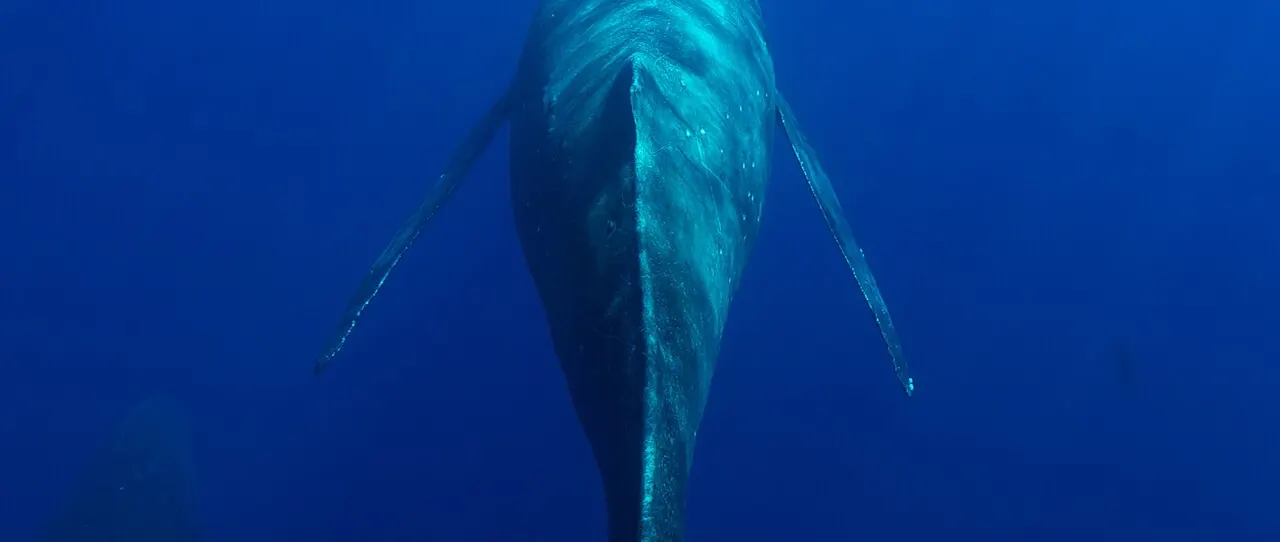
Photograph: Public-domain photograph of a humpback whale from the Hawaiian Islands Humpback Whale National Marine Sanctuary. It illustrates the species and region; it is not a photograph of an encounter aboard the Alakai Nui catamaran in 2026. Original photograph by National Marine Sanctuaries; Public domain. Web-sized adaptation with attribution.