The Mallorca harbour with a different rhythm
Mallorca is sometimes presented as a choice between crowded beach resorts and remote coves. Port de Sóller offers a third experience: a sheltered-looking bay framed by the Serra de Tramuntana, a working waterfront and a link to an inland town where citrus growing, rail travel and modernist architecture are part of the local identity. For guests aboard a 12–24-metre yacht, the appeal is to combine a day on the water with a proper land excursion. The official Balearic Islands tourism portal describes Sóller and its port as connected destinations and recommends the tram between them.
The scene rewards a measured itinerary. A yacht may bring its passengers to the north-west coast, but the experience does not have to be defined by how quickly the next anchorage can be reached. The harbour view, the old tram, the valley's cultivated landscape and an extended lunch can form a day in their own right. The important practical distinction is that a picturesque bay is not an automatic promise of a berth. Every visiting vessel must verify current harbour access, reservation arrangements and forecast conditions separately.
Mountains shape the maritime character
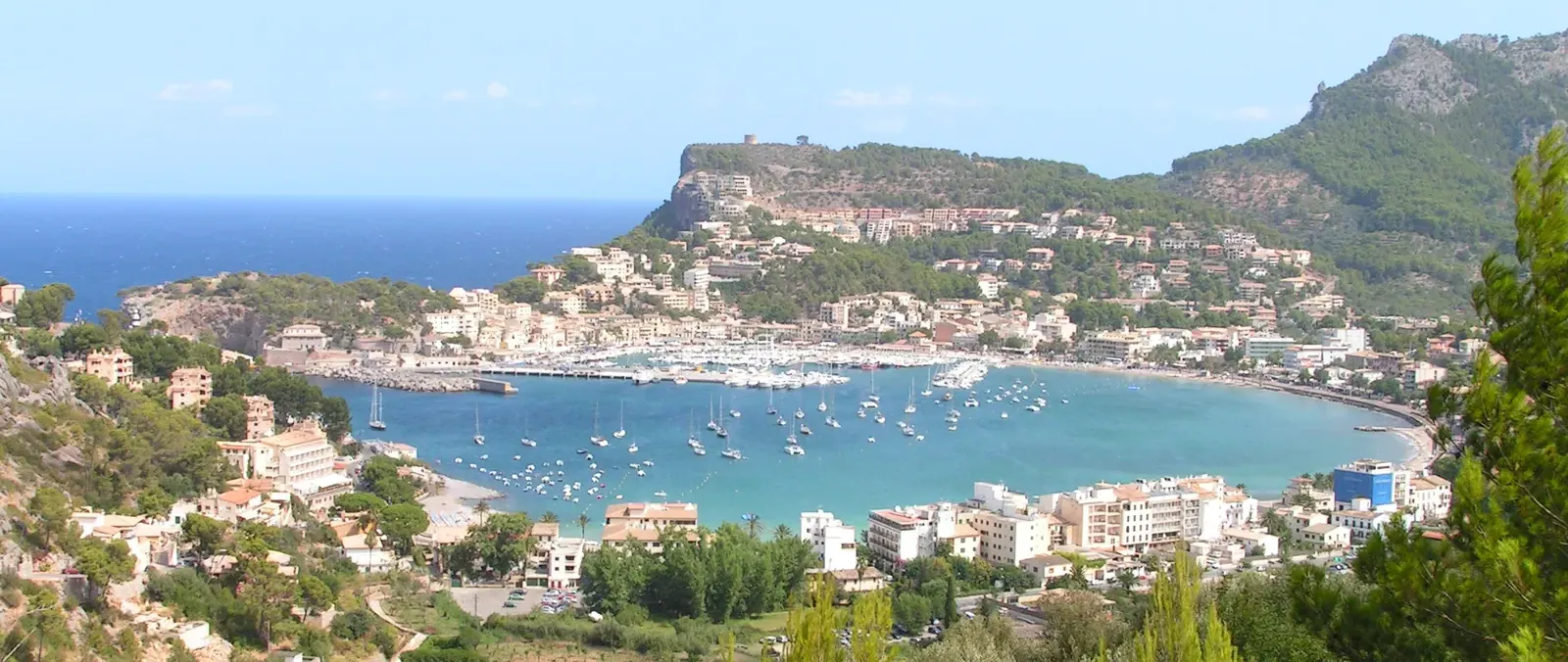
The Serra de Tramuntana lies close behind the coastline and creates a visual contrast unusual among Mediterranean yachting destinations: steep terrain and a relatively compact waterfront within the same view. The Balearic tourism authority identifies the range as a UNESCO-recognised cultural landscape, with the designation made in 2011. That status concerns the relationship between people, settlement and the mountain environment, not a guarantee that every coastal track is available to walk on every day.
A sea approach can make the geography legible in a way a road journey cannot. The slopes rise quickly, and buildings appear as part of a much larger topography. For yacht owners who value a destination's atmosphere rather than only its facilities, that sense of scale is part of the appeal. It also demands respect: shore breezes, local sea conditions and harbour approaches cannot be inferred from a photograph of a calm afternoon. The skipper must treat the actual forecast and official harbour notices as the basis of the plan.
The tram makes the shore visit memorable
One of the most distinctive experiences is the traditional tram connecting Port de Sóller and the town of Sóller. The official tourism guide describes a route passing through the valley's orchards and built landscape, while another Balearic tourism page explains the broader connection with the historic train from Palma, a line dating to 1912. The visual appeal of old rolling stock is obvious, but the trip is more than an exercise in nostalgia. It offers visitors a way to leave the waterfront and understand the valley without turning the day into a lengthy road transfer.
Operating timetables, fares and service changes should be checked with the railway company before relying on a particular departure. Heritage transport can have seasonal patterns or maintenance interruptions. A realistic yacht itinerary might begin with a morning visit to the port, use the tram to reach Sóller for lunch and return with time in hand. Avoid booking an onward passage so tightly that a missed tram creates pressure on the crew. The real luxury is being able to enjoy the ride.
Sóller beyond the waterfront
The town itself has a different relationship with the surrounding hills. Official tourism material points to its prosperous history, the influence of citrus exports and a mixture of traditional houses, French-influenced residences and modernist buildings. In the centre, the Parish Church of Saint Bartholomew is one of the landmarks described by the regional visitor authority. These details matter because they help visitors see Sóller as a town with an economic and architectural past rather than merely an attractive photo stop.
For a group arriving from a yacht, a short walking itinerary is usually preferable to trying to see every building. Choose one architectural or cultural destination, leave room for a café and take time to notice shop fronts and details in the streets. If a museum visit is desired, verify opening hours and access on the planned date. November is not August; hospitality and cultural schedules can differ, and the fact that a place is advertised online does not establish that its doors will be open at the precise moment of arrival.
Citrus, olives and the valley's flavours
The Balearic tourism board associates Sóller with orange and lemon groves, and its descriptions of the valley connect the town's prosperity with produce exported through the port. That is an invitation to explore local food intelligently. A meal can be planned around dishes actually available on the day, accompanied by questions about seasonal ingredients. The official Sóller train itinerary also points travellers towards the local cooperative as a place to learn about olive oil production and describes seafood specialities at the port.
No responsible guide should promise that a particular restaurant will be serving a specific fish or fruit in November. Menus and supply change, as do opening days. For yacht guests, it can be more rewarding to make one informed reservation and give the kitchen room to explain what is available. A leisurely lunch also provides a welcome change from a schedule dominated by marina manoeuvres and tender trips. The memory may be of a conversation about the valley's produce as much as a particular dish.
A practical plan for a 12–24-metre vessel
The actual yacht matters. A 13-metre day cruiser, an 18-metre sailing yacht and a 23-metre motor yacht bring different beam, draught, electrical and manoeuvring requirements. It would be misleading to assume that all can use the same berth or that an attractive photograph of Port de Sóller confirms the availability of visiting moorings. The skipper should consult the relevant harbour authority or operator for current navigation guidance, berth reservations and any limits applying to the vessel.
Where a suitable berth is confirmed, the trip ashore can be separated cleanly from the voyage. Guests may then travel independently on the tram while the crew handles provisioning or routine checks. If no berth is available, the itinerary may need a different base and a land-based day visit. That adjustment should be made before departure rather than improvised in an exposed or crowded approach. A beautiful destination is most enjoyable when the logistics are straightforward.
What to see in the port
Port de Sóller has its own waterfront identity. The Balearic Islands tourism site notes the beach next to the port, the potential for walking along the shore and the possibility of continuing toward the Cap Gros lighthouse area. From the water, the broad curve of the bay is the main visual element; ashore, the smaller details of the promenade, boats and hillside become clearer. A good first hour can be spent simply walking and orienting the group before choosing between a tram excursion and a longer meal.
A guide should distinguish suggested places from guaranteed access. A lighthouse may be visible without its premises being open, a path may be affected by works, and seasonal businesses may operate reduced hours. Where walking conditions or mobility requirements matter, confirm the route locally. The harbour is most appealing when the visit is adapted to the travellers actually on board: one family may want a quiet waterfront lunch, another may prefer the railway and a museum, and a third may choose a shorter excursion before sailing again.
Winter and shoulder-season considerations
This article is written in November, when Mediterranean cruising calls for a more flexible style of planning. Daylight is shorter than in midsummer and unsettled weather can affect passages and harbour movements. Those facts do not make a visit inherently unsuitable, but they do change the way a crew should approach contingencies. Leave a sensible margin for the return to the yacht and confirm that public transport and attractions have a workable schedule.
Nor is it sound to promise empty beaches, consistently lower prices or reliable sunshine simply because it is outside the peak summer period. The point of visiting in a quieter season is to broaden the kind of experiences you seek, not to trade one rigid expectation for another. The valley's architecture, the tram and the mountain landscape provide strong reasons to visit even when swimming is not the centre of the day. Should the forecast or ferry and harbour conditions change, it is better to adapt the plan than to force a timetable.
Travel light and leave room for surprises
Yacht guests sometimes carry an itinerary as detailed as a ship's technical checklist. For this part of Mallorca, a more rewarding approach can be to agree on just three essentials: a safe and confirmed marine plan, one cultural focus and time to enjoy the surroundings. The tram can serve as the spine of the day, with a walk through Sóller at one end and the waterfront at the other. That approach leaves enough space to discover a local shop, follow an architectural detail or linger over coffee.
The combination of boat and tram also illustrates why yacht travel can be distinctive without being extravagant at every stop. The vessel provides freedom and continuity; the local transport opens a different perspective. Rather than remaining in the controlled environment of the yacht throughout the day, travellers participate briefly in a place that has its own history and rhythms. That is a better souvenir than a series of hurried photographs.
The case for a single, well-chosen stop
Port de Sóller is a persuasive destination for a smaller luxury yacht because the town, coast and hinterland form a coherent experience. The same hills that make the harbour's setting memorable have shaped a distinctive inland community; the tram binds the two together; and the port gives yacht travellers a natural starting point. The Balearic tourism authority's own guidance supports each part of that story, from the citrus landscape to the railway and the seafront.
The sensible plan is to verify the berth, check weather and transport timetables, and give the excursion enough time to unfold. Owners need not rush to a second bay merely to make the day feel productive. On a suitable day, a view from the water, a tram ride through the valley and an afternoon in Sóller can be enough. The most compelling form of luxury here is the ability to spend time thoughtfully in a place whose identity extends far beyond the harbour entrance.
Sources and image credit
Primary sources: Official Balearic Islands tourism guide to Sóller, Official guide to the historic train and tram, Serra de Tramuntana cultural landscape and Port de Sóller beach and harbour. Hero: view of Port de Sóller from the hills, photographed in August 2007 by BuzzWoof and released into the public domain on Wikimedia Commons. Converted to WebP; archival view, not present-day weather or berth conditions.