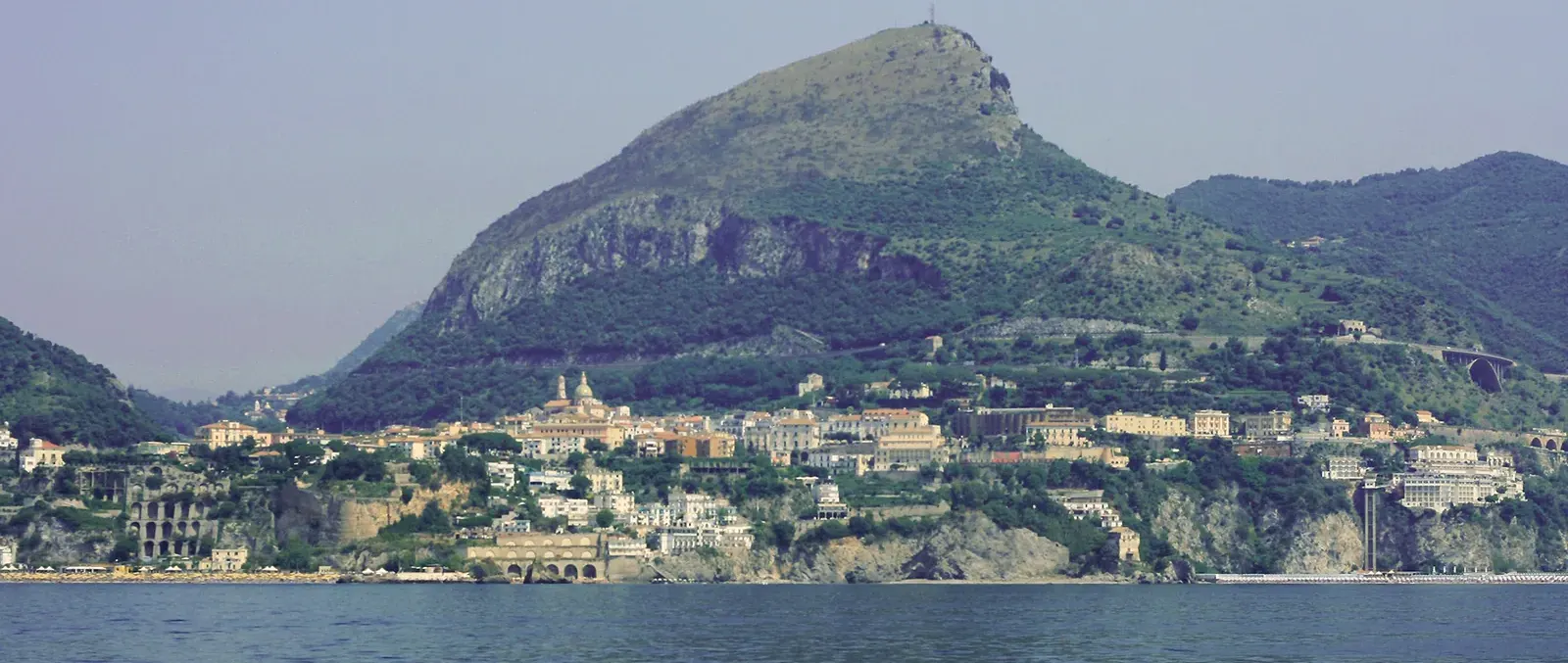
A quieter doorway to the Amalfi Coast
There is a different way to encounter the Amalfi Coast than beginning with the postcard crowds of Positano. Approach its eastern edge, where Salerno gives way to Vietri sul Mare, and the first memorable colour is not the blue of a beach club but the glazed blue of hand-painted ceramics. This is the sort of excursion that suits owners and charter guests aboard a 12- to 24-metre yacht: a manageable shore visit with a strong sense of place, a connection to local makers and a satisfying return to the water. Italian national tourism identifies Vietri as the eastern gateway to the famous coast, while Marina d'Arechi describes Salerno as a practical base for exploring the same shoreline. The two perspectives work together, provided that the guest distinguishes an attractive coastal destination from a guaranteed yacht berth.
For Luxury Yacht Guide, the appeal is a journey shaped by taste rather than headline extravagance. The spectacle here is the way ceramics occupy everyday space: façades, stairways, small squares and architectural details. A boat gives visitors a fluid relationship with the coast, but the best memories may be formed away from the quay, walking through an ordinary town that has made colour part of its identity. This guide is a suggested approach to the destination, not a promise of weather, marina availability or attraction opening hours on any particular date.
What makes Vietri different
Vietri sul Mare is not merely another position on the map between Salerno and Amalfi. Italia.it, Italy's official tourism platform, describes a town where majolica appears in monuments, courtyards and public spaces. The distinctive glazed surfaces are not a fashionable recent embellishment; they are a visual language through which the town presents itself. This makes a shore visit unusually rewarding for travellers who enjoy craftsmanship and want to understand how coastal places develop a character beyond their beaches. Look upwards as well as into shop windows. The dome of the Cathedral of Saint John the Baptist, picked out in colourful tiles, is one of the recognisable features of the historic centre.
One of the pleasures of arriving without a rigid checklist is the chance to notice smaller decisions: how a ceramic motif is repeated, where a pattern becomes architectural rather than decorative, and why an object intended for a dining table might communicate just as much local identity as a famous viewpoint. Luxury at this scale is attentive rather than ostentatious. It may mean choosing a single piece directly from a workshop, knowing why it suits a cabin or a home, and allowing enough time to speak about the work without treating the town as a hurried souvenir stop.
Making the crossing from berth to town
For an owner-operated yacht or a charter in the smaller luxury segment, the first logistical decision is where to leave the vessel. Marina d'Arechi in Salerno provides a clearly documented alternative to assuming that a visitor can berth beside every scenic village. Its published facilities include approximately 1,000 berths for craft from 10 to 100 metres, an entry depth reported as eight metres, a dedicated fuelling area, shore services and around-the-clock assistance. Those specifications make it relevant to much of the Luxury Yacht Guide fleet, but they are not a substitute for checking current berth allocation, draught limits, beam, approach conditions and pricing directly with the marina.
The marina's own arrival information includes approach guidance and VHF channel 74. A skipper should obtain current instructions before arrival, particularly if visiting for the first time. From the berth, Vietri can become a land-based cultural outing rather than an uncertain exercise in searching for a village mooring. Those who prefer a day on the water can arrange a separate coastal passage when conditions permit. The essential point is to match the itinerary to the vessel and crew instead of requiring the harbour to fit a photograph seen online.
A morning with the ceramic tradition
Begin the town visit with its streets, not a shopping list. Vietri's ceramics are easier to appreciate when the buildings and objects can be seen together. The national tourism guide points to the vivid majolica of the cathedral and the historic fabric around it, and also highlights the town's Villa Comunale as a colourful public setting. A short walk between these places makes clear that craft is part of the broader townscape. Guests who enjoy design may notice how patterns can feel exuberant in one context and carefully restrained in another. That observation is a useful starting point for choosing a piece to take home.
There is no need to assume that every workshop offers demonstrations or will admit unscheduled visitors. If seeing a maker at work matters, contact an individual studio ahead of time. Ask whether the piece is made locally, how it was fired and glazed, whether it can safely travel aboard, and how it should be packed. These are practical questions as well as respectful ones. A yacht offers space for collected objects, but delicate ceramics still require protection against movement, vibration and hard corners during a passage. A small object with a genuine connection to the visit can be more meaningful than a larger purchase made in haste.
Museums and the story behind the glaze
The material culture of Vietri extends beyond retail. Italian cultural heritage records identify the Museo della Ceramica at Villa Guariglia, housed in a tower and concerned with ceramic production and artistic work associated with Vietri and Salerno from the eighteenth through twentieth centuries. That historical range helps place an individual shop or workshop within a longer regional story. A visit can show how domestic utility, artistic experimentation and the tastes of successive generations intersect. The museum is particularly interesting for travellers who are drawn to design but would like something more substantial than a photograph of a decorative wall.
As with any regional museum, arrangements must be verified close to travel. Opening periods, ticketing, exhibitions, access arrangements and restoration work can change; a general destination article cannot responsibly certify admission for a given day in November. If the museum is unavailable, the town's public architecture still provides a genuine introduction. The cultural stop should be treated as a possible highlight, with sufficient flexibility to enjoy a walk and an extended lunch if the timetable changes. That is often the most luxurious way to travel outside the peak season.
Lunch as part of the itinerary
A yacht holiday sometimes encourages guests to measure quality by the number of elaborate reservations secured in advance. Vietri rewards a simpler rhythm. A good lunch can become the point at which the morning's visual discoveries settle into memory. The wider Amalfi Coast is associated with citrus terraces, fishing communities and Mediterranean produce, and Italy's tourism authority draws attention to neighbouring Cetara as a distinctive fishing village. Rather than treating the region as one identical culinary experience, use the menu to learn what the kitchen is preparing locally and seasonally. Ask questions, and allow for variation rather than insisting on a particular dish being available.
For groups, a sensible approach is to choose a restaurant based on the actual season, accessibility and opening day. Some hospitality businesses alter their schedules as summer ends. A place praised for its terrace in August may not offer the same experience in November, and waterfront seating should never be assumed. Reserving a table with a clear understanding of the day's service is preferable to building an itinerary around an unverified opening. The aim is to create room for conversation, local food and a slow return to the boat rather than an itinerary overloaded with stops.
A shore plan for a 12–24-metre yacht
Vessel size changes what a destination asks of its visitors. A 15-metre cruiser, an 18-metre performance yacht and a 23-metre flybridge motor yacht may all fit the broader category of luxury cruising, but their handling, berthing requirements and crew arrangements are not interchangeable. Marina d'Arechi's published berth range includes them in principle. That does not mean any particular berth will be available. The skipper should give the marina the actual length overall, beam, draught, electrical requirements and intended arrival time; passengers can then plan shore activities on a realistic basis.
For a privately operated yacht, simplicity is valuable. The morning could begin with an unhurried departure from the berth for a confirmed transfer, followed by the historic centre, a visit focused on ceramics and lunch. The afternoon can remain open for a neighbouring coastal stop by road or a return to the vessel. It is worth resisting the temptation to add Positano, Amalfi, Ravello and Vietri into one compressed day simply because they appear close on a map. Their roads, gradients, parking and seasonal transport patterns can make a short-looking itinerary less enjoyable than it sounds.
November changes the mood, not the geography
Published in November, this guide is particularly interested in the character of a shoulder-season visit. The coastline's cliffs, towns and craft traditions remain, but a winter itinerary needs a more flexible relationship with weather and services. Shorter daylight hours, possible unsettled sea conditions and changes in the operating calendars of restaurants or visitor attractions should be treated as planning factors, not unwelcome surprises. No article can tell a skipper that a future sea passage is safe. That judgment belongs to current marine forecasts, harbour notices and the people responsible for the vessel.
The reward for keeping a flexible schedule can be a quieter appreciation of the eastern Amalfi Coast. There is no guarantee of empty streets, fine weather or lower prices, and those claims would be a poor basis for booking. What travellers can do is shift the focus from a fixed list of celebrated images to the material life of the place: the cathedral tiles, the streets around the centre, the way the hillside meets the sea and the possibility of finding a craft object with its own story.
Looking beyond Vietri without losing the thread
Italy's tourism authority positions Vietri beside a sequence of places that each contribute something different to the Amalfi landscape. Cetara provides a fishing-village counterpoint; Amalfi carries the history of a maritime republic; Ravello is associated with gardens and high viewpoints; Maiori and Minori form another chapter in the coast's settlements. For a yacht itinerary, those names are opportunities rather than obligations. Choose a second destination because it deepens the day's experience, not because it would make the route look more impressive on a chart.
Travellers using Salerno as a base can also separate time afloat from time ashore. A sailing day should be planned around suitable conditions and confirmed port arrangements. A shore day can focus on ceramics and architecture, leaving the crew free from a complicated series of approaches and departures. Marina d'Arechi itself advertises access to both the Amalfi and Cilento coasts, which makes the base useful for a wider programme. But no marina's promotional description replaces detailed nautical planning or an assessment of the operating vessel.
The value of taking one place seriously
The strongest luxury travel writing does not need to promise that every hour is extraordinary. Vietri offers a more specific proposition: an Italian coastal town where the relationship between craft, buildings and seafaring geography is visible at pedestrian pace. The yacht is part of the story because it offers a way to reach the region and return to a private home on the water. Yet its presence should heighten curiosity about the coast rather than insulate visitors from it. That balance matters especially in the 12–24-metre market, where cruising often remains personal, practical and closely linked to the decisions made on board.
A successful visit might be remembered by a view of the town from the sea, a conversation about a glazed ceramic, a lunch that ran pleasantly long and an uncomplicated evening back at the marina. None of those experiences depends on the tallest yacht in the harbour. They depend on allowing the location to set the pace. For a future itinerary, verify the marina's availability, review the marine forecast, confirm the museum or workshop you hope to visit and leave room to change the plan. Vietri sul Mare is worth discovering on its own terms.
Sources and image credit
Primary sources: Italia.it: Vietri sul Mare; Italia.it: Amalfi Coast; Italian cultural heritage catalogue: Museo della Ceramica; Marina d'Arechi official marina information; Marina d'Arechi official arrival guidance. Hero: Vietri sul Mare photographed from the sea in 2008 by Jensens, Wikimedia Commons; placed in the public domain by photographer. Cropped and converted to WebP for display; archival view, not present-day conditions.