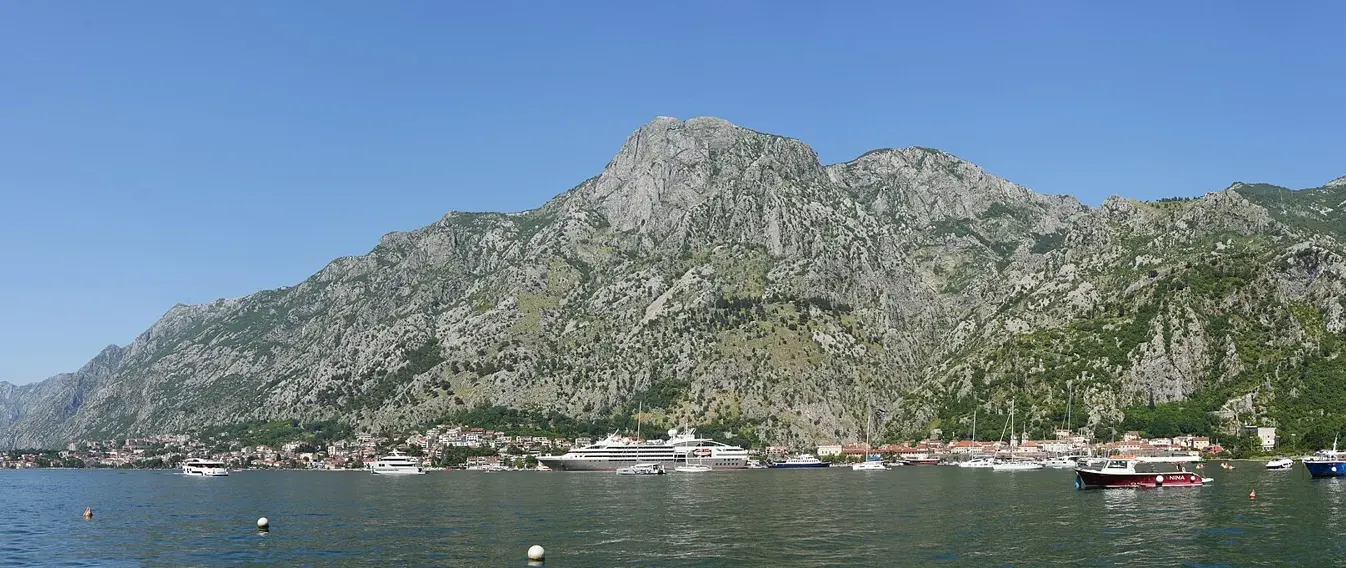
A bay that changes the pace of a voyage
The Bay of Kotor is often described by its mountains because the landscape is almost impossibly theatrical. Yet for owners of midsize luxury yachts, its real interest is how it changes the rhythm of coastal travel. Entering the bay from the open Adriatic brings a succession of settlements, wooded slopes and sheltered reaches that invite shorter passages and longer explorations ashore. Montenegro’s national tourism organisation identifies the bay as an attractive sailing environment and points to several ports and marinas for visiting yachts. The setting can make a voyage feel intimate without requiring a long open-sea leg every morning. The important qualification is that shelter within a bay does not remove the need to plan for local winds, commercial movements, navigation rules or weather that can develop quickly along a mountainous coastline.
The heritage that makes Kotor different
UNESCO lists the Natural and Culturo-Historical Region of Kotor for its relationship between fortified towns, coastal settlements, architecture and steep surrounding mountains. Its account describes the medieval harbour as a significant artistic and commercial centre whose schools of masonry and iconography influenced the Adriatic world. That is more than a decorative backdrop for photographs from a sundeck. It means that arriving by yacht offers direct access to a landscape shaped by maritime trade, defense and urban life over centuries. The region was damaged in the 1979 earthquake and underwent major restoration. Treating those streets and monuments as living heritage, not as a private resort environment, is essential to experiencing the place well.
Choosing a first berth
The tourism organisation identifies Portonovi, Porto Montenegro and the Port of Kotor among the possible arrival points, but they offer very different experiences. Portonovi presents a full resort-marina setting near Kumbor, while Porto Montenegro at Tivat is built around sophisticated shore-side services and luxury hospitality. The Port of Kotor gives direct access to the walled old town, with the historical centre very close to the waterfront. The right choice depends on whether guests prefer yacht services, convenient customs and formalities, an immediate historic-city visit or an easier transfer to the next anchorage. Berthing arrangements, draft limits, fees and opening arrangements should always be confirmed with the actual operator. A list of permitted arrival ports must not be mistaken for a promise of visitor space.
Entry formalities deserve attention
Crossing a national maritime border is not the same as moving between neighbouring anchorages. Montenegro’s tourism authority lists specific ports with border-control functions and notes that some facilities operate under different entry conditions. For example, it distinguishes Luštica Bay’s domestic-traffic role from entry points where the required border formalities can be completed. Rules may be updated, and the eligibility of a particular arrival route can depend on vessel flag, guests, crew and previous port. A skipper should check the latest official port, customs, immigration and harbour instructions before departure and should not improvise a first landfall based on a marina advertisement. A disciplined arrival plan prevents one of the most avoidable sources of stress on an otherwise elegant itinerary.
A yacht-friendly scale of exploration
A 12-to-23.99-metre yacht is well suited to the sort of trip in which guests enjoy the destination as much as the boat. On a short route, a tender may provide access to a waterside café or a safe pickup point, subject to local permissions and conditions. On a longer stay, the yacht can change overnight positions after a half-day ashore without turning the move into an expedition. A small crew may nevertheless need time for lines, tender operations, stores and housekeeping between activities. The better itinerary allows for that work instead of treating the yacht as a shuttle bus. Owners should select sheltered berths and reasonable departures for the actual yacht, not for the larger vessels featured in marina marketing.
Walking within Kotor’s walls
The Port of Kotor’s proximity to the old town makes it a natural cultural stop, but the streets merit more time than the view from a passing deck might suggest. UNESCO emphasises the architecture of fortified and open cities, palaces, churches and settlements around the bay. A walk is best undertaken slowly, especially in warm weather. Begin near the squares and churches, follow the texture of the streets and notice how a town of traders, sailors and artisans has adapted its buildings to a narrow coastal site. The town’s walls can be admired without insisting that every guest complete a steep climb. Good yacht hospitality is about matching activities to interests and abilities rather than converting heritage into an endurance test.
Perast and the smaller-scale shore
The appeal of the wider Boka is not confined to Kotor itself. Travelling between the bay’s small settlements reveals a sequence of waterfront facades, fishing traditions and church silhouettes. A harbour stop such as Perast can offer a quieter contrast to a busy day near the main port, though landing arrangements, local traffic and tender access need checking. The area also contains notable religious and cultural sites that deserve respect rather than a hurried photo opportunity. It is sensible to arrange shore excursions through properly authorised local operators when access or navigation is unfamiliar. The purpose is not to accumulate the greatest possible number of places in a day. It is to discover how strongly the bay’s maritime identity varies from one short stretch of coast to the next.
Resort life at the western end
For guests who want the comforts of a resort between historic visits, the national tourism site highlights Portonovi and its hospitality offering. It identifies a marina and restaurants alongside the One&Only resort and wellness facilities. Such a stop can work especially well when some members of the party prefer spa treatments, swimming or a long lunch while others explore by tender or car. The distinction between the marina’s berth booking and a hotel reservation matters: neither should be presumed to include the other. Ask for direct confirmation of access, guest arrangements and any transfers. A comfortable resort evening can complement the bay’s cultural experiences, but should not displace them entirely; the landscapes outside the resort gates are what make Montenegro distinctive.
Sea conditions and mountain weather
Mountainous coasts can create local effects that are difficult to understand from a broad regional forecast. A quiet-looking surface at one end of the bay does not establish that every approach, channel or exposed outside passage will be pleasant later in the afternoon. Follow current marine forecasts, pilotage information and harbour instructions; monitor traffic and maintain a proper lookout. Owners planning a swim or paddleboard session should consider ferries, local excursion boats and the position of the tender, not just the water temperature. At anchor, assess holding, depth, scope and swing room carefully. Narrow water and abrupt changes in depth are reasons to exercise more judgment, not less. A secure berth and an interesting shore itinerary are often the sensible response to a difficult forecast.
Food, architecture and an evening ashore
A memorable evening in Kotor need not follow the obvious pattern of a long formal dinner. Begin with a measured walk through the older quarters, reserve a table that leaves enough time to return safely, and let the menu reflect local produce rather than a generic idea of Mediterranean luxury. Guests with limited mobility may appreciate a car transfer and a restaurant close to an easy pickup location. If arriving at a resort marina, confirm transport in both directions before leaving the yacht. A captain who knows the party’s dining preferences can reduce needless waiting, but independent travellers may enjoy choosing a lively small restaurant instead. Either approach is better than imposing the same evening programme on every yacht visitor.
The question of crowds
The Bay of Kotor receives more than private yachts. Cruise-ship movements, excursion boats and ordinary local traffic can alter the experience near the waterfront, particularly in the busiest months. An owner seeking quiet might prefer to visit Kotor’s streets early and spend the afternoon elsewhere; another party might enjoy the activity and choose a central berth. Before planning a grand arrival, check current port schedules, navigation constraints and available berthing. Avoid assuming that the apparent scale of a photograph from an empty spring morning describes a summer weekday. Good itineraries are flexible: they reserve the most important experiences but leave space to change the order if weather, traffic or a cultural attraction demands it.
Travel with the place, not against it
UNESCO’s recognition of the Kotor region carries responsibilities for residents, visitors and the marine industry. The setting is not an empty stage but a network of communities and a fragile historic landscape. Boat waste should be managed through approved facilities, sensitive shores should not be damaged by careless anchoring, and sound levels at a berth should respect neighbours. Choosing a local guide can deepen understanding of the old town while supporting the people who maintain its character. Even photographs benefit from patience: a place that attracts visitors for its historic atmosphere loses something when every encounter becomes a rushed spectacle. There is room for genuine luxury here, but its most attractive form is considerate.
A sensible three-night pattern
For a first visit, consider a three-night structure rather than a rigid list of anchorages. Arrive through the appropriate legal port and give the crew time to secure the yacht. Spend a full day exploring Kotor’s heritage, with transfers arranged in advance if needed. Use another day for a short cruise through the inner bay and a small-town visit or a resort stop, according to conditions and guest interests. On departure day, review the forecast for the open Adriatic rather than taking the bay’s apparent calm as reassurance. This is a conceptual itinerary, not a navigational plan; positions, routes, clearances and overnight berths need real-time professional confirmation. Its advantage is that the bay becomes a destination, not simply a scenic corridor.
Photograph: Bay of Kotor at Muo, Montenegro, photographed by Ingo Mehling on 7 June 2025; Wikimedia Commons, CC BY-SA 4.0. Image resized and converted to WebP.