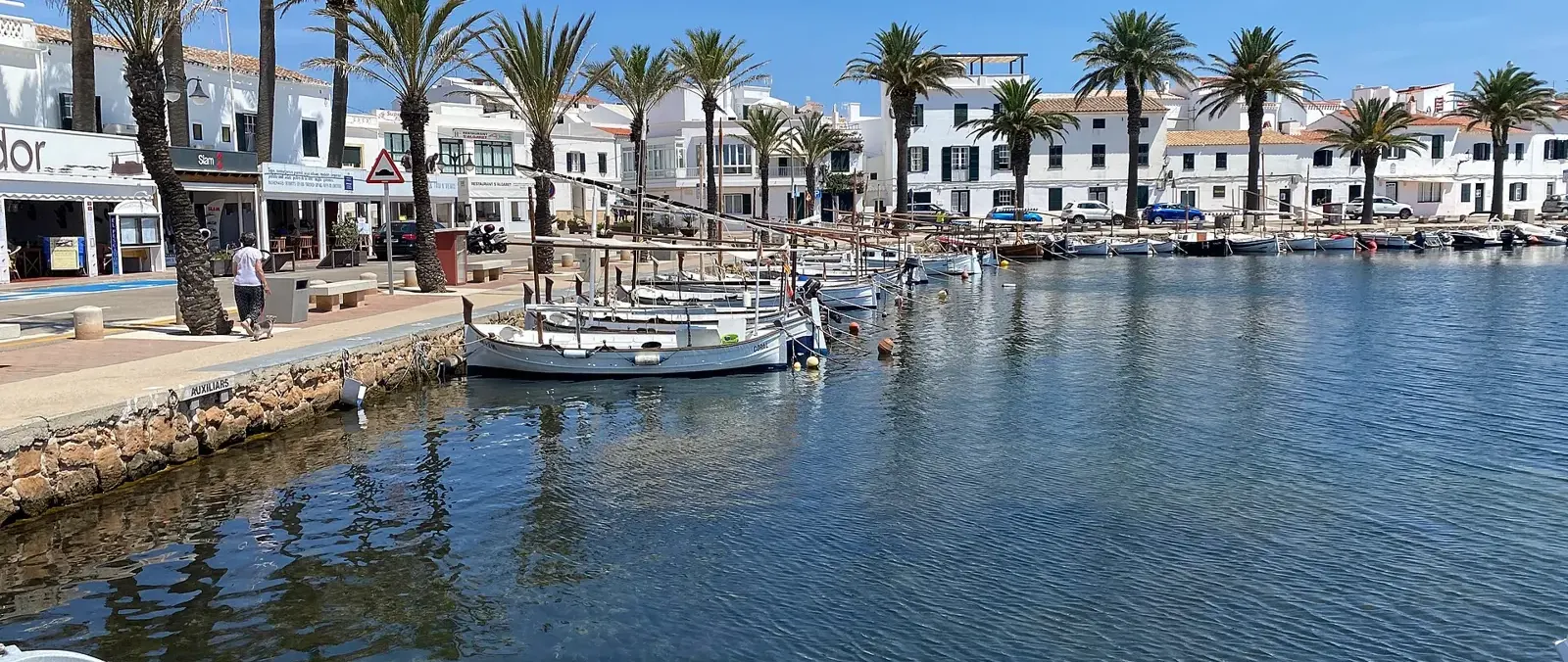
A beautiful northern harbour with an important qualification
Fornells, on Menorca's north coast, looks like a natural destination for an elegant Mediterranean yacht escape. Low white buildings, green shutters, fishing boats and waterfront restaurants create a setting that the Balearic Islands' official tourism service explicitly celebrates. But an appealing harbour photograph is not evidence that every visiting yacht can reserve a berth. Ports de les Illes Balears, the regional port authority, publishes an unusually important restriction: the standard online mooring-booking system for Fornells is for boats no more than 12.00 metres in length and 4.00 metres in beam. Luxury Yacht Guide covers yachts from 12 metres to just under 24 metres, so nearly the entire size bracket lies above that published visitor-booking limit. For a yacht of exactly 12 metres, suitability still depends on beam and availability; for a longer vessel, the standard reservation route is not the answer. This is the first practical fact every captain or charter guest needs to understand before choosing Fornells as an overnight destination.
Why the booking limit cannot be averaged away
The regional authority operates different limits at different Balearic ports. Its English-language reservation page allows up to 15 metres length and 4.46 metres beam at certain named ports, but it explicitly gives Fornells a maximum of 12.00 by 4.00 metres. A crew cannot assume that the more generous allowance available at another harbour applies here. Nor does the existence of a large natural bay erase the rule governing a specific berth reservation system. The appropriate response is to separate questions: can the public port offer a berth through the listed channel, can an alternative local operator accommodate the yacht, and can a lawful buoy or anchoring arrangement be made under the environmental rules? Each requires a distinct check. The port authority lists a Fornells office telephone number of +34 971 37 66 04, an email contact portfornells@portsib.es and radio channel 8. Contact details and current instructions should be verified before arrival, but they are a better starting point than unsupported claims from a general cruising brochure.
More than one operator and more than one kind of mooring
Ports IB describes 115 berths under its direct management and a further 100 handled by Club Nàutic de Fornells. Those are published administrative figures, not a list of vacancies or an assertion that larger visiting yachts are accepted at the club. The authority's port page also identifies a large anchoring area in the natural harbour and provides a direct link to its buoy-reservation system. A separate official field plan, dated July 2024, identifies buoy categories of eight, twelve, fifteen, twenty and twenty-five metres within the regulated Fornells area. That document indicates the existence of a scheme designed with larger classes in mind, but a 2024 plan must not be treated as a guarantee of current buoy position, availability or suitability in November 2026. A skipper of an eighteen-metre boat should contact Ports IB for the current scheme, permitted vessel dimensions, allocation rules and any seasonal service changes. Do not simply select a buoy by looking at its colour or at a historic PDF.
Understanding the regulated buoy system
The Ports IB booking site distinguishes port moorings from regulated buoy fields. It publishes separate day-use and overnight voucher categories, together with operating time windows and vessel-length classes. These pages are useful because they make the distinction explicit: a mooring buoy reservation is a different product from a berth on the quay. However, published price tables are not proof that the Fornells field has a free buoy in every size on every date. Before committing to a visit, check which specific field is being offered, whether a buoy is suitable for the yacht's length, displacement and windage, and what current booking and weather rules apply. Local requirements for approaching and making fast to the mooring must be followed. A much heavier yacht should never rely solely on a simple length label in an outdated diagram. The captain needs the applicable current operating conditions, correct mooring technique and a weather plan. Environmental sensitivity is not an optional footnote in a Mediterranean bay.
Seagrass, protected habitats and the costs of careless anchoring
The regional port authority links its reservation system to good environmental practice, a Posidonia atlas and the Life Posidonia programme. Those links are a reminder that the Balearic seabed is not an empty space available for indiscriminate anchoring. Seagrass meadows are important marine habitats and can be damaged by anchors and chains. The correct decision depends on the authorised zones, substrate, local rules, swinging radius and actual conditions at the time. A yacht that cannot obtain a berth should not automatically treat the nearest attractive patch of water as a lawful alternative. The regulated buoy approach exists partly to manage recreational demand in sensitive places, but its precise availability and operating rules have to be checked against current authority information. For luxury yacht guests, careful environmental conduct can be presented positively: a quiet visit in which the crew has already established the right mooring leaves more time for swimming, food and the surroundings, with less uncertainty and less risk of damage.
The village: lobster stew, waterfront tables and a slower rhythm
The official Balearic tourism service describes Fornells as a traditional coastal community in Es Mercadal municipality, known for its protected-looking harbour, whitewashed houses and green shutters. It especially highlights caldereta de langosta, the Menorcan lobster stew served as a distinctive part of local gastronomy. A visit can be built around that village identity instead of imposing a long itinerary of distant attractions. Guests might explore on foot, stop for coffee, walk along the waterfront and reserve a meal at a restaurant serving local specialities. Opening hours, ingredients, prices and table availability are matters for the individual restaurant; no tourist source provides a live guarantee. The appeal of Fornells is that it is rooted in Menorcan fishing culture rather than designed as an anonymous luxury shopping strip. Yacht visitors should approach that culture respectfully and spend some time ashore. Even a simple afternoon may be memorable when the surrounding landscape and the harbour are allowed to set the pace.
An itinerary for a larger yacht needs a realistic alternative
For a yacht over twelve metres, the correct plan may be to enjoy Fornells by an authorised buoy, by a legitimate short visit using permitted shore transfer arrangements or as part of a wider Menorca cruise with a confirmed berth in another suitable harbour. Each option depends on current rules and operational confirmation. Mahón, on the island's east coast, offers a quite different harbour setting and is the subject of a separate Luxury Yacht Guide destination feature. The route between ports should never be chosen solely by road-distance intuition; the exposed north coast, prevailing conditions and the yacht's intended speed matter. A vessel under sail also needs to consider likely wind and arrival daylight. For family charter parties, a well-planned transfer may be preferable to a difficult late-afternoon approach. The key is to distinguish the desire to experience Fornells from an unfounded need to berth a large yacht on the village quay at all costs. Good itinerary design allows alternatives rather than forcing every stop to fit a predetermined picture.
A short but essential pre-departure checklist
Confirm the yacht's overall length, maximum beam, draught, displacement and insurance details. Consult the current Ports IB Fornells port and booking pages. If using the standard public mooring system, respect the stated twelve-metre by four-metre maximum; if the yacht exceeds it, seek a separately confirmed lawful solution rather than entering false dimensions. For a buoy, verify which field and class the operator actually offers, whether a particular date is bookable and what conditions apply to the skipper's boat. Review current environmental restrictions and navigational notices, and plan a sheltered alternative. If guests want to go ashore for lunch or to explore, arrange transport from the actual permitted stopping place and check its timing. The official information establishes the port's operators, booking caps and the existence of a regulated buoy framework. It does not establish today's free spaces, berth price or suitability for a given yacht. Fornells can be an excellent Menorcan experience precisely when its charm is matched by realistic seamanship and advance preparation.
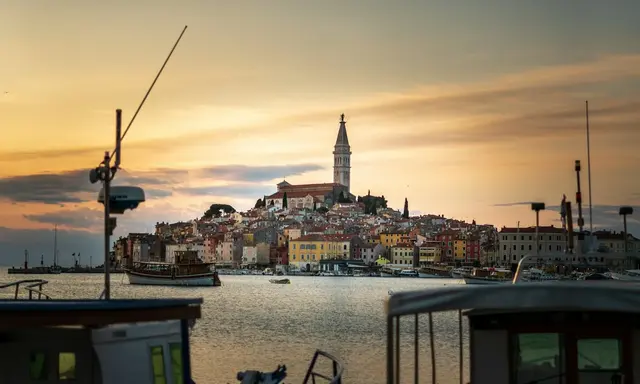
Header photograph: Fornells port, Menorca, photographed 14 July 2020 by Josep Renalias (Lohen11), CC BY-SA 4.0, Wikimedia Commons. Resized and converted to WebP. Archive image does not establish berth availability or current mooring layout.