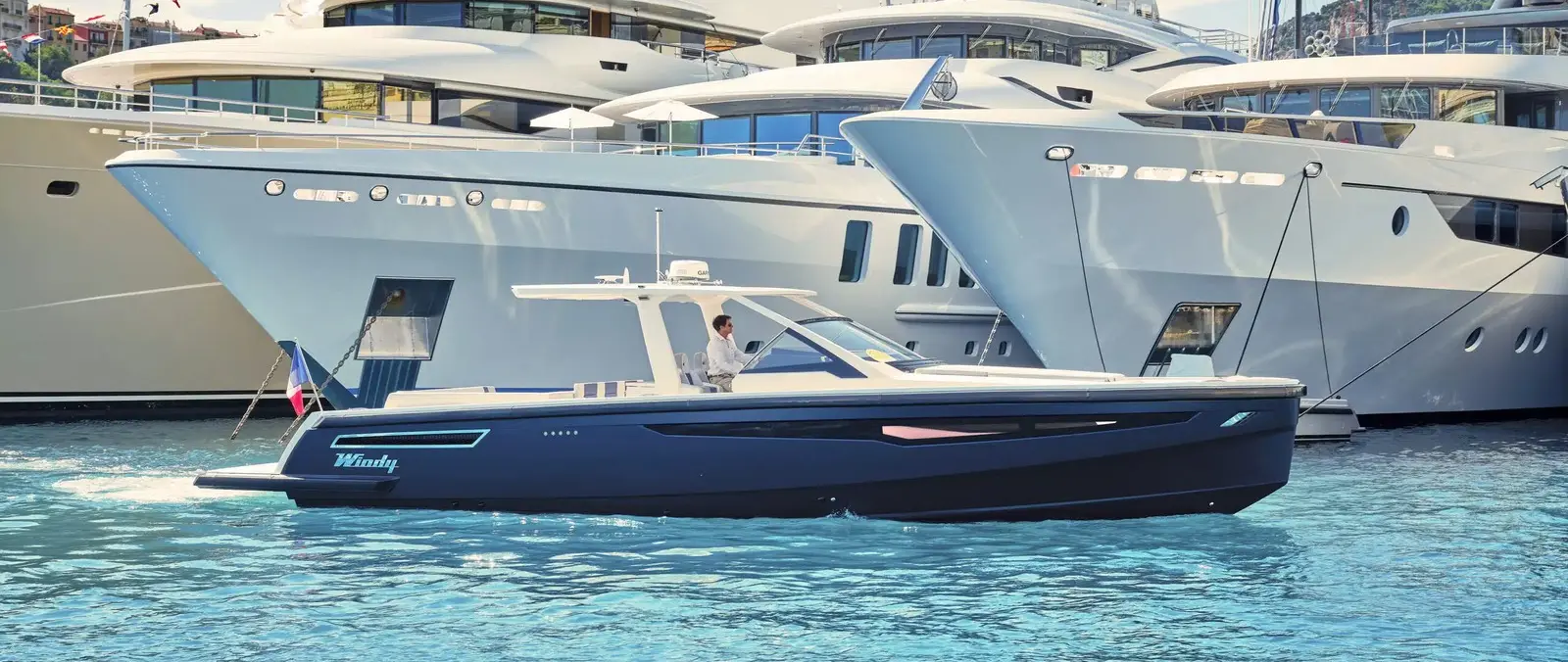
A Scandinavian chase boat with two distinct personalities
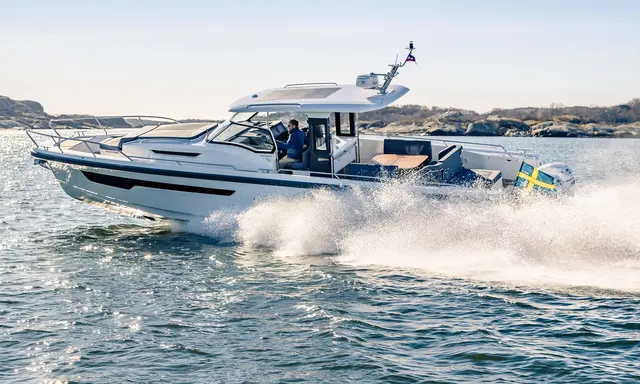
The Windy SR44 Blackhawk is designed to serve two different, demanding roles. It can be a high-performance sports boat for an owner who wants fast coastal outings, or a sophisticated chase boat working alongside a much larger yacht. Its length depends on the propulsion arrangement, with the manufacturer listing 14.03 metres for inboard power and 14.46 metres for the outboard version. Those dimensions give the model enough deck space for social cruising while remaining fundamentally different from a heavy enclosed motor yacht.
The Scandinavian builder draws on the principles of its larger SR52 model, emphasising a deep-V hull, clean deck circulation and carefully finished spaces. Windy identifies Hans Jørgen Johnsen in the naval architecture information and Design Unlimited in the interior design credits. It is the kind of vessel where the quality of the ride and the way the crew can move around the deck matter more than how many cabins can be squeezed into the hull.
The model's 3.96-metre beam leaves room for an inviting cockpit without making the vessel excessively broad for the type of harbours used by luxury tenders. It is still substantial compared with a conventional tender, so berth dimensions and the practicalities of operating near a parent yacht should be considered from the start. The best use case is an owner who wants a separate fast boat with genuine onboard comfort, rather than expecting it to duplicate a superyacht's accommodation.
Inboard and outboard specifications should not be confused
Windy's published technical data differentiates clearly between the propulsion choices. The inboard SR44 is listed at 14.03 metres, with a top speed of up to 44 knots, while the outboard alternative measures 14.46 metres and is rated by the builder at up to 52 knots. These are manufacturer performance figures subject to engine installation, loading, hull condition and sea state, not promises that every individual boat will achieve the same speed.
Engine choices are correspondingly varied. Windy lists twin Volvo Penta diesel installations and an IPS alternative for the inboard arrangement, while the outboard version can be specified with twin Mercury V12 600 engines or three Yamaha 425 XTO units. Choosing between these packages involves more than a preference for a particular engine badge. Manoeuvrability, service availability, noise, deck access and the intended cruising region can all influence which combination works best.
The manufacturer quotes 900 litres of fuel for the inboard configuration and 1,600 litres for the outboard version, alongside indicative ranges of up to 245 and 275 nautical miles respectively. Those figures should be evaluated against the specific engine option and cruising speed, with sufficient reserves for the planned operating area. A superyacht's chase boat may follow a different programme from a family sports cruiser, making passage planning and refuelling logistics an important part of any specification discussion.
The deep-V concept reflects the emphasis on controlled handling when conditions become less accommodating. Even a technically capable fast boat, however, must be operated with careful attention to sea state and passenger comfort. High-speed performance is not a substitute for prudent weather decisions, appropriate safety equipment or trained crew. A sea trial at several speeds and through real chop is much more informative than relying on the highest number in a brochure.
A cockpit intended for moving, not merely sitting
The SR44's deck arrangement is shaped around circulation between driving, socialising and relaxing. Windy describes a spacious, balanced layout that keeps passengers closely connected with the sea, a quality that makes sense for both dayboat and tender use. When people come aboard from a larger yacht, comfortable steps, clear routes and places to stow their belongings become especially important. The deck should be assessed with the expected passenger group, not just during an empty-boat viewing.
The manufacturer also highlights the possibility of tailored storage solutions, including provisions for diving equipment. Such personalisation may be particularly useful where the boat supports watersports or shore excursions from a superyacht. Owners should consider the weight and location of specialist gear as part of the installation, because a tidy compartment is only useful if it keeps essential equipment secured and readily accessible while under way.
Design details have a functional as well as visual role. A large social cockpit should allow the helm crew to retain awareness of passengers, while movement fore and aft should remain sensible when the vessel is pitching or rolling. The SR44 is presented with contemporary Scandinavian styling, but the real value of that restraint is a deck that is relatively easy to understand and use. It is an attractive proposition for owners who prefer a purposeful, uncluttered environment.
Cabin comfort with a working purpose
Windy describes a lower-deck interior combining refined finishes with practical storage and a place to retreat during longer days. The brand credits Design Unlimited alongside its own design team for this area. The intention is not to turn the SR44 into a multi-cabin cruising yacht. Instead, the accommodation complements the boat's primary role as an open sports vessel by offering shelter, privacy and a space where personal belongings can be managed away from the weather.
For many owners, the quality of these secondary spaces determines whether a fast dayboat remains enjoyable over a long season. The ease of using the head, access to storage, suitable ventilation and the ability to prepare for another outing should all be examined carefully. A well-appointed cabin may also be appreciated when waiting for weather or when guests want a quiet interval away from the cockpit. Practical comfort should be judged alongside design finishes and lighting.
Specific equipment choices can alter the balance between leisure and support duties. A tender commissioned to transport guests between a superyacht and the shore may prioritise seating and boarding access, while a privately owned SR44 used as a sports boat might devote more space to water-sports equipment. The model's appeal comes from its adaptability, but specification should be driven by activities that will actually take place, not the most ambitious possibilities in a sales catalogue.
The appeal of a genuinely versatile 14-metre boat
The SR44 Blackhawk sits in an interesting position between an everyday family cruiser and a specialist support craft. Its speed potential, deep-V heritage and customisation possibilities allow different owners to build around different priorities. Maintenance arrangements may vary considerably between inboard and outboard installations, so the selected propulsion package should be reviewed with local service providers before purchase.
An owner who already has access to a large yacht may value an independent fast vessel for exploring nearby bays, transporting small groups and visiting marinas that are inconvenient for the parent boat. Someone buying the SR44 as a stand-alone sports boat may focus instead on cockpit comfort, fuel use and overnight practicality. Both should insist on a demonstration that reflects real passenger loads and the conditions in which the boat will normally operate.
This examination reflects the Windy SR44 Blackhawk's current manufacturer information and the differences between its propulsion variants, not a claim of a new October 2026 debut. With lengths around 14 metres, performance-oriented engineering and a distinctly Scandinavian approach to interior and exterior design, it offers a credible choice for luxury boating where speed, handling and adaptable space take precedence over elaborate accommodation.