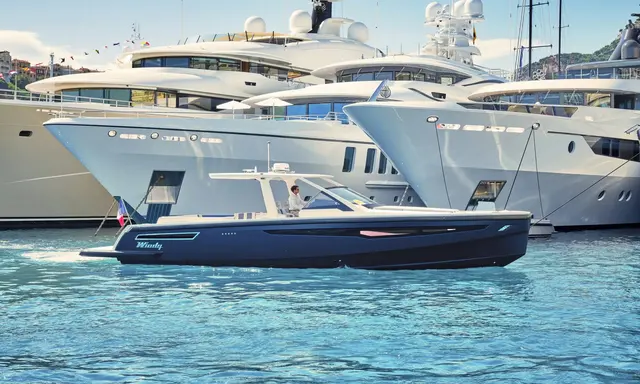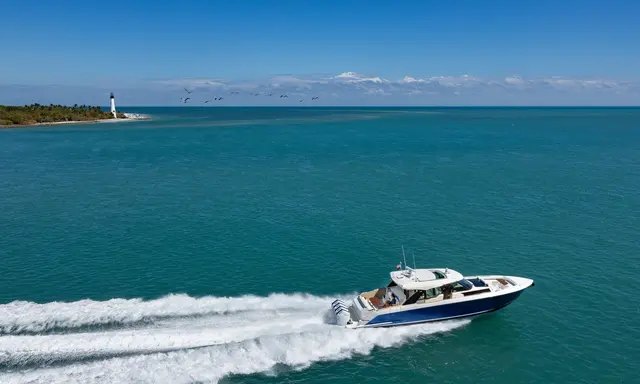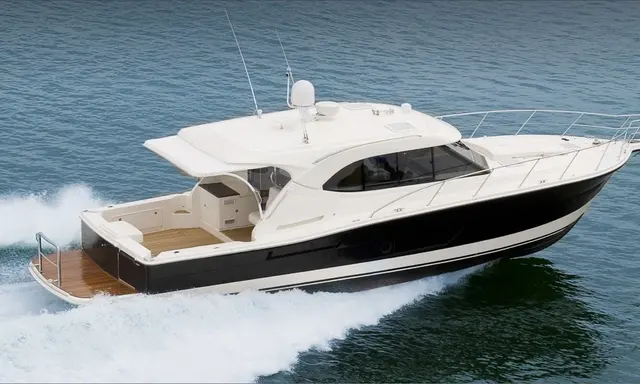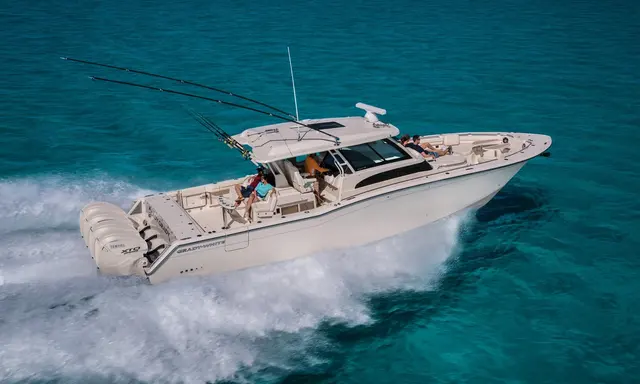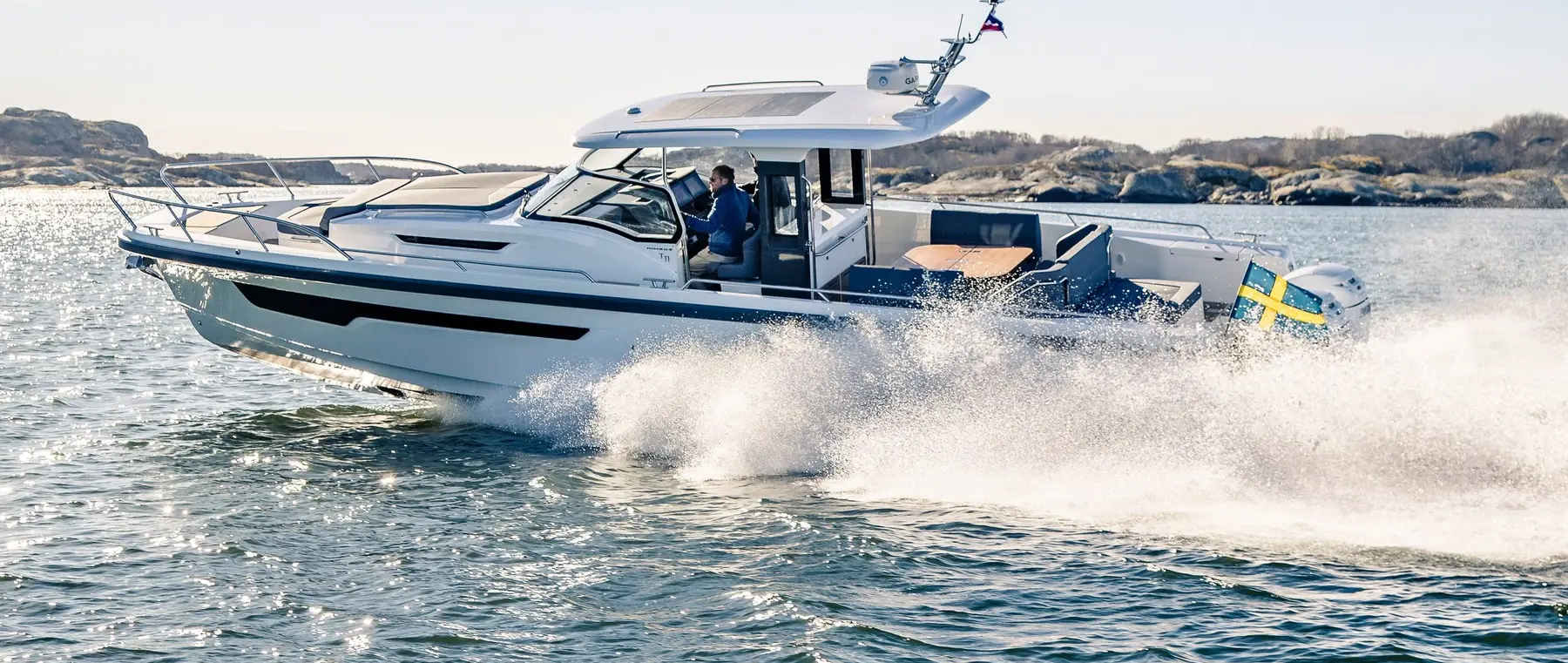
A practical 12.40-metre interpretation of the dayboat
The Nimbus T11, also marketed as Tender 11, is a Scandinavian walk-around boat developed for people who want to use nearly every part of the deck. At 12.40 metres overall, it offers more space and protection than a conventional small open tender while remaining firmly within the category of owner-operated sports boats. Nimbus presents the model as a practical platform for everything from family cruising and water sports to transporting passengers between shore and a larger yacht.
Rather than filling the centre of the boat with an enormous enclosed structure, the builder has organised movement around a sociable cockpit and generous aft lounge. The concept allows guests to change seats, walk forward or reach the boarding area without continually squeezing between fixed furniture. On a long day with friends, that circulation can make the yacht feel more generous than its dimensions suggest. It is especially valuable when people board with equipment or want to move between swimming and dining.
The published beam is 3.46 metres, with a draught of approximately 0.90 metres. Those dimensions provide useful deck volume but keep the T11 within the handling and berthing context of a large dayboat rather than a full-sized motor yacht. Owners should still check suitable berth width, loading arrangements and whether their regular destinations have convenient boarding facilities. Compact proportions do not make preparation and responsible seamanship optional.
A stepped hull and several propulsion choices
Nimbus describes an air-lubricated stepped hull and a fine forward entry, with performance intended to support efficient, responsive handling across a range of operating conditions. The builder cites speeds above 40 knots, but the precise result depends on the chosen engine combination, loading and sea state. A boat's performance identity is most useful when it translates into an enjoyable ride at the speeds its owner actually prefers, not simply the highest figure displayed in a technical table.
The manufacturer's engine alternatives include twin Mercury Verado V8 300 outboards, twin V10 400 outboards and twin Volvo Penta D4 DPI diesel installations rated at 320 horsepower per engine. Those packages can lead to different performance, noise, maintenance and service considerations. Prospective owners should compare fuel use and handling on the specific arrangement offered. A short test at maximum speed cannot substitute for a longer trial at comfortable cruising speeds in the local sea conditions.
Nimbus lists a fuel capacity of 850 litres and freshwater storage of about 135 litres. These capacities suit the vessel's emphasis on extended day use, but they do not establish a guaranteed range or the length of time a full passenger group can remain away from a marina. Fuel planning requires real consumption data and a reserve suited to the intended passage. Water use similarly varies with showering, cooking and the number of people aboard.
The boat's compact upper profile is balanced by a published maximum air draught of approximately 3.85 metres. Owners cruising on waterways with fixed bridges should verify the height of the actual boat, including antennas and fitted accessories. Details such as a T-top, radar or other equipment can affect clearances in practice. Reliable dimensions are essential for planning routes, just as an accurate understanding of draught helps when approaching shallower anchorages.
A cockpit that can be reorganised
The T11's central social area is one of its strongest arguments. Nimbus combines several sofas, a table and sunbed arrangements into a flexible lounge rather than locking the whole cockpit into one purpose. For a family, that may mean room for lunch at anchor and somewhere to stretch out later in the afternoon. For a yacht owner using the boat as a tender, it can provide comfortable seating while moving guests between destinations.
An outdoor galley can be equipped with features such as a grill, refrigeration and an ice maker, depending on the options selected. These details support the concept of a self-contained day at sea, with refreshments prepared close to the guests rather than requiring everyone to go below. Optional sun shading can also affect comfort during the hottest parts of the day. Buyers should distinguish the base specification from available equipment before assuming every example carries the same facilities.
Storage is another practical strength. The manufacturer's published description includes an unusually large aft storage area for equipment and water toys, demonstrating that a dayboat needs more than attractive seating to be genuinely useful. A boat used regularly for swimming, diving or paddle sports accumulates gear quickly. The ease of reaching storage compartments, washing them down and safely securing equipment should be tested during an inspection.
Four berths add overnight usefulness
Although the T11 is conceived chiefly as a dayboat, it offers sleeping accommodation for four people in two sleeping areas, according to the builder's specifications. A forward double berth and a mid-cabin double berth create more flexibility than might be expected from an open sports model. The layout also includes a separate head and shower. These features make the boat relevant to couples or small families who occasionally want to spend a night away from home port.
That overnight capability should be viewed realistically. The T11 is not a replacement for a much larger two-stateroom cruising yacht with extensive private spaces, but it can provide the convenience of staying aboard after a long coastal outing. Guests will appreciate adequate lighting and ventilation, while owners will want storage for clothing and dry equipment. Inspecting the cabin with the intended crew gives a clearer picture than counting berths in isolation.
Optional equipment includes solar panels on the T-top, a diesel generator and air-conditioning arrangements, depending on the configuration. These additions can enhance comfort but change electrical load, service requirements and weight. The best configuration is the one that supports the owner's actual cruising pattern without creating unnecessary complexity. Owners planning mostly short day trips may have different priorities from those intending to overnight frequently.
Choosing a boat for active coastal life
The Nimbus T11 combines an open walk-around layout with a faster hull, a usable cabin and flexible outdoor furnishings. It therefore appeals to buyers who want to spend time close to the water, explore smaller destinations and entertain without employing a permanent crew. As with any performance boat, safe movement around the decks and a clear view from the helm should be assessed in the conditions where the vessel will operate.
The most sensible purchasing questions concern real routines: how many passengers normally come aboard, which engine service network is available locally, how much gear needs to be carried and whether overnight accommodation will actually be used. A sea trial with several guests can reveal how the seating, helm and deck circulation work together. Specifications and images are valuable starting points, but they cannot replace direct experience.
This is a look at Nimbus's established T11 design and its current published specification, not an announcement of a new October 2026 launch. Its 12.40-metre hull, walk-around layout, optional day-cruising facilities and four berths show why the modern luxury tender category can overlap with genuine family cruising. For owners who prefer active days rather than enclosed living spaces, that balance may be the model's strongest selling point.