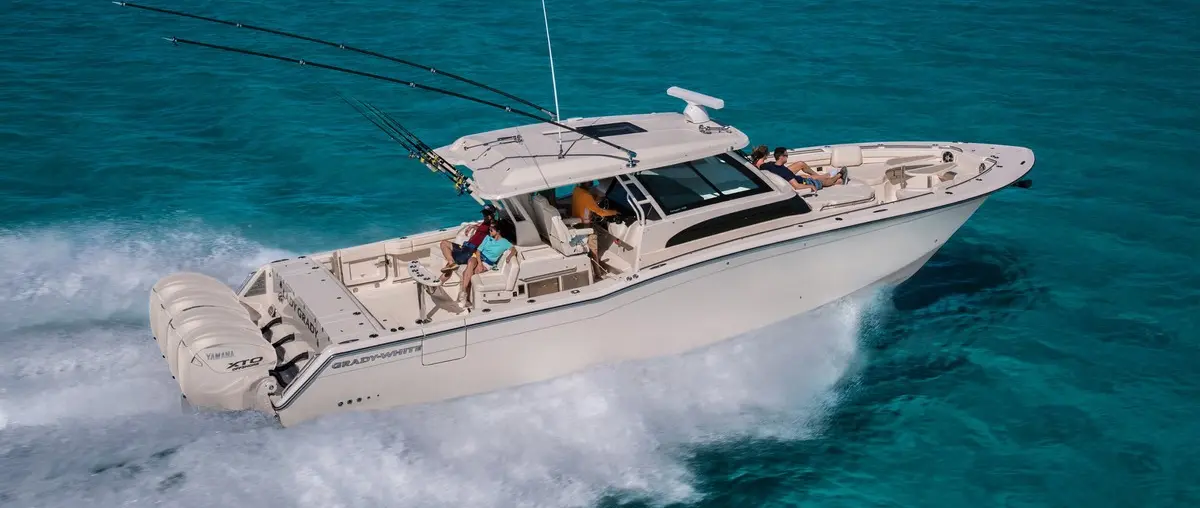
An offshore flagship with room to entertain
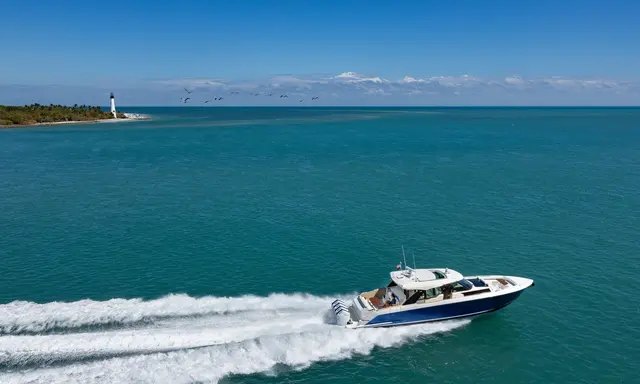
The Grady-White Canyon 456 is a substantial centre-console boat built for the unusual owner who wants serious offshore fishing capability without surrendering luxury day-cruising comfort. The American manufacturer calls it the flagship of its Canyon range. At this size, the point of the design is not simply faster fishing trips. It is the possibility of taking family and guests aboard a capable open-deck vessel whose practical equipment is hidden within a welcoming, well-organised layout.
Grady-White specifies a centreline length of 45 feet, or 13.72 metres, excluding engines, and a beam of 14 feet, approximately 4.27 metres. Those figures distinguish the boat from smaller centre consoles that can become crowded once anglers and their equipment are aboard. Here there is room to circulate forward and aft, with space for dedicated cockpit work and conversation. It is still a single open-deck layout, though, and buyers should consider weather exposure as well as its generous proportions.
The published hull figures include a 21-degree transom deadrise and a hull draught of around 0.76 metres. These numbers offer insight into the design but do not guarantee a particular ride in every sea state. Load, speed, weather and the decisions made at the helm always matter. The builder's SeaV² hull identity is a long-standing part of the model's appeal, while the true test remains how the chosen engine configuration behaves in realistic offshore conditions.
Outboard power and fuel planning
The maximum rated horsepower is 1,800, a capacity figure rather than a claim about the installed engines on every Canyon 456. Potential buyers need the precise outboard specification for the boat being considered, including power, propellers and control systems. An extensive engine installation can support ambitious offshore use, but it also brings service and fuel costs that should be evaluated alongside the freedom of travelling quickly between coast and fishing grounds.
The manufacturer lists a standard fuel capacity of 616 US gallons, equal to approximately 2,332 litres, distributed between two tanks. This is an important figure for passage planning, but fuel capacity does not establish range without reliable consumption data, weather allowances and sensible reserves. Anglers travelling far offshore should calculate fuel use for the actual engine installation and voyage. Owners using the boat mainly for shorter social trips may find that the efficiency of their preferred cruising speed matters more than maximum power.
A 4.27-metre beam also requires attention once the boat returns to harbour. Marina berth widths, lift arrangements, service access and engine clearances all influence how convenient the vessel will be to own. The low-profile centre-console architecture can make the boat appear simpler than an enclosed cruiser, but sophisticated electronics and several large outboards call for equally disciplined upkeep. Planning the home-port routine is as important as imagining a perfect day at sea.
Equipment that serves a fishing crew
Dedicated fishing facilities are built into the layout, not attached as an afterthought. The manufacturer's equipment list includes port and starboard transom livewells of 35 US gallons each, substantial insulated fish boxes and multiple rod-holding positions. These details matter during a long offshore session when safe movement around the cockpit and convenient access to equipment are essential. An owner can reasonably expect fishing storage to be easily reached, secured and washed down at the end of the day.
One prominent feature is an aft insulated fish box listed at 459 quarts, or roughly 434 litres, with refrigeration/freezing capability. Additional bow fish boxes and lockable rod storage extend the working capacity of the boat. Serious anglers will inspect how their preferred tackle fits and how the crew can operate the equipment without blocking passage around the console. Leisure owners, meanwhile, may appreciate that the same large storage spaces can support long days with water-sports equipment and provisions.
The substantial aft cockpit is complemented by a wide forward area, allowing different groups to use the boat at once. That separation works well when a fishing crew is active at the stern and guests prefer the bow. Safety remains a practical consideration: secure footing, usable handholds and clear deck routes have greater value offshore than the appearance of an uncluttered brochure photograph. A sea trial should include ordinary movement around the entire deck as well as time at the helm.
A sociable boat beyond the fishing grounds
The Canyon 456 is also designed to entertain. The builder lists adjustable tables in the bow, seating with movable backrests, a foldaway aft bench and carefully arranged helm seating. These features allow its open deck to shift between an active working environment and a comfortable place for a quiet lunch at anchor. The distinction between a purposeful fishing layout and a sociable cruising layout is one of the flagship's defining strengths.
Inside the console structure, the manufacturer illustrates facilities including a head and galley area, adding privacy and convenience for extended days afloat. However, potential buyers should not assume a centre-console boat provides the same volume of sleeping accommodation as a multi-cabin enclosed yacht of comparable overall length. The interior's value is that it supports the open-deck experience: a place to prepare refreshments, manage personal needs and find some separation from activity on deck.
The published equipment also extends to a 12-kilowatt diesel generator, digital electrical management and gyroscopic stabilisation. These systems indicate the level of comfort now expected in the high-end centre-console category. They warrant a realistic ownership discussion as well, including generator service, electrical support, marine air-conditioning and access to specialised technicians. Sophisticated equipment can make a day easier, provided it is maintained to the standard its complexity demands.
Choosing the right kind of luxury
The Canyon 456 is likely to appeal most to owners who enjoy being close to the water and want the flexibility to fish offshore early, host friends in the afternoon and return to harbour without changing boats. It does not replace an enclosed cruiser for everyone. Weather protection and accommodation are different, and the pleasure of an open deck should be weighed against how and where the yacht will be used throughout the year.
A sensible specification review should start with intended use, not accessory count. Confirm the engine installation, assess the deck with the usual number of people aboard, review fishing equipment that will genuinely be used and plan maintenance and berth access. The result is a more revealing test than comparing maximum horsepower alone. For a family with varied interests, good seating and easy movement may be just as valuable as the specialist fish boxes.
The Grady-White Canyon 456 demonstrates why large centre consoles have become a distinctive part of premium boating. Its 13.72-metre hull, extensive fishing provisions, generous seating and substantial fuel supply let the same vessel serve very different days on the water. This is an examination of the manufacturer's established model rather than a claim that it launched in October 2026. The central attraction remains its blend of working-boat purpose and refined leisure use.