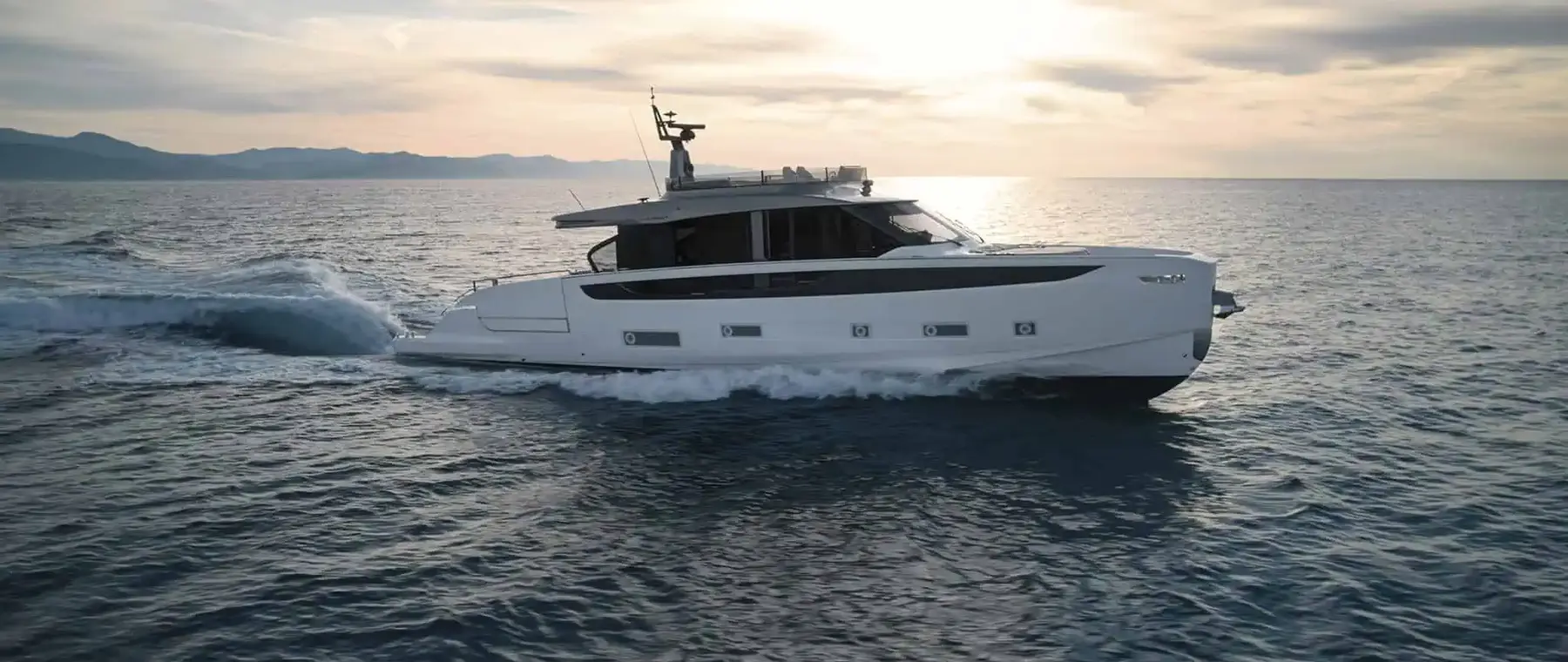
Volvo Penta and Azimut Yachts have moved their IPS Hybrid programme from prototype development into a market-ready package for the Azimut Seadeck 7. The 21.70-metre motor yacht is the LYG-sized application of a two-year joint engineering programme focused on quieter operation, energy management and integrated propulsion.
The announcement at Cannes matters because the technology is no longer being presented only as an experimental installation. Azimut has told its dealer network that the system is ready to be sold and delivered, turning a closely watched hybrid demonstrator into an ownership option.
Electric cruising without a separate generator
The hybrid package combines Volvo Penta IPS diesel propulsion with electric motors, batteries, controls and energy management in one integrated system. On the Seadeck 7, Azimut says the yacht can operate in pure-electric mode for short periods and remain at anchor with hotel loads powered from the battery bank rather than a conventional generator.
That changes the owner experience as much as the emissions profile. Silent manoeuvring, reduced vibration and quieter nights at anchor are practical benefits that can be noticed immediately, while the electrical architecture also supports energy recovery and faster battery charging.
Helm-to-propeller integration reduces complexity
Volvo Penta describes the package as an integrated solution from helm to propeller. Instead of treating the diesel engines, electric motors, batteries, controls and software as separate systems from different suppliers, the package is engineered and supported as one propulsion and energy platform.
For builders and owners, that has implications beyond installation. A single integrated architecture can simplify diagnostics, software management and service responsibility, which becomes increasingly important as propulsion and onboard electrical demand become more closely connected.
Seadeck 7 stays firmly inside the LYG sector
The Seadeck 7 measures 21.70 metres overall with a 5.48-metre beam and four guest cabins plus crew accommodation. Its conventional propulsion specification uses twin Volvo Penta IPS units, while the hybrid development builds electrification around the same broader IPS concept.
Azimut says the Seadeck approach can reduce carbon dioxide emissions by up to 40% over a year of average use when the yacht's hull, lightweight construction, propulsion and onboard energy systems are considered together. The hybrid package forms part of that wider efficiency strategy rather than operating as an isolated technology.
Hybrid propulsion enters a more practical phase
The important change in 2026 is commercial maturity. Volvo Penta and Azimut have spent the development period refining noise, vibration, robustness and control logic, and the move into the dealer network signals that the technology is now intended for real customer specification rather than demonstration alone.
For Luxury Yacht Guide readers, the Seadeck 7 provides a useful example of electrification reaching a family-sized luxury motor yacht below 24 metres. It shows how hybrid propulsion is shifting from specialist projects toward integrated factory options where comfort, range of operation and serviceability matter as much as headline sustainability claims.