Support at sea becomes part of the charter proposition
The Moorings has introduced new high-speed support boats for its charter operation in the British Virgin Islands, with the aim of improving the technical assistance it provides to customers away from its marina base. The international charter business announced the investment on 29 October 2026. Its statement describes the vessels as an upgrade to the equipment available to its local support team, rather than an addition to the fleet of yachts that guests can book.
The operator intends the boats to help technicians reach charter yachts more quickly and to broaden the range of weather conditions in which the support team can work. No response-time commitment or comparative sea-trial results accompany the announcement. The company also does not identify the number, model or individual operating limits of the new vessels.
For the luxury charter market, the investment demonstrates how the service provided around a yacht can be as important to the commercial proposition as the yacht itself. Bareboat customers and fully crewed guests purchase different kinds of charter experience, but both may depend on resources located ashore when a technical problem cannot be resolved by the people aboard.
A fleet investment with a different purpose
Charter operators normally publicise the addition of guest yachts in terms of accommodation, sailing or motor cruising characteristics, and new itineraries. Support craft serve a different function. Their value is connected to the ability of the business to maintain contact with vessels that are already out on charter and, where appropriate, deliver assistance without requiring them to return to base.
The Moorings describes the new craft as a means of transporting its technical staff across the charter area. That can influence the way the company allocates resources when several guests are sailing separate itineraries at the same time. A vessel that can travel more quickly under suitable conditions may allow a technician to devote a greater proportion of the working day to service tasks rather than transit. The announcement, however, does not quantify any improvement in the number of calls that can be handled or the time required to complete them.
The distinction between travelling to a vessel and resolving its problem is important. An engineer reaching a yacht promptly may still need particular spare parts, access to technical information or assistance from another specialist. The outcome will also depend on the nature of the fault and the conditions aboard. An investment in transport addresses one part of that chain of activity rather than every aspect of maintenance.
The charter company's marina operations, workshop resources and access to parts therefore remain relevant to the service available to customers. The announcement positions the new boats within that wider infrastructure instead of offering a separate technical service to owners of all vessels cruising in the territory.
The particular demands of an island cruising area
The British Virgin Islands have long been associated with charter sailing between islands. The distribution of anchorages gives a charter guest considerable flexibility in choosing a route, while also creating a service area extending beyond any single marina. A technician working with that fleet may need to travel to different locations during the same day.
Conditions during a charter can differ between sheltered bays and more exposed stretches of water. A skipper considering whether to remain at an anchorage or return to a marina after discovering an equipment issue must take account of the vessel's condition, weather and the advice received from the charter base. A support boat can form part of the operator's response, provided the circumstances permit a visit.
It would be inappropriate to interpret the announcement as an assurance that help will be available at every location in every weather condition. The operator's own statement refers to a wider range of conditions rather than unrestricted operation. The limitations of the support craft and the decisions of the personnel responsible for their operation remain relevant.
The update also concerns technical and guest assistance, not a public maritime rescue service. A serious emergency requires the appropriate emergency response arrangements. Customers should understand the distinction between contacting their charter company about equipment and requesting urgent assistance through the recognised channels provided in their charter briefing.
Different service requirements for bareboat and crewed guests
The Moorings offers sailing and power catamarans for independent charter, as well as fully crewed luxury yacht holidays. Its announcement explicitly addresses both kinds of customer. The arrangements for reporting and dealing with a technical difficulty may differ substantially between those groups.
On an independent charter, the person responsible for the yacht needs to understand its equipment and the circumstances in which additional assistance should be sought. A pre-departure briefing is an important opportunity to establish the normal reporting procedure and identify the information that the base will need in order to respond. The availability of an experienced shore team does not remove the skipper's responsibilities or the need for appropriate competence.
A fully crewed charter provides another interface between guests and the operator. The professional crew can assess many ordinary equipment questions and communicate the technical details to the relevant shore personnel. The guest may not be directly involved in coordinating assistance, but the resources available to the crew can still affect how the charter proceeds when an issue develops.
For premium sailing and motor catamarans between 12 and 23.99 metres, the practical value of those support arrangements can be considerable. Such yachts may carry extensive domestic equipment and multiple onboard systems in addition to their main machinery. Not every fault has the same operational significance, and the appropriate response should be determined by the people responsible for the yacht in consultation with the company where necessary.
The new support craft are relevant because they give the local team an additional means of reaching customers. They do not establish that every mechanical or domestic equipment fault can be repaired away from the base.
Technical support before the yacht leaves the marina
The company's October announcement describes a service programme that begins before departure, covering yacht preparation, briefings and advance planning. That broader approach is important in interpreting the investment. Effective support is not exclusively concerned with responding to faults after a vessel has left its berth.
A charter business needs to allocate sufficient time between bookings to prepare the yacht and identify items requiring attention. Its staff should have access to relevant equipment records and understand which issues can be resolved locally. A clear exchange of information with the incoming skipper can also help distinguish unusual behaviour from a normal characteristic of the installed equipment.
When an issue is subsequently reported at sea, the quality of the description can affect the response. The circumstances in which an indication appeared, the equipment concerned and the yacht's location may help the base decide whether a technician needs to visit. The appropriate approach will depend on the particular fault and the relevant equipment procedures.
There is a commercial balance involved in the maintenance of a geographically dispersed charter fleet. Time devoted to travelling between yachts is time that cannot be used for work elsewhere unless additional resources are available. A more capable support fleet may create options for organising those responses, but there is no evidence in the statement quantifying the effect on the operator's maintenance costs or fleet availability.
In that respect the announcement is a useful illustration of the relationship between yacht maintenance and the logistics of providing service in a popular cruising destination. The two aspects cannot be assessed in complete isolation.
Implications for the wider luxury charter industry
Charter businesses compete through the vessels available to guests, the destinations in which they operate and the quality of the service surrounding a booking. The Moorings has operated in the yacht charter sector since 1969 and describes the British Virgin Islands as its most established base. Its investment there concerns an existing operation, rather than the opening of a new destination.
A prospective charter customer evaluating a holiday may reasonably ask how the provider handles technical issues, what arrangements apply when cruising away from a marina and what assistance is included in the booking. Those questions should be considered alongside yacht specifications, itinerary restrictions and the contractual terms of the charter. The availability of support can be particularly relevant to customers operating a yacht independently in an unfamiliar destination.
For the charter industry, the development is also a reminder that expanding or modernising the guest fleet can create corresponding requirements for shore-based resources. The company has not announced a new luxury yacht delivery in this release. It has instead identified its support infrastructure as an area of continuing investment.
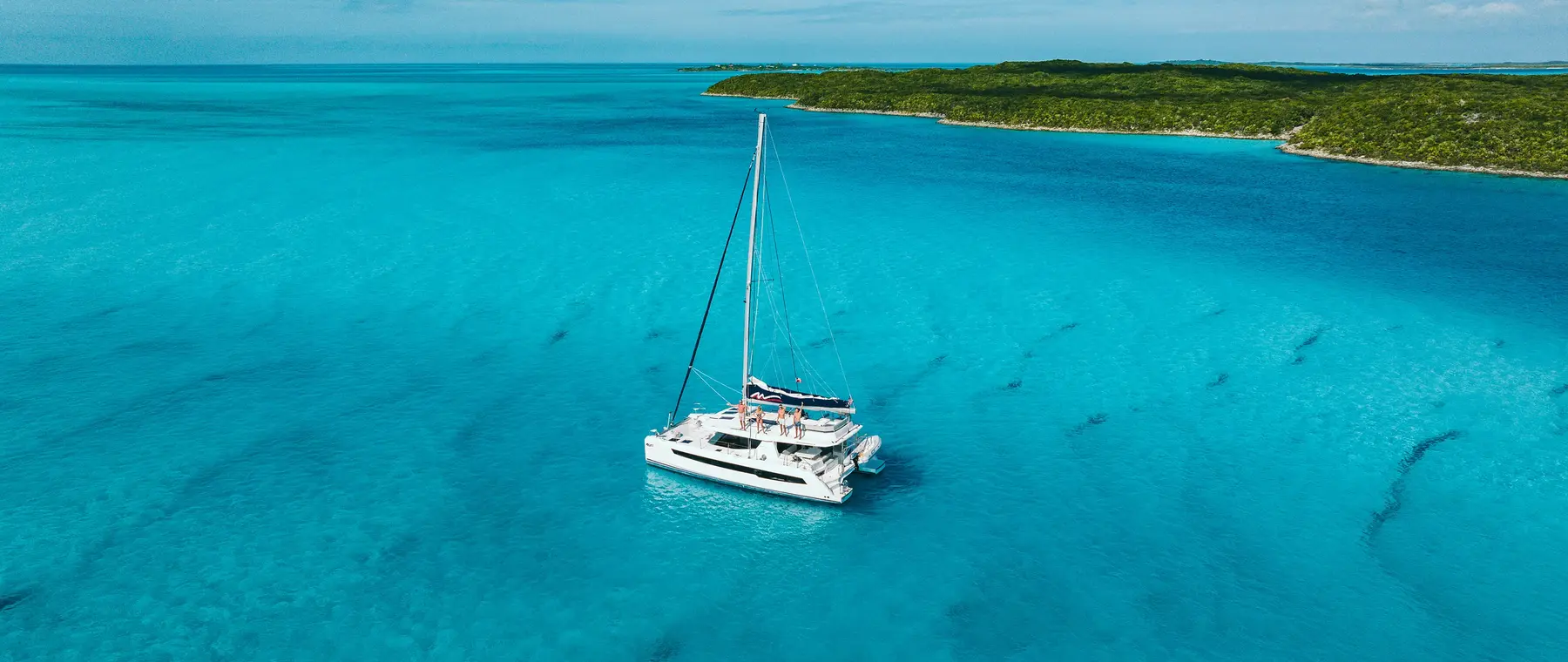
The photograph accompanying this report was supplied by The Moorings through its press release distribution service and depicts charter sailing in the Bahamas. It illustrates the company's broader catamaran charter activities, not the new support craft or a particular location in the British Virgin Islands. The confirmed news remains the introduction of the upgraded support boats in the BVI operation.
The practical results of that investment will depend on how the craft are deployed, the conditions in which assistance is requested and the technical resources available to the staff aboard them. The announcement does not provide outcome data against which an improvement in customer service can yet be independently measured.
Sources and lead image
Source documentation: https://www.prnewswire.com/news-releases/the-moorings-elevates-on-the-water-guest-support-in-the-british-virgin-islands-302922768.html. Lead image: The Moorings charter sailing catamaran in the Bahamas, illustrative photograph — The Moorings, official press photograph distributed with its 29 October 2026 British Virgin Islands support-boat announcement; the image is from the Bahamas and does not depict the new support boats.. Official issuer-supplied press photograph, reproduced for editorial coverage of the specific announcement and resized for web display.