Four companies on one Metstrade stand
Southern Spars and Hall Spars will exhibit together at Metstrade 2026 for the first time, bringing their rigging businesses into a shared presentation with Future Fibres and RigPro. The official Southern Spars statement identifies the Amsterdam event as a setting for discussing mast structures, standing rigging, manufacturing, engineering and long-term service as connected elements rather than separate purchases. The companies say they will be in the Superyacht Pavilion at stand 08.603. Although that location reflects the group's work on very large sailing yachts, the announcement has a direct relevance to Luxury Yacht Guide's 12-to-23.99-metre sailing audience. Hall Spars explicitly identifies a wider market from 30 to 110 feet, a range that includes substantial numbers of owner-operated and professionally crewed cruising yachts below 24 metres. For those yachts, rig quality affects both performance and dependable passage-making.
What is new at the 2026 exhibition
The immediate development is the combined appearance and common service story. Southern Spars' release says this will be the first time the two spar makers have exhibited together at Metstrade. Future Fibres and RigPro are included to broaden the discussion from mast design and manufacture through supporting rigging products and ongoing care. That does not mean the group has launched a single universal rig package for every sailing yacht, or that systems from different projects can simply be substituted. The stand offers access to expertise in related disciplines under one presentation. Owners and yards should still expect a design proposal for the actual vessel, prepared around hull geometry, loads, intended sailplan and operational profile. The benefit of integration is potentially clearer communication among specialists, but the details of any agreement or installation remain project-specific.
Hall Spars and the mid-size yacht market
One of the most important details for readers is Hall Spars' stated product reach. The manufacturer says it is broadening its systems for cruising yachts, racing boats and multihulls, referring to yachts from 30 to 110 feet. At the lower end are boats below Luxury Yacht Guide's sector; at the upper end are yachts clearly within the superyacht category. Between them sits a substantial 12-to-23.99-metre market where carbon spars, rigging upgrades and maintenance decisions can be commercially significant. A 14-metre performance cruiser may prioritize handling and ease of use, while a 22-metre long-range sailing yacht can have different load cases and service requirements. A broad product range does not remove the need for engineering assessment. It does make Hall Spars' presence at the show relevant beyond extreme racing and very large custom projects.
The Rig of 2030 concept
Southern Spars is also promoting a project it calls Rig of 2030. Developed with Future Fibres and RigPro, it explores a future in which mast structures, rigging, sail aerodynamics and onboard technology are designed more closely as one operating system. The manufacturer describes this as a vision and development direction, not a finished product with a confirmed universal specification or a measured performance guarantee. That distinction is important. It would be misleading to claim that a 2030 rig can now be ordered for any existing yacht and will automatically deliver a defined percentage increase in speed. The broader engineering point is credible: the mast bends under load, the sail changes shape, rig tension changes and the hull responds. Studying these interactions together may reveal ways to improve reliability and handling. Actual gains must be demonstrated through design and trials on named projects.
Why integrated engineering matters
Owners often encounter sail performance as a collection of components: a mast, standing rigging, sails, winches, furling gear and electronic instruments. In reality, their behavior is connected. Changes in rig stiffness or sail geometry affect load paths and handling; additional sensors may provide useful information only if those readings can be understood and acted on by the crew. The Southern Spars approach emphasizes composite structure, specialist rigging and technology in the same discussion. For a cruising yacht, integration may be valuable because it can support a design that is easier to operate consistently, especially during long passages or changes in weather. None of this implies that complexity is automatically beneficial. Owners should ask what the proposed system adds, what it requires in routine inspection and whether the yacht's crew can realistically maintain it.
A vision shaped by racing and larger yachts
The company's published description refers to experience gained on advanced foiling projects including Raven, Gitana and Ferrari Hypersail, alongside substantial sailing yachts such as Sarissa and Maximus. Those examples demonstrate the breadth of the group's project history, but they are not themselves examples of 12-to-24-metre production yachts equipped with a new 2030 system. Technology can move between sailing sectors, yet it must be adapted carefully. Loads, structure, budget, sail-handling priorities and available specialist support differ between an offshore racer and a family cruiser. The meaningful transfer for smaller luxury yachts might be better engineering methods, manufacturing quality or monitoring tools rather than direct adoption of very large hardware. An owner should look for evidence of what has actually been used on a comparable yacht before approving a major rigging change.
Long-term service, not only initial supply
Rigging is an ownership issue as much as a build specification. Standing rigging, terminals, fittings, mast structure, halyards and controls operate under repeated load and exposure. Inspection and maintenance requirements depend on the actual configuration, material and service history. With RigPro involved in the joint exhibition, the group is making long-term support part of the offering it wants to discuss. That can be valuable for yachts that cruise across multiple countries, where future access to a qualified rigger matters. Yet the release does not guarantee a technician in every harbour or a fixed response time for every model. Buyers should request a service schedule, inspection criteria and documentation for replacement parts, then confirm that specialist support exists in the yacht's intended cruising area. The attraction of an integrated supplier depends on how well that support continues after handover.
Carbon rigs and practical trade-offs
Composite construction can offer important engineering possibilities in modern mast design, but material choice alone should not be treated as proof of a better sailing yacht. The proposal must account for the vessel's righting characteristics, deck structure, rigging geometry and the owner's expectations. A light rig may change how the boat responds, but the complete sailing system and its handling equipment determine whether the change is useful. Owners considering a retrofit should also evaluate installation access, any reinforcement needed, insurance approval, electronics integration and the cost of specialist maintenance. The Southern Spars announcement promotes an engineering approach rather than offering a single calculation that covers all yachts. Responsible reporting therefore avoids turning advanced composite experience into unsupported claims about universal speed or fuel savings. Each benefit has to be substantiated within the actual design brief.
The broader group offering
Future Fibres is associated with rigging technology, while RigPro brings a service dimension, and the two spar makers span different construction and performance requirements. Southern Spars describes the combined presence as giving designers, builders and owners a fuller route from structural concept to support. This may reduce the need to coordinate completely unrelated suppliers on a new project, although contractual responsibility still needs to be defined. When an owner commissions equipment from several businesses within a group, it is sensible to establish who signs off the overall engineering package, who carries the warranty and where changes are documented. If service is later performed in another country, the original build records should travel with the yacht. The most valuable outcome is not simply a shared corporate logo but a coherent set of technical responsibilities that can be understood by the owner and the yard.
Technical discussions beyond the show stand
The group's statement identifies two associated industry appearances. Southern Spars research and development manager Uli Sommerlatt is due to present the Rig of 2030 concept at the Yacht Racing Forum. Separately, Dr Martina Reche Vilanova of North Windships is scheduled to discuss wind-assisted propulsion in commercial shipping at VriThink's Night Out. These sessions address related but different subjects, and a commercial vessel's wind-assist technology should not be confused with a yacht mast system. Their presence illustrates the wider technical context of sail propulsion and composite structures. The lectures have not yet taken place at the time of this report, so no conclusions from those presentations should be stated as established results. Readers attending Metstrade can use them as opportunities to hear the concepts in more detail and ask for supporting data.
Questions for a 15–20 metre owner
A useful conversation at the stand could begin with the yacht's existing rig plan and inspection history. Is the owner considering a new boat, major refit or routine replacement of standing rigging? Are the priorities lower weight, easier handling, reduced maintenance demands or a sailplan that suits a particular cruising programme? What surveys or load analyses would be required before recommending new mast or rigging components? The answers may differ materially between a monohull and a performance multihull. Any proposal should include a clear bill of materials, installation assumptions, inspections and after-sales arrangements. Crucially, an owner should ask for examples on comparable boats, not assume that equipment successful on an extreme foiling project is automatically appropriate for a family yacht. Engineering credibility is demonstrated through the fit between the proposal and the vessel.
What the first joint appearance signals
Metstrade will take place from 17 to 19 November 2026, and the companies have announced their combined participation in advance. The news is therefore a commitment to exhibit and explain an increasingly integrated approach, not a report of orders booked or equipment tested during the show. For the 12-to-23.99-metre luxury sailing sector, Hall Spars' 30-to-110-foot product reach makes this more than a superyacht-only story. Owners may find value in discussing how rig design, structural manufacture, advanced rigging and long-term service are coordinated. The strongest future evidence will come from documented installations, model-level specifications and clear technical support. Until those emerge, Rig of 2030 should be understood as a development vision and the Amsterdam stand as an industry opportunity to examine its implications.
Primary sources: Southern Spars' official Metstrade 2026 announcement and the company's Rig of 2030 technical vision. Technical concepts are described as development plans, not independently verified equipment performance.
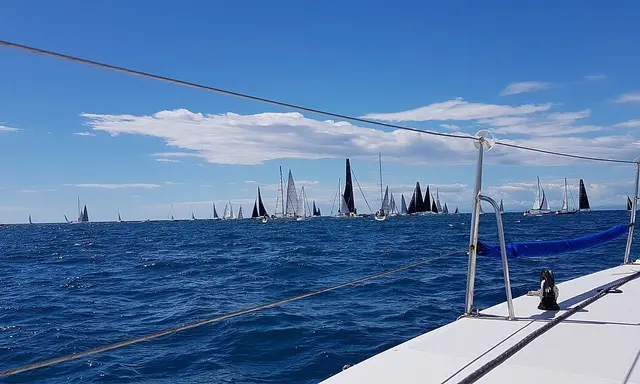
Photography: Official Southern Spars image distributed with the November 2026 Metstrade announcement, used for factual editorial reporting; image rights and source credited to Southern Spars. It does not document a 2030 rig installed on a specific 12–24m production yacht.