An integrated 48V pack for high-demand yacht services
HiBlade combines forty-two thin NCM semi-solid-state cells into a pack rated at approximately 6,750 watt-hours, with a nominal voltage around 50 volts and capacity of 135 amp-hours. Safiery quotes a unit weight of around 29 kilograms, offering designers a modular route to supporting larger electrical loads in the limited service spaces of a cruising yacht.
Such specifications are the manufacturer's declared ratings, not the measured endurance of a complete boat. Owners should calculate actual electricity demand from air-conditioning, refrigeration, galley equipment and hotel services, including charging losses, rather than translate battery capacity directly into a promised number of quiet hours at anchor.
Cell-level impedance is central to the new system
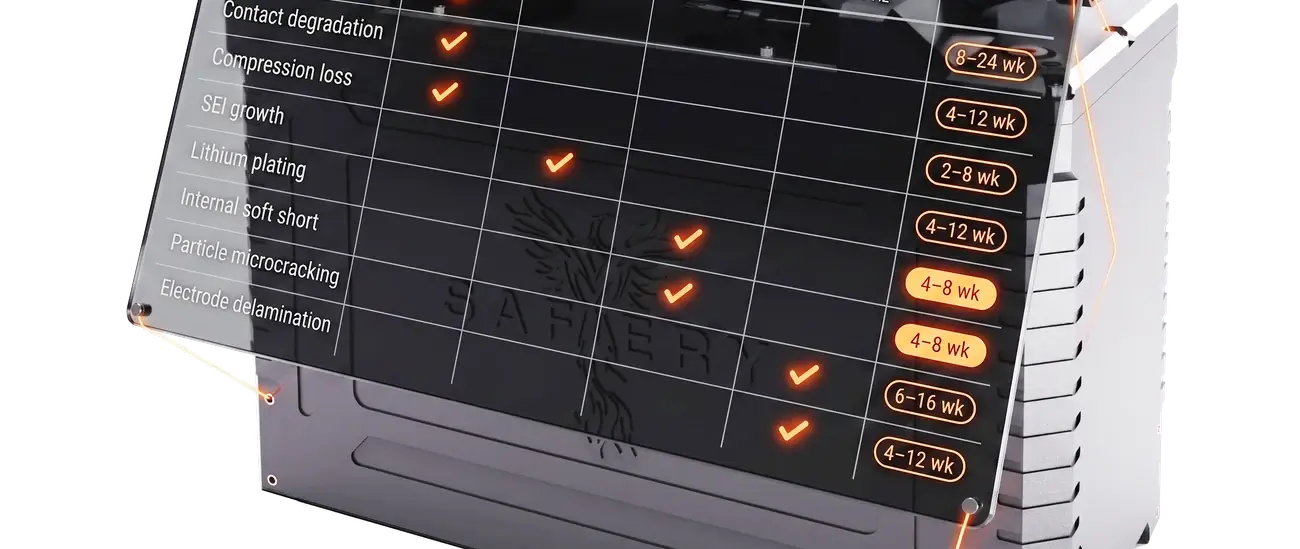
The most distinctive feature is the Quasar battery-management system, which Safiery says measures electrochemical impedance in individual cells during operation. The goal is to identify a developing abnormality within the pack before conventional terminal-voltage and temperature readings show a clear warning.
The company describes resistance measurements at micro-ohm resolution and claims earlier warning of possible internal defects. These are manufacturer statements and should not be treated as independently proven predictions of battery faults in every marine environment. Formal safety engineering remains necessary even where monitoring becomes more detailed.
Parallel banks introduce safety and commissioning demands
Safiery describes support for large parallel configurations, alongside current balancing and protection hardware that monitors the performance of separate modules. This could interest installers of 12.00–23.99-metre yachts with several battery packs supplying inverter loads or auxiliary electrical equipment.
Integration still needs qualified engineering for fusing, cabling, thermal management, battery isolation and emergency response. A control system cannot eliminate all risks associated with lithium batteries, particularly when improper installation, water intrusion or incompatible charging devices may be involved.
Certification and service evidence matter at purchase
The launch material references marine and industrial safety standards as part of the product-development pathway, but buyers should check current independently issued approvals for the exact specification being supplied. Claimed cell energy density, projected warning intervals and patent filings do not substitute for an approved installation.
For a new-build yacht, the practical question is how the battery connects to the vessel's existing distribution, charging and diagnostic systems and who supports that installation after handover. HiBlade is an IBEX 2026 product announcement, and its real value to owners will be established through commissioning quality, service arrangements and long-term operating results.
Official sources: safiery.com.