The latest recognition goes beyond the initial coating launch
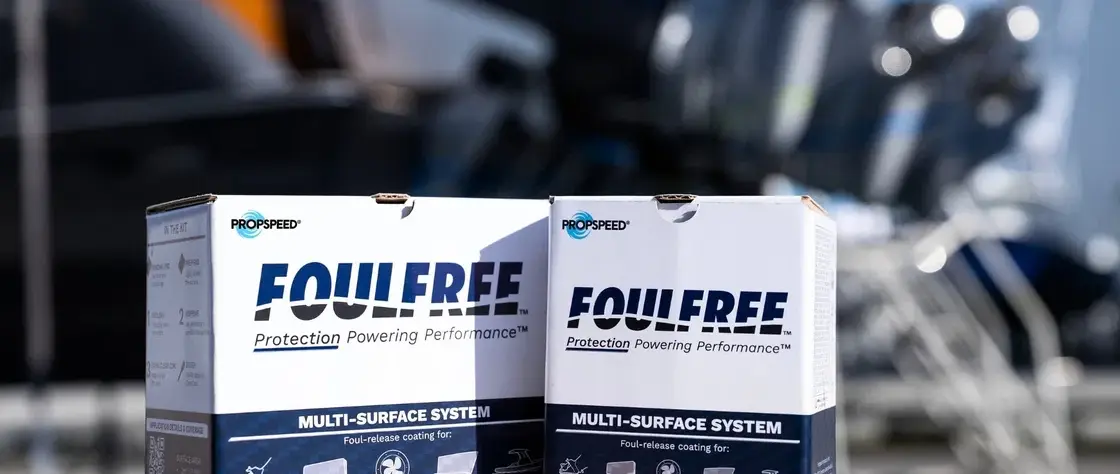
Foulfree Multi-Surface already existed as part of Propspeed's developing underwater-protection range, but its 2026 Newport award provides a separate news event: recognition by judges reviewing new products exhibited at the boat show. The decision came in a category covering boat operation, maintenance and safety.
A buyer should distinguish the award itself from quantified evidence of fuel savings or long-term coating performance. Selection by a show panel indicates perceived innovation and usefulness, while a suitable application schedule and real service history are still needed to judge durability on any particular yacht.
Different substrates create a complicated protection problem
Traditional antifouling arrangements often require different products for metal, glass, plastic and specialist components. Propspeed markets the Multi-Surface system for a range of non-metal surfaces around underwater equipment, including certain transducers, interceptors, thruster parts and appropriate inflatable material.
That broader approach may reduce the need for multiple separate coating products in a shipyard's inventory, but an owner must still confirm each substrate is approved and prepared correctly. A wrong application on a sensor face or moving part could interfere with equipment function, so manufacturer instructions and component warranties remain important.
A foul-release finish is not the same as a biocidal paint
Propspeed describes the Foulfree approach as clear and free of biocides, aiming to make it more difficult for organisms to remain attached to treated surfaces. Its role differs from conventional biocidal antifouling intended for broad hull coverage, and buyers should not assume it is an automatic substitute for all underwater coatings.
Maintenance intervals depend on water temperature, local fouling intensity, usage patterns and the quality of surface preparation. Even a successful finish should be inspected after haul-outs and after impacts or mechanical work. A clean component also still needs to be checked for physical integrity and calibration.
The practical opportunity is in planned yard work
For owners of 12–23.99m yachts, thruster tunnels, stabiliser surfaces and selected fittings can be costly to clean during annual maintenance. A compatible foul-release treatment may therefore be worth discussing with the yard when a boat is already out of the water, rather than making an unscheduled haul-out solely to test a new material.
The 2026 Newport award is an independently judged product-recognition event, but each owner should seek the manufacturer's latest compatibility list and application specifications. The result is more relevant to maintenance planning than to speculative claims about higher yacht resale prices or guaranteed cruising performance.
Official sources: www.propspeed.com.