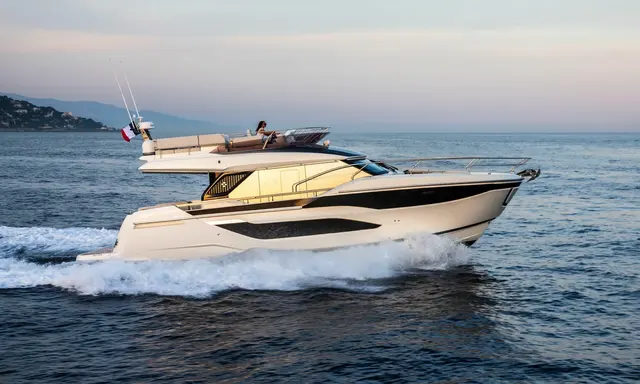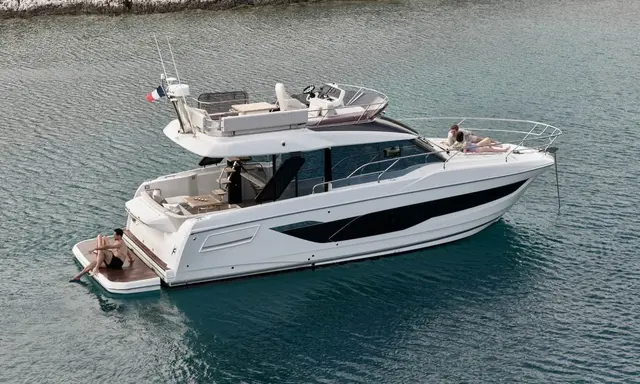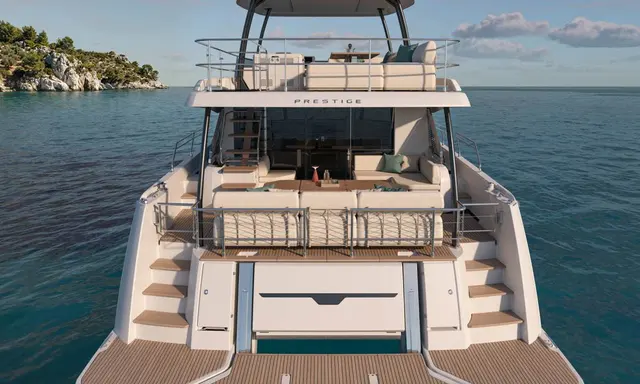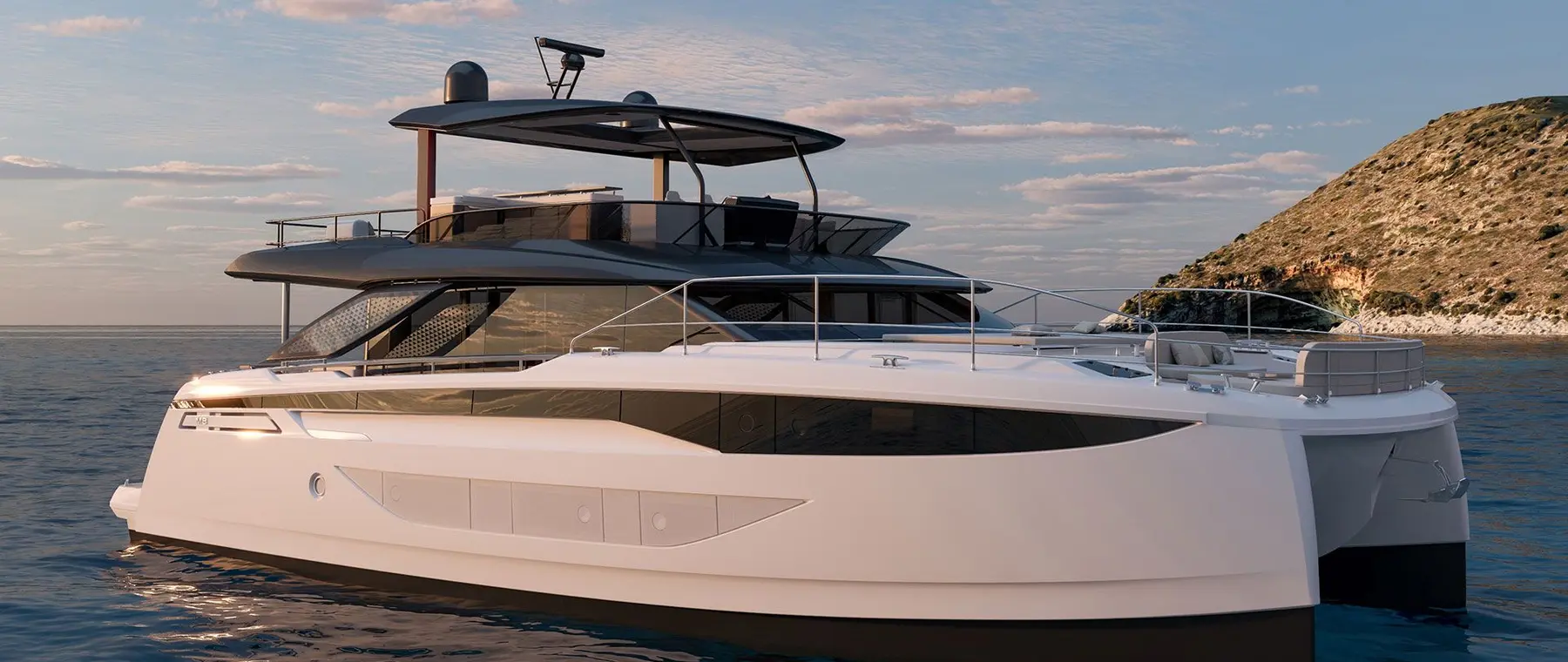
PRESTIGE has developed the M8 EVO as the next step in its M-Line power-multihull programme, using feedback from owners of the original M8 to reshape the flagship's exterior and interior. The new version keeps the core promise of volume and stability but changes several of the spaces owners interact with most frequently, particularly the flybridge, saloon and full-beam suite.
The builder says the EVO project has been influenced by M8 use in regions ranging from the Bahamas and Caribbean to Asia and the Côte d'Azur. That real-world feedback gives the redesign a different starting point from a clean-sheet model, because the team can identify which ideas work in practice and where owners want more flexibility after extended time aboard.
Exterior changes give the M8 EVO a new identity
The most immediate differences are visual. PRESTIGE has redesigned the hull windows, introduced a black-finished fashion plate and created an entirely new hardtop, producing a more assertive silhouette without changing the fundamental multihull architecture beneath it.
Those exterior changes also have a functional effect. Removing the interior staircase to the flybridge and rethinking the hardtop structure frees space above for an outdoor galley, larger dining area and modular saloon, turning the upper deck into a more complete living zone rather than simply an additional helm and seating position.
The main-deck layout is opened up
Eliminating the internal flybridge staircase creates new possibilities in the main saloon. PRESTIGE has used the extra room for a larger dining table, an expanded galley and a raised dining area near the helm, with panoramic glazing intended to keep the interior visually connected to the water.
This is a good example of how one circulation decision can reshape an entire yacht. Stairs occupy more than their footprint because they influence furniture placement and walking routes around them, so moving that connection outside gives designers freedom to make the principal interior feel less interrupted.
The owner's suite becomes more residential
The full-beam owner's cabin has also been revised with twin walk-in wardrobes, increased headroom and separate office and lounge functions leading toward the bathroom. PRESTIGE describes the result as a private apartment on the water, reflecting the broader industry move toward treating the main cabin as a place for extended daily use rather than only sleeping.
Materials follow what interior designer Valentina Motta describes as a warmer interpretation of modernism and Art Deco. The intention is not simply to add decoration but to use texture, colour and material transitions to define spaces, giving the multihull's large interior volumes a more architectural feel.
Owner feedback becomes part of model development
PRESTIGE sales director Andrea Cragnotti says the evolution has been shaped by two forces: feedback from owners and the continuing French-Italian collaboration behind the M-Line. That owner input is particularly valuable for a yacht that has already been used across different climates and cruising patterns, because practical habits are difficult to predict fully before the first hulls reach customers.
A successful EVO strategy allows a builder to respond without abandoning the investment and engineering already proven in the original model. It can also protect residual values by making the evolution recognisable as part of the same family rather than replacing an existing yacht with a completely unrelated successor after only a short market life.
Private previews ahead of Cannes
PRESTIGE planned advance presentations in Monfalcone and Beaulieu-sur-Mer before the M8 EVO's world premiere at the 2026 Cannes show. Those private events give existing customers and serious prospects an opportunity to compare the new spaces directly with the original M8 and judge whether the changes address the way they actually use a large power catamaran.
The M8 EVO therefore represents more than a styling update. It shows PRESTIGE treating a production flagship as a platform that can evolve through owner experience, preserving the core architecture while revising circulation, outdoor living and interior priorities. In a fast-growing power-multihull segment, that ability to learn from the first generation may be one of the strongest advantages an established builder can bring to the next.
The EVO approach may also help dealers explain the model to owners who already know the original M8. Instead of presenting an entirely new concept, they can point to specific changes in circulation, outdoor cooking, dining and private accommodation and relate those changes to feedback gathered from existing boats. That creates a more concrete conversation about use rather than relying only on styling differences between model years.