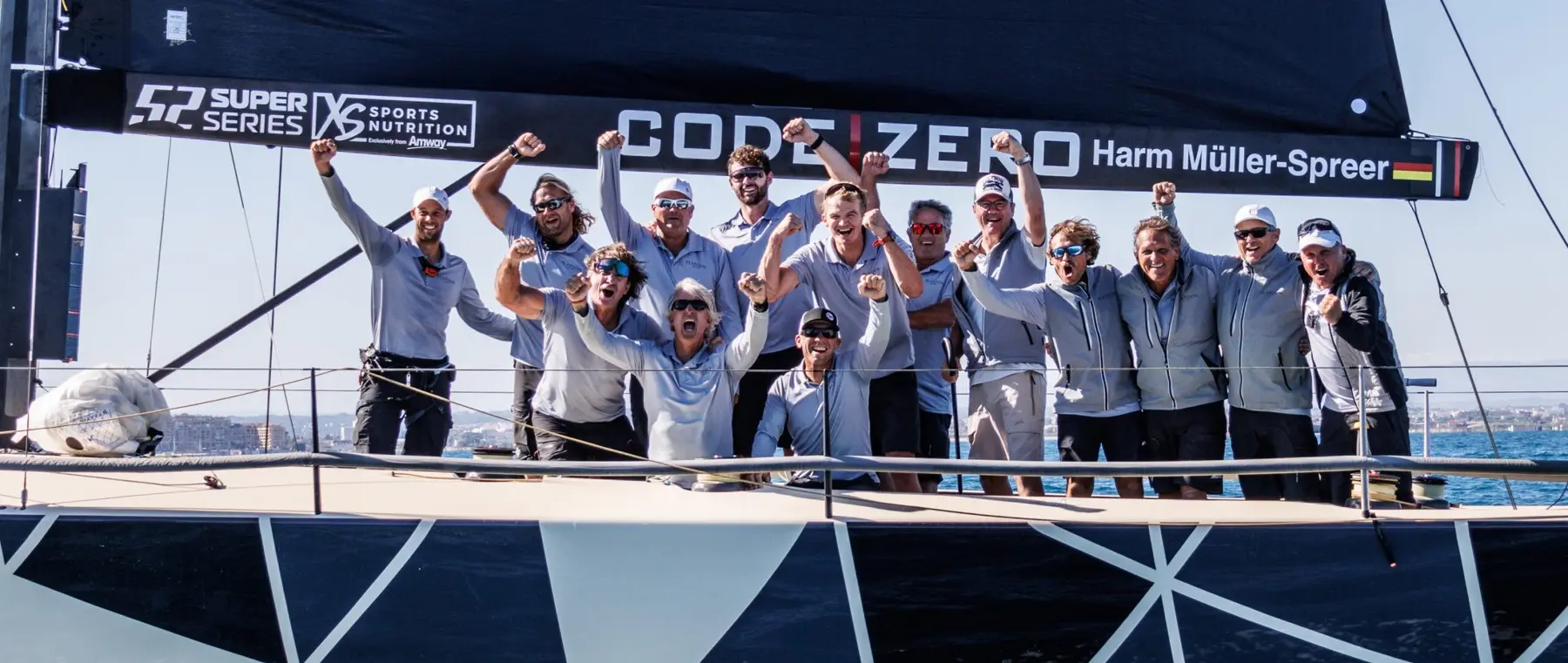
Platoon Aviation seals the 2026 season championship
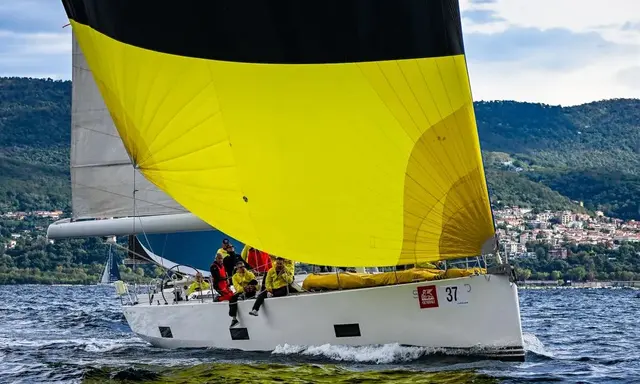
Harm Müller-Spreer's German-flagged Platoon Aviation has won the 2026 52 SUPER SERIES season championship after the final races in Valencia on 10 October. The owner-driven TP52 ended the five-regatta campaign on 216 points, 30 ahead of Takashi Okura's Sled on 246, with Italy's Alkedo Cetilar third on 253. The result confirms a season-long title rather than victory in the final individual regatta, an important distinction because the Valencia event produced a different winner.
The closing regatta assembled a record fleet of sixteen high-performance 52-foot monohulls representing eleven nationalities. Racing was scheduled from 6 to 10 October in variable Mediterranean conditions, with light and shifting breeze playing a major part in the outcome. The championship drew teams with America's Cup and other professional racing experience, making consistency across the entire season especially valuable.
Alkedo Cetilar claims the Valencia event
Andrea Lacorte's Alkedo Cetilar secured the Valencia Sailing Week trophy with 36 points, ahead of Pieter Heerema's No Way Back on 43 and Platoon Aviation on 45. A second-place finish in the concluding race helped Alkedo complete its regatta win, a major result for a team still relatively new to the circuit. The final local leaderboard also placed Thailand's Vayu fourth and Sweden's Trinity Racing fifth.
The split between the regatta and circuit trophies reflects how long championships work. A crew may not win the final event yet still retain a decisive aggregate advantage built through strong earlier performances. Conversely, a race win can be a landmark for a developing team without overturning the year-long championship standings. Owners considering grand-prix racing have to manage both short-term tactical performance and consistent results.
A duel with Sled shaped the season
Sled won the opening two events of the 2026 season, including the Rolex TP52 World Championship in Porto Cervo. Its early form made the Japanese-flagged team a formidable opponent, and the championship remained competitive through later rounds in the Canary Islands. But a technical failure during the Lanzarote programme and difficult conditions in Valencia reduced Sled's opportunity to close the gap.
Platoon entered Valencia with an eleven-point advantage after winning the Royal Cup in Puerto Calero. By the evening before the final day, the lead had grown to twenty points. Sled ultimately placed eighth at the Valencia event while Platoon finished third, leaving Müller-Spreer's crew with a comfortable championship margin. Sled nevertheless concluded the year as both world champion and runner-up in the season series.
The technical turnaround behind the result
Platoon Aviation's current yacht entered the circuit in 2024, and the crew initially faced a lengthy period of optimisation. The team's 2025 finish was fifth overall, despite the experience of its personnel and previous title history. For 2026, the yacht received a new keel and further adjustments intended to improve its speed and handling across different conditions.
Such modifications are meaningful in a tightly controlled racing class where small differences in balance or efficiency can affect performance around an entire course. An improved keel cannot guarantee race wins by itself: sail selection, rig tuning, weight distribution, crew handling and tactical decisions still interact. The 2026 championship indicates that Platoon combined its equipment development with more consistent execution than in the preceding season.
Experienced sailors remain central to the programme
Owner-driver Müller-Spreer has worked with an experienced international crew including Italian tactician Vasco Vascotto, strategist Jordi Calafat and navigator Juan Vila. Calafat and Vila were part of the Alinghi America's Cup success in Valencia, giving the team unusually strong familiarity with top-level competition. Their roles combine weather interpretation, fleet positioning and decisions about where to place the yacht on each leg.
The championship did not come without difficult races. On the penultimate day the team recorded a thirteenth-place finish in the large fleet before recovering to fifth and fourth in subsequent races. That recovery limited the damage from a poor result and is characteristic of campaigns that win by avoiding repeated large losses rather than relying only on first places. The shore crew's contribution to reliability was also acknowledged in the official race report.
Why the 52-foot platform matters
TP52 yachts are approximately sixteen metres long and are built as high-performance racing monohulls rather than conventional cruising yachts. They operate with professional sail programmes, closely managed hull and appendage development and crews skilled in rapid manoeuvres. Their size places them within the 12-to-24-metre segment covered by Lux Yacht Guide, although their layout and purpose differ substantially from a luxury passage-making motor yacht or family cruiser.
Grand-prix sailboat technology can offer lessons about composites, sail handling, instrumentation and structured maintenance, but the solutions do not transfer automatically to a private cruising yacht. Racing projects prioritise performance and can involve intensive technical support between events. A private owner should evaluate reliability, interior usability and service access differently from a professional campaign.
A season of contrasting results across five venues
The official season totals show the rewards of accumulating points with relatively small penalties. Platoon scored 51, 53, 33, 34 and 45 across the five regattas. Sled recorded 42, 47, 31, 62 and 64, an equally strong start followed by more expensive results later in the year. Alkedo's third-place season result confirms how narrow the competitive gaps became behind the leading teams.
Valencia brought both the biggest fleet and complex offshore winds, making starts and tactical positioning more difficult. A boat trapped on the wrong side of a wind shift could lose several positions in minutes. In that environment, crew communication and the ability to abandon a poor tactical plan often matter as much as maximum boatspeed. The year's final points are therefore best interpreted as a combination of technical preparation and repeated execution.
What follows the Valencia championship
The championship closes a notable 2026 campaign for Müller-Spreer, who also receives recognition as the leading owner-driver of the year. Lacorte was second in that classification, while No Way Back's Heerema placed third. Sled leaves the season with the world title and strong individual-regatta results even though the overall circuit crown has passed to its German rival.
For owners and builders following competitive sailing, the final result demonstrates how a well-organised sixteen-metre programme can evolve over several years. Platoon was not instantly dominant when the present yacht entered service, but a mixture of technical updates, continuity and experienced decision-making produced a championship-winning package. Any 2027 expectations remain prospective until the organisers and teams confirm their next racing plans.