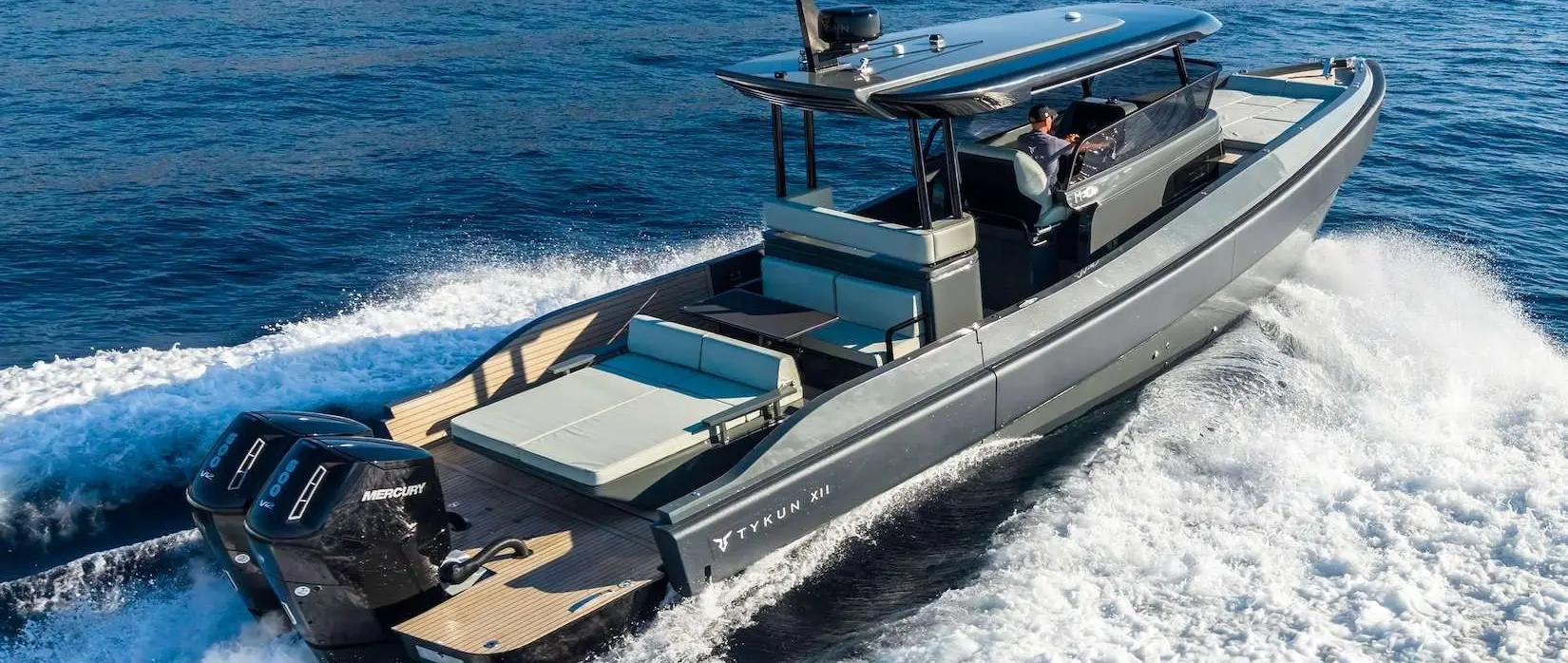
A 12.9-metre flagship makes its debut in Monaco
TYKUN introduced the 12.90-metre TYKUN XII at the 2026 Monaco Yacht Show, giving the specialist Italian builder a larger flagship in its aluminium tender range. The model takes the TYKUN X concept into the territory of compact luxury motor yachts, with accommodation possibilities for overnight use and a choice of open-deck arrangements. It operated during the event as a tender for Monaco-based Royal Yacht International, allowing the design to be seen doing the work for which the builder intends it.
The vessel's dimensions place it within the 12-to-24-metre sector rather than the large superyacht market. That distinction matters because a fast tender must fit different storage, handling and cruising requirements from a 40- or 60-metre mother yacht. TYKUN is positioning the XII as a potentially independent day cruiser as well as a support boat, rather than treating every customer as the owner of a superyacht.
Two bow layouts serve two different uses
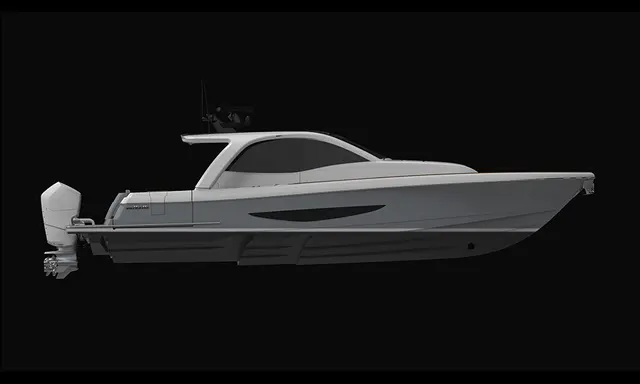
Owners can choose a High Bow or Low Bow configuration. The raised High Bow version shown in Monaco makes room for a more generous internal area and a broad forward sun pad, while the Low Bow adopts a walkaround deck with seating and a table towards the bow. Both use the same underlying platform, but they offer different balances between overnight space, deck access and social use.
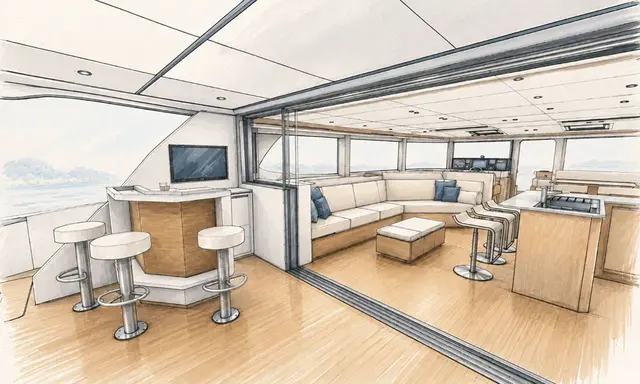
For buyers, the headline length does not fully convey those practical differences. A group that plans frequent swimming stops may favour ease of movement and an unobstructed route to the bow; owners intending to spend a night aboard may instead prioritise sheltered internal volume. The builder says interiors can be configured with a double berth, V-berths or convertible living space, as well as a separate shower room and storage.
Spadolini design meets professional-vessel engineering
The styling is by Tommaso Spadolini, working from a concept developed with Benedetta Iovane, while Carlo Bertorello was responsible for hull and structural engineering. The design uses a reverse-raked windscreen associated with workboats, a carbon-fibre hardtop and an aft cockpit that can open out through folding side bulwarks. A bar station behind the helm can be equipped with refrigeration, cooking facilities, an ice maker and air conditioning.
Those details are more than decorative. At this size, a hardtop's position affects shelter and sightlines; fold-down sides require robust joints, sealing and safe operation; and adding galley equipment changes electrical demand. Buyers comparing the available versions should request exact displacement, loaded performance and layout drawings, because optional equipment and custom changes can materially affect a boat's handling and range.
Aluminium construction shapes the design approach
The hull and deck are constructed from 5000-series aluminium, using a stepped hull form intended for high-speed running. The builder says the project draws on MED Group's experience with craft produced for professional and security applications. An enlarged fender arrangement is integrated around the perimeter, reflecting the model's expected use in close quarters alongside larger yachts and quays.
Aluminium gives a designer different options from a moulded composite boat, particularly where the owner wants changes to structural details and deck layouts. It is not maintenance-free, however. Corrosion control, weld inspection, compatible fittings and protection against galvanic currents remain essential. Buyers should also establish exactly what RINA certification covers in the finished configuration rather than inferring that every optional arrangement has the same approval.
Twin outboards and high-speed capability
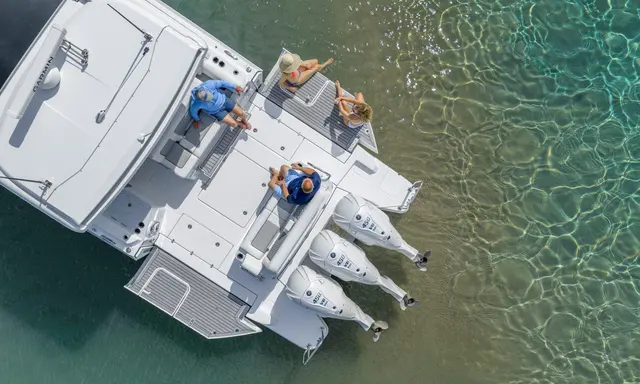
TYKUN lists twin-outboard options rated at 400, 450 or 600 horsepower per engine. The strongest configuration is stated to exceed 50 knots, while the maximum published fuel capacity is 1,360 litres and fresh water can reach 300 litres. The builder quotes a 3.5-metre beam and accommodation arrangements for differing numbers of occupants, with guest capacity stated between six and fourteen according to configuration.
Maximum speed is not a guaranteed cruising speed. Range, fuel consumption and comfort depend on engine choice, equipment, sea state, loading and the particular hull setup. For a tender that may make multiple transfers during a busy event, the practical priorities include reliable low-speed control, boarding arrangements, fender protection and sufficient fuel reserves, not merely the highest number recorded in promotional testing.
An environmental declaration accompanies the launch
The Monaco appearance came alongside a second consecutive Blue Wake Award for TYKUN in the Tenders and Water Toys category. The announcement links the recognition to a Life Cycle Assessment of the TYKUN X and XII and to an Environmental Product Declaration registered through the International EPD System. The process was verified by RINA and the builder says the declaration remains valid until 2031.
An EPD documents calculated environmental impacts across a defined life cycle; it is not a statement that a high-powered motorboat creates no emissions. Its usefulness lies in making the scope, assumptions and reported impacts more transparent, potentially allowing the builder to compare changes in production methods and materials over time. An informed buyer should review the actual declaration and its system boundaries before relying on an environmental claim.
A small yacht with a custom-build philosophy
MED Group describes the TYKUN XII programme as a bespoke atelier approach, with each unit developed around the owner's requirements. That can involve changes to equipment, finishes and some arrangements rather than forcing every owner into a fixed interior. The builder says the flexibility of welded aluminium construction supports this process, although the extent of any permitted structural changes must be reviewed by the engineering team.
Such customisation is attractive but demands detailed contract control. Owners should establish which items are standard, how layout modifications affect weight and class requirements, and when decisions become fixed for production. The ability to choose a high or low bow does not remove the need to verify towing and lifting arrangements, vessel registration, safe passenger capacity and service access for the chosen combination.
What the Monaco debut establishes
The Monaco demonstration established that the model has progressed beyond a presentation drawing and into practical service at a major marine event. That is a useful milestone, although it does not establish long-term reliability across multiple seasons or provide independently verified fuel-use figures. The stated top speed, environmental declaration and custom options should each be evaluated on their own evidence.
For buyers in the 12-to-24-metre segment, the TYKUN XII adds another aluminium-built alternative to the fast dayboat market, with an unusually pronounced workboat aesthetic. Its next test will be whether the combination of accommodation, accessible deck space, high-speed propulsion and support arrangements meets real owners' requirements after delivery.