Nantes court clears transfer of shipyard assets
The future of Black Pepper Yachts has taken a more definite direction after the Nantes Commercial Court approved a transfer of the French builder’s assets to CDML Marine, a company associated with entrepreneur Didier Charpentier. Industry reporting on 7–9 October 2026 says the transaction follows court-supervised proceedings and allows the yard’s specialist sailing-yacht work to continue in Nantes. It is an asset acquisition rather than evidence that the previous operating company has emerged unchanged from its financial difficulties.
The buyer is not an unfamiliar outside investor. Charpentier, formerly a senior figure at French business-software company Itesoft, is an existing customer who ordered a Code C.69 performance cruising catamaran. His involvement brings an owner’s perspective to an industrial turnaround, but it also places particular importance on fair treatment of existing customer obligations and the completion of projects already on the shop floor.
Most of the skilled workforce is retained
Eleven of the yard’s twelve employees are to remain under the new arrangement, according to the transaction reports. Preserving specialist personnel is significant for a relatively small yard making carbon-fibre yachts, where experience with laminating, bonding, systems installation and finishing is not quickly replaced. The outcome retains much of the practical knowledge needed to finish existing boats and maintain previous deliveries.
The number of retained jobs should not be mistaken for a guarantee of future output or a completed financial recovery. Continuing operation depends on sufficient working capital, a viable order book and reliable schedules. The business will also need to coordinate subcontractors and outside suppliers who may have been affected by the earlier proceedings, particularly where customer-specific equipment has already been ordered.
The Code C.69 programme is central to the turnaround
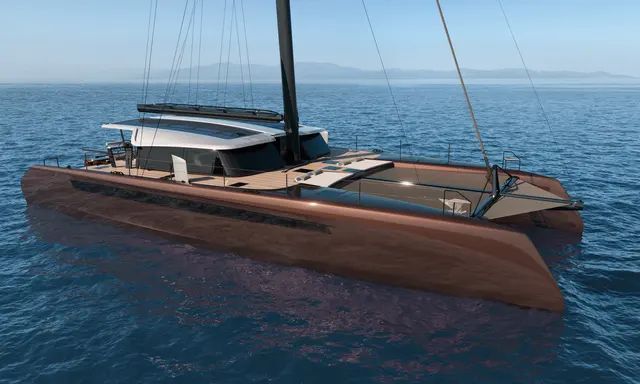
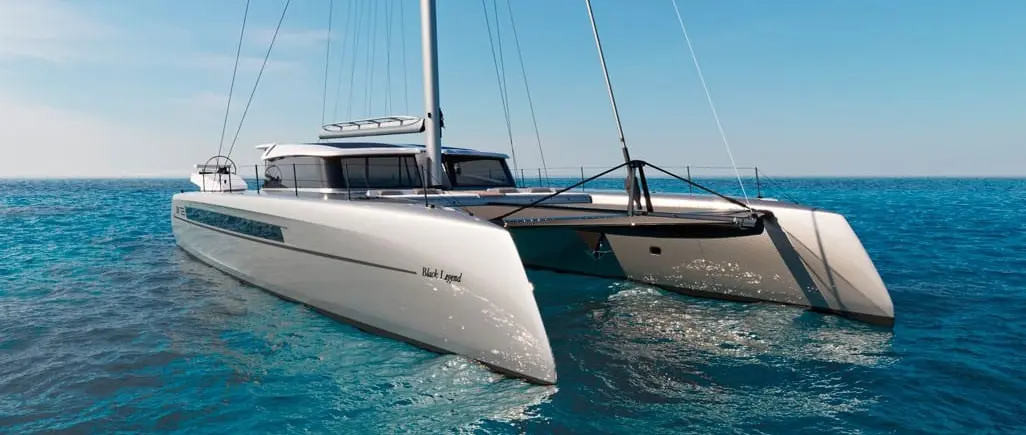
The yard’s 21.1-metre Code C.69 is a carbon-composite sailing catamaran designed for fast cruising, with naval architecture credited to François Pérus and Romain Scolari of Yacht Design Collective. The published specification includes a beam of about 9.6 metres and an upwind sail area of 210 square metres. Those dimensions put the model squarely within the large, privately operated luxury-catamaran market, rather than the small coastal-dayboat category.
The two C.69 projects in the reported order book played a role in the financial strain after construction costs exceeded initial forecasts. That history makes delivery planning an immediate test for the incoming management. The published builder specification is indicative, not a contractual guarantee for either owner's vessel; final choices can differ where each yacht is configured through a semi-custom programme.
Carbon construction offers opportunity and exposure
Black Pepper’s identity is closely linked to carbon-composite engineering and lightweight sailing yachts. The C.69’s platform is designed around carbon and epoxy infusion, aiming to control displacement while creating a rigid sailing structure with comfortable internal volumes. Such construction can deliver performance advantages, but it also requires disciplined tooling, environmental control, quality assurance and accurate labour estimates.
A specialised composite yard cannot automatically turn an ambitious design into a profitable build simply because the hull materials are advanced. Mould preparation, structural components, cured-part inspection, systems integration and custom interiors are all sources of schedule and cost uncertainty. Successful recovery will require the team to link its technical ambitions with realistic procurement, change control and production milestones.
The acquirer outlines investment ambitions
In comments reported by the French sailing press, Charpentier described his attachment to the brand’s design language and his intention to retain its distinctive character. The programme described by the new ownership includes investment in production equipment, strengthening operational management and expanding commercial relationships. Those plans amount to an announced strategy, not completed expenditure verified in the public filings.
Reporting also attributes to the buyer a goal of average annual growth of around 40 percent until 2030. That figure is a target, and no reliable evidence has yet established that the yard will achieve it. A meaningful assessment will depend on forthcoming contracts, margins, delivery performance and whether the new structure can meet the fixed and variable costs of carbon yacht construction.
What owners should ask about existing contracts
Existing customers are likely to be concerned about the status of their build agreement, payment schedule, technical specifications and any retained warranties. The purchase of assets following a court process is not necessarily the same as a straightforward transfer of every contractual liability to a new company. Affected customers should obtain written confirmation of which legal entity is responsible for each obligation and what project documentation has been transferred.
From an operational standpoint, continuity should mean that critical design calculations, inspection records, component orders and commissioning plans remain accessible. Owners considering a new order should request milestones supported by measurable progress and evidence of financial safeguards. These are general procurement considerations rather than a finding that any specific owner has suffered a loss.
A continuing role for 12-to-24-metre sailing yachts
The Code C.69 sits in the 12-to-24-metre yacht segment that combines genuine ocean-cruising ambitions with owner-focused accommodation. Black Pepper's published figures include twin 110-horsepower auxiliary diesels and adaptable interior arrangements, while its wider range encompasses specialist performance monohulls. The firm’s ability to retain both design identity and practical production reliability will affect whether it can compete for discerning owners in this size class.
Such boats often involve greater customisation than high-volume production models but without the financial resources of a very large superyacht programme. That combination demands careful contract specification and close communication between designer, yard and owner. It also gives capable independent yards room to differentiate themselves through build quality, sailing characteristics and technical support.
The next chapter will be measured by deliveries
The acquisition gives Black Pepper Yachts an opportunity to continue work in Nantes with most of its existing people and a buyer already familiar with its product. It does not erase the cost overruns that contributed to the court process, and neither the acquisition price nor the level of new financing has been made public. The most meaningful near-term evidence will be tangible progress on the C.69 builds and a stable plan for the wider range.
For prospective owners and industry suppliers, the transaction is an encouraging development tempered by normal restructuring risks. It preserves a French centre of specialist yachtbuilding knowledge while creating a new commercial structure around the Black Pepper brand. Future announcements should be assessed against completed deliveries, operational commitments and confirmed service continuity rather than projections alone.