Why AIS Class M was introduced
Ocean Signal says the Class M framework addresses two issues that had become more important as autonomous maritime radio devices multiplied: congestion on the main AIS channels and the risk that an AIS-only man-overboard alert might not be noticed quickly enough. The rules therefore change both how compliant beacons use spectrum and how they alert nearby vessels.
The company notes that the regulation took effect from 1 January 2025, making it a current equipment consideration for owners buying or replacing AIS MOB devices in Europe. Older equipment may still function technically, but owners need to understand whether it meets the newer Class M requirements.
DSC adds an audible layer to MOB alerts
A central change is the use of Digital Selective Calling alongside AIS. Rather than relying only on a new target appearing on a chartplotter, a Class M device can interact with compatible VHF equipment so that an audible distress alert draws attention to the casualty.
Ocean Signal contrasts this with earlier AIS MOB designs that could transmit a position but did not include the full DSC transmitter-and-receiver capability required by Class M. Its MOB2 was developed as the company's Class M-compliant AIS MOB option.
What yacht owners should review
For a yacht owner, the relevant check is not simply whether a beacon transmits AIS but whether the complete device is approved for the intended regulatory area. Crew safety procedures should also confirm that onboard VHF, AIS and chartplotter systems are configured to display and sound MOB alerts correctly.
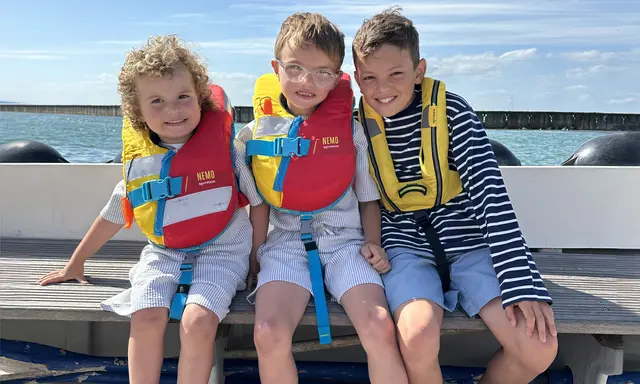
Lifejacket integration is another practical point because an MOB beacon must be positioned and armed so that it can be activated reliably in an emergency. Regular drills remain important even when the electronics can automate parts of the alerting process.
A move toward integrated recovery systems
Class M fits a wider trend toward linking personal safety devices with the yacht's navigation and communications network. Manufacturers are increasingly designing equipment so that an overboard event creates both a local electronic alarm and a clearly plotted recovery target.
That does not remove the need for good seamanship, lookout and recovery practice. It does, however, give crews more ways to recognise an emergency quickly and retain an accurate position while manoeuvring back toward a person in the water.