Innovation recognition for the PLB3
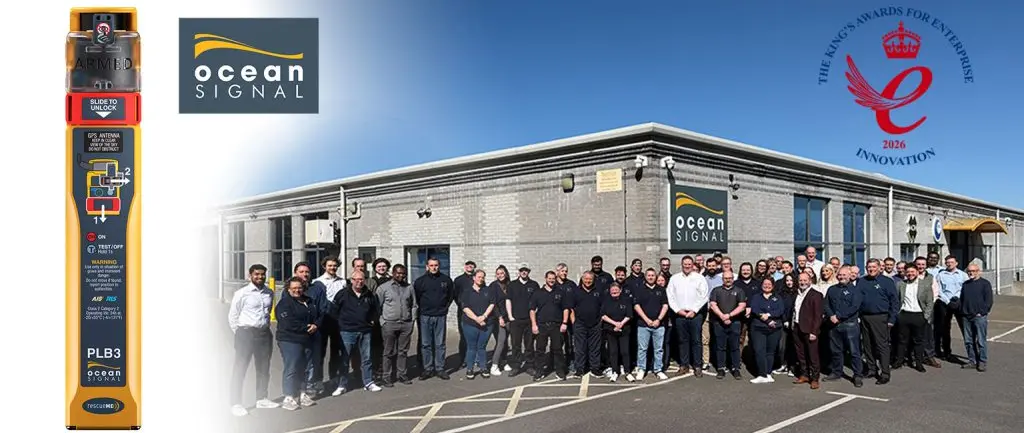
Ocean Signal says the King's Award recognises the rescueME PLB3, which brings 406MHz Cospas-Sarsat distress alerting and AIS into one personal beacon. That combination is intended to alert the global rescue network while simultaneously helping nearby AIS-equipped vessels locate a casualty.
The Margate-based manufacturer was one of 185 organisations recognised in the 2026 King's Awards for Enterprise. The PLB3 had already won the overall DAME Design Award at METSTRADE in 2022, giving the device both marine-industry and national innovation recognition.
Global and local rescue in one device
Beyond 406MHz and AIS, the PLB3 includes Return Link Service, which can confirm to a survivor that the distress alert has reached the satellite system. Ocean Signal also highlights mobile connectivity as part of the product's approach to testing and ownership support.
For yacht owners and crews, the significance is the layering of independent rescue paths rather than reliance on a single alerting technology. Offshore safety equipment is increasingly being designed around that redundancy, combining long-range satellite distress transmission with local position reporting to vessels already in the area.
Why the award matters to yacht safety
The King's Award is a business accolade, but the underlying technology is directly relevant to leisure yachts and offshore sailing. Personal beacons are carried on the person rather than being tied to the vessel, so they remain useful if a casualty is separated from the yacht or liferaft.
AIS also changes the local response dynamic because the position can appear on compatible navigation systems aboard nearby vessels. That can shorten the search phase while professional rescue coordination is already being triggered through the 406MHz alert.
A broader shift in personal distress equipment
Ocean Signal's recognition comes as marine safety equipment becomes more connected and more integrated with onboard electronics. The PLB3 is one example of manufacturers combining satellite, local radio and digital user interfaces in a single compact product.
For owners reviewing safety inventories, the practical lesson is to check not only whether a beacon meets carriage requirements but also which rescue channels it supports. Registration, battery life, servicing and compatibility with the yacht's own navigation equipment remain important parts of the decision.