A new economic argument for boating access
The National Marine Manufacturers Association has renewed its appeal for federal action on public water access after the release of United States outdoor recreation economic data. In a statement dated 19 November 2026, the association cited figures published by the Bureau of Economic Analysis on 18 November. Outdoor recreation generated $1.3 trillion in economic output and supported 5.3 million American jobs in 2025, according to those figures. Boating and fishing together contributed $39.1 billion in value added, making them the largest outdoor recreation activity by that measure. NMMA argues that those economic links strengthen the case for maintaining ramps, marinas, waterways and public facilities used by recreational boaters.
Understanding the different economic measures
The numbers need careful handling because economic output, value added and employment describe different things. The $1.3 trillion figure represents the wider outdoor recreation economy, not revenue earned by boat manufacturers alone. Similarly, 5.3 million jobs are associated with outdoor recreation broadly, while $39.1 billion is the specific value-added figure given for boating and fishing. Reporting these as interchangeable would exaggerate the size of the marine market. A yacht owner or business assessing investment opportunities should examine the methodology and geographic scope before turning an industry headline into a forecast. The figures provide evidence of scale but do not identify the profitability of individual companies.
Why a marina is an economic asset
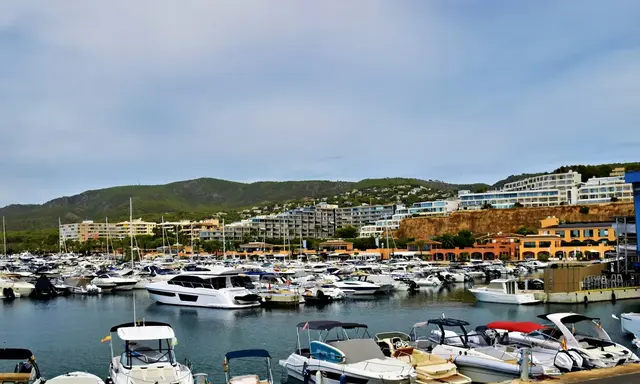
Marinas are not simply parking places for boats. They connect recreational activity with repair yards, fuel suppliers, chandlers, hospitality businesses, local transport and seasonal employment. When a marina or public ramp closes, the effects can extend beyond the immediate berth holders. Conversely, thoughtful maintenance or upgrades may support other waterfront services. The NMMA announcement emphasises this wider infrastructure relationship without providing a site-by-site investment appraisal. Decisions about a specific marina should still consider demand, environmental constraints, public benefit and operating costs. The association's argument is that infrastructure is a basic precondition for the economic activity documented in the new federal data.
The meaning of access to public waters
Access can take many forms, from a small public launching ramp on an inland lake to a deep-water passage used by visiting yachts. The relevant challenges also vary: some communities struggle with scarce parking, others with ageing pontoons or a limited number of suitable navigation channels. A broad national policy cannot address every local problem identically. NMMA's initiative focuses on the ability of Americans to reach and use waterways safely and reliably, which requires infrastructure as well as legal access. Owners should distinguish rights to navigate from the practical availability of facilities needed to launch, berth and service a particular vessel.
A letter to congressional leadership
NMMA says it wrote to leaders in Congress on 29 October urging action on three legislative measures before the end of the 119th Congress. The November statement explicitly links those requests with the newly released Bureau of Economic Analysis figures. Advocacy is not the same as enacted legislation: the requested measures must still pass through the applicable political and administrative processes. The association's position should be identified as an industry recommendation rather than an official government conclusion. Its practical message is that the recreational marine economy depends on policy choices affecting public land, federal water facilities and funding streams used by boaters and anglers.
America the Beautiful Act and restoration
One measure identified by NMMA is the America the Beautiful Act, which would reauthorise the National Parks and Public Land Legacy Restoration Fund. The association highlights deferred maintenance on federal lands and waters, including boating-related facilities. Maintenance backlogs can affect access even where the underlying waterway is open. A pier with unsafe decking or a ramp with inadequate serviceability may be unusable for people who otherwise have a legal right to visit. However, reauthorisation alone does not establish which individual projects would receive funds. Owners and local businesses should follow the formal allocation process before assuming that a particular marina improvement is financed.
The Water Resources Development Act
NMMA also advocates action through the Water Resources Development Act. Its 2026 priorities include reforms affecting recreational access at US Army Corps of Engineers facilities, marina leasing policies and the potential for private waterfront investment. This matters because lease terms can influence whether a marina operator can justify long-term improvements. A short or uncertain tenure may discourage an expensive new dock or shore-power installation, even where demand exists. Changes to federal policy could improve the climate for investment, but outcomes will depend on enacted wording and implementation. The association's release expresses support for reform; it does not prove that a particular leasing problem has already been resolved.
A trust fund supported by boaters and anglers
The third measure is reauthorisation of the Sport Fish Restoration and Boating Trust Fund. NMMA describes it as a long-running programme funded largely by boaters, anglers and recreational manufacturers, supporting boating infrastructure, conservation and public access across all fifty states. The financing mechanism matters because it links some of the resources raised through recreational activity to facilities and projects that sustain that activity. Yet individual grant decisions and eligible uses are governed by programme rules. A proposal to renew the fund should not be reported as a new grant made to a named marina. Good reporting distinguishes the policy structure from specific projects and outcomes.
Small builders are central to the industry
The association says 93 percent of US boatbuilders are small businesses and that 95 percent of boats sold in the United States are manufactured domestically. These are national industry figures cited by NMMA, not claims about the size or origin of every yacht sold in the country. They nevertheless underline why access policy can affect more than large brands. Smaller builders may depend on regional dealers, test facilities, launching infrastructure and specialist suppliers. A reduction in recreational activity could have consequences for those networks. Conversely, an expanding boating population may support companies offering services, accessories and training that help people use their vessels safely.
The connection between builders and waterways
A boat is a product that requires a physical environment to be useful. Unlike many consumer purchases, enjoyment depends on available waters, weather, appropriate launching or berthing and places to maintain equipment. This gives the marine sector a distinctive interest in public infrastructure. A manufacturer can improve designs and dealer services, but cannot independently guarantee that a customer will have access to a local waterway. NMMA's legislative request seeks to address that gap through federal programmes. The same issue is visible internationally, though infrastructure ownership, public rights and environmental rules differ greatly from one country to another.
What the figures mean for luxury yachts
Yachts in the 12–24 metre range often use private marinas, but they still benefit from navigable public waters, reliable channels and local businesses serving a wider boating community. Larger vessels may have more specialised berth and draft requirements, yet support services are part of a shared waterfront economy. The aggregate boating and fishing figure cannot be treated as a direct measure of the luxury-yacht market. Owners and investors should avoid making that inference. Instead, the report highlights the infrastructure on which recreational activity relies and the potential consequences when maintenance, permitting or access policies fail to keep pace with demand.
Infrastructure should be evaluated locally
A national economic figure is not enough to determine whether a specific marina should expand or receive public funds. Local assessments should consider environmental impact, safety, water depth, congestion, competing uses and the needs of residents as well as visiting boaters. Some sites may require restoration rather than additional capacity. Others may benefit from better pump-out facilities, accessible launching or improved public transport links. NMMA's call for investment can be understood alongside these considerations rather than as a demand to build without constraints. Responsible waterfront planning seeks to balance public use, conservation and the long-term functioning of marine businesses.
Data do not eliminate market risk
The outdoor recreation economy is large, but aggregate size does not guarantee stable sales at every builder or marina. Consumer confidence, financing, interest rates, weather and changes in the used-boat market can influence annual activity. The BEA figures describe 2025, while the policy conversation takes place in November 2026. Treating the data as a precise forecast of 2027 boat registrations would be an error. Industry participants may find the figures valuable as a framework for explaining boating's public significance, while continuing to use current sales and utilisation data for commercial decisions. The distinction between advocacy evidence and operating forecasts should remain clear.
Conservation is part of continued access
The trust-fund proposal explicitly links boating with conservation as well as infrastructure. That connection is important because access to a degraded waterway may provide limited long-term benefit. Water quality, habitat protection, responsible waste management and management of congestion can determine whether boating remains enjoyable and socially accepted. The right approach varies by location and requires evidence about the particular environment. An argument for access should therefore not exclude environmental responsibilities. Owners contribute by following navigation restrictions, managing waste correctly and maintaining their vessels to avoid preventable pollution. Sustainable use depends on the condition of the waterway as well as the facilities beside it.
How to read a policy announcement
NMMA is a trade association representing marine-industry interests. Its statement is therefore an advocacy document supported by selected federal economic figures. The BEA data are an official statistical source; the recommendations for Congress are NMMA's own policy position. This separation is essential for readers evaluating the claims. Both may be important, but they are different types of evidence. Anyone seeking to assess a legislative proposal can consult the actual bill text, congressional status and relevant budget information. The announcement should not be interpreted as confirmation that the proposed laws have passed or that an infrastructure improvement has already been funded.
What happens next in Washington
NMMA says it intends to continue working with lawmakers from both parties during the remaining weeks of the congressional session. The association frames its effort around protecting access, supporting American manufacturing and maintaining recreation infrastructure. The release does not establish an exact timetable for legislation or predict how individual members will vote. Observers should track formal congressional proceedings rather than infer an outcome from the industry's optimism. For waterfront businesses, some of the most immediate actions may be to document maintenance needs and participate in local consultation processes. Effective national policy depends on a realistic understanding of conditions faced at individual facilities.
The broader significance of boating access
The economic case made by NMMA is that recreational boating supports jobs, manufacturing and local businesses while depending on a network of waterways and facilities that require continuing care. The 2025 federal figures provide a broad measure of outdoor recreation's importance, and the association has chosen to use them in support of three specific legislative priorities. The appropriate conclusion is not that all public spending on marinas is justified, but that access and infrastructure deserve informed consideration alongside other public needs. For yacht owners, businesses and communities, that is a practical policy conversation with direct consequences for the ability to enjoy and sustain boating.