What a certified badge actually represents
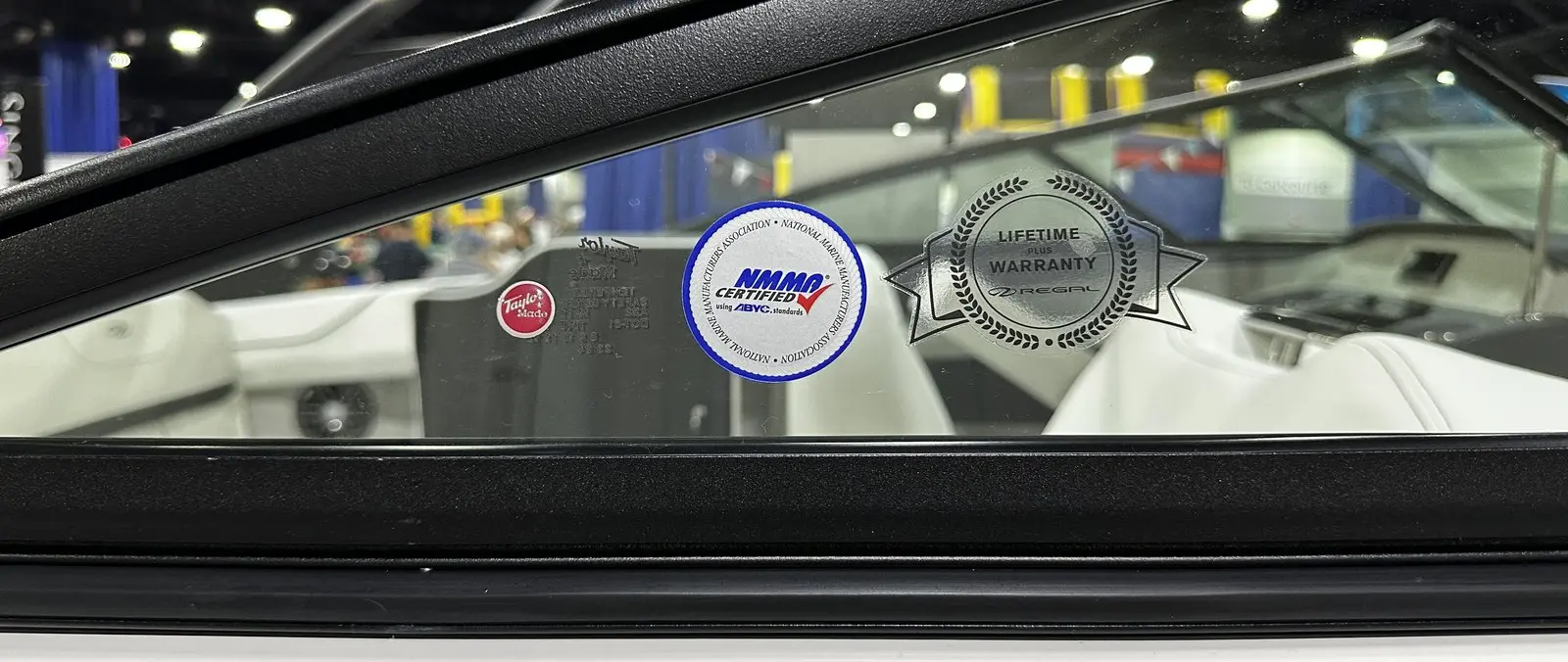
The National Marine Manufacturers Association has published a new explanation of what its boat certification programme means for buyers and the trade. In a release dated 23 November 2026, the US association emphasises that the NMMA Certified mark is backed by a process of standards review, recurring inspection and documented corrections. It is typically displayed on a boat's capacity plate or yacht plate near the helm. The mark can be useful information for a family comparing new recreational craft, but it should not be mistaken for a guarantee of flawless construction or a promise about a boat's future condition. The important distinction is between a formal conformity process and the many separate decisions involved in ownership.
A model is inspected, not merely advertised
NMMA says that participating models undergo a physical inspection by an association inspector each year. When the review identifies a variance, the builder must demonstrate that the issue has been corrected. This makes the scheme different from a purely self-declared marketing label. It does not mean an inspector has examined every individual component of every customer boat or supervised every later repair. Prospective buyers should ask dealers exactly which model and production configuration falls within the programme, and whether options or modifications affect the equipment that was assessed. The scheme provides an additional structured check, while normal purchase surveys and handover inspections still have an important role.
The importance of ABYC standards
In the United States, NMMA Certification uses relevant standards from the American Boat & Yacht Council as part of its technical basis. ABYC standards address many of the systems that can be difficult for buyers to assess through a quick showroom visit. Electrical distribution, fuel installations, flotation, capacities and navigation lights are among the subjects highlighted by the association. These are not necessarily the features that attract attention at a boat show, yet they influence practical safety and serviceability. The applicable standards vary by vessel type and equipment. A builder should be able to explain which documents and design decisions support its compliance claim, rather than relying only on a logo.
Beyond minimum legal obligations
NMMA describes its process as going beyond some of the minimum requirements applicable to recreational boats under US federal law. That statement needs to be read carefully: mandatory law, consensus standards and voluntary certification each have different roles. A boat may be legally offered for sale without being enrolled in the same voluntary programme. Conversely, displaying a certification mark does not exempt a manufacturer or operator from laws that still apply. International buyers face additional questions concerning the markets and flags in which a vessel will operate. The NMMA announcement is about the American programme, not a blanket statement that one mark substitutes for every national or international approval.
Why the yacht plate matters
A capacity or yacht plate is often a small detail close to the helm, where larger screens and control systems demand more attention. Yet the information attached to the plate can help identify the vessel, its intended loading context and, where applicable, its participation in a certification scheme. Buyers should not assume every mark on a dashboard means the same thing. Names that sound technical may represent manufacturer claims, component approvals or separate industry programmes. Reading the exact label and asking for supporting records is a better approach than treating badges as interchangeable. The plate is a starting point for verification, not the end of the inspection process.
Electrical systems can conceal important differences
A well-lit demonstration boat gives little indication of how electrical circuits are protected or how installers have managed cables behind cabinetry. Yet electrical design affects safety, maintenance and the reliability of equipment that passengers use every day. Appropriate standards may address conductor sizing, protection and installation methods, although the specific rules depend on the system. Certification provides one reason to ask a builder how electrical design is checked before production. The owner should also obtain proper diagrams and know the location of emergency controls. Modifications by later owners or third-party installers can change the original configuration and need their own competent assessment.
Fuel and propulsion are part of the unseen boat
Much of a recreational boat's functionality depends on spaces that are hard to admire in a showroom. Fuel lines, ventilation, equipment mounting and access to service points influence the ease of maintaining the vessel. NMMA includes fuel systems among the domains addressed by its certification programme. Those systems should be considered alongside the manufacturer's installation instructions and the qualifications of the people undertaking repairs. Buyers can ask how accessible filters, shutoffs and inspection points will be once the boat is loaded for a trip. A certification mark is useful assurance of a process at the design stage, but it cannot prevent problems caused by neglected maintenance or inappropriate modifications.
Loading and passenger expectations
A boat's comfortable capacity cannot be guessed simply from the number of seats or the size of the cockpit. Passengers, fuel, water, baggage and equipment all contribute to loading. The NMMA explanation mentions capacity and flotation within the areas covered by applicable standards. Buyers should follow the limitations and operating guidance for the precise model rather than assuming every promotional photograph reflects a permissible underway configuration. A table surrounded by eight seats, for example, may not establish a safe passenger count in rough weather. Good instruction at handover should explain weight distribution as well as the maximum values printed on the relevant documentation.
Navigation lights deserve proper scrutiny
Navigation lights are a basic part of operating after dark or in restricted visibility, but they are easy to overlook when choosing a new yacht. The position, visibility and electrical integration of lights must suit the vessel and relevant operating rules. NMMA includes navigation lights among the systems it identifies in its standards-based certification discussion. A buyer should ask whether accessories such as a hardtop, tender or aftermarket electronics could interfere with sightlines or existing light arrangements. Any later changes need appropriate assessment. The issue illustrates why conformity is a continuing practical responsibility rather than a property that can be assumed from a photograph of the delivered boat.
The annual review creates a feedback loop
A recurring model-level inspection can encourage companies to maintain records as production runs and suppliers change. A boat introduced one year may acquire different electronics, fittings or optional equipment during its life in the catalogue. The builder must consider whether those changes affect the standards basis previously assessed. NMMA's annual procedure offers a structure for checking that process, although the association's brief public explanation does not disclose detailed inspection reports for every model. The buyer can still ask how the yard manages changes in parts and documentation. Consistency across a series can be just as valuable as an impressive one-off demonstration prepared for a show.
What happens when an inspector finds a variance
The association is explicit that manufacturers must show correction of variances identified during inspection. This is an important safeguard because a review that merely records problems without a corrective process would offer limited practical value. The public announcement does not suggest that every variance is equally serious, nor does it describe the specific findings of individual builders. Owners should avoid assuming that the existence of a correction system proves a particular brand has a history of defects. The relevant principle is accountability: a documented process can identify a gap and require action before a compliance claim is maintained.
Dealers have a role in explaining certification
NMMA urges participating manufacturers to make the programme visible in product materials and encourages dealers to explain its meaning during the buying process. A clear conversation can help customers move beyond cosmetic comparisons and ask about less visible construction. Sales representatives should not use certification as a reason to dismiss legitimate questions about service access, options or warranty coverage. They can instead describe the standards applied, the inspection cycle and how the manufacturer handles changes. A transparent answer builds trust because it gives a buyer a way to verify assertions. The strongest sales claim is one supported by accessible documentation, not simply repeated more confidently.
Certification is not a substitute for a sea trial
A vessel can conform to a set of design and equipment standards while handling in a way that does not suit a particular owner. Seakeeping, noise, comfort and the effectiveness of the helm arrangement are best judged through realistic use, with attention to weather and loading. The NMMA programme is not presented as a universal performance ranking for competing models. Buyers should continue to request sea trials and, where appropriate, independent marine surveys. That distinction prevents the Certified mark from becoming a shortcut around the very tasks most likely to reveal whether a boat meets the owner's actual cruising needs.
Relevance to imported and exported yachts
Luxury craft often cross borders at some point in their lives, either through initial sale, relocation or resale. A US certification may help an American buyer understand a builder's process but does not by itself answer every question about European requirements, local registration or insurance. The standards and documentation required in another jurisdiction should be assessed separately. This is especially important where optional installations, modifications or commercial use are involved. A prospective buyer who expects to move the vessel should tell the builder and surveyor early, before an import issue becomes an expensive surprise. Distinguishing voluntary schemes from legal obligations protects both owners and dealers.
A stronger conversation about quality
The real usefulness of NMMA's November 2026 explanation is its focus on the work behind a familiar badge. A certification mark can prompt questions about applicable ABYC standards, annual inspections, corrections and design documentation that owners might otherwise never ask. It does not remove the need for routine care, training or independent assessment. Yet by putting technical requirements into a language that dealers and buyers can discuss, the programme can make quality less dependent on guesswork. For anyone selecting a 12–24 metre yacht or a smaller recreational boat, the central lesson is to assess how a manufacturer verifies its claims, not just how attractively the vessel is presented.