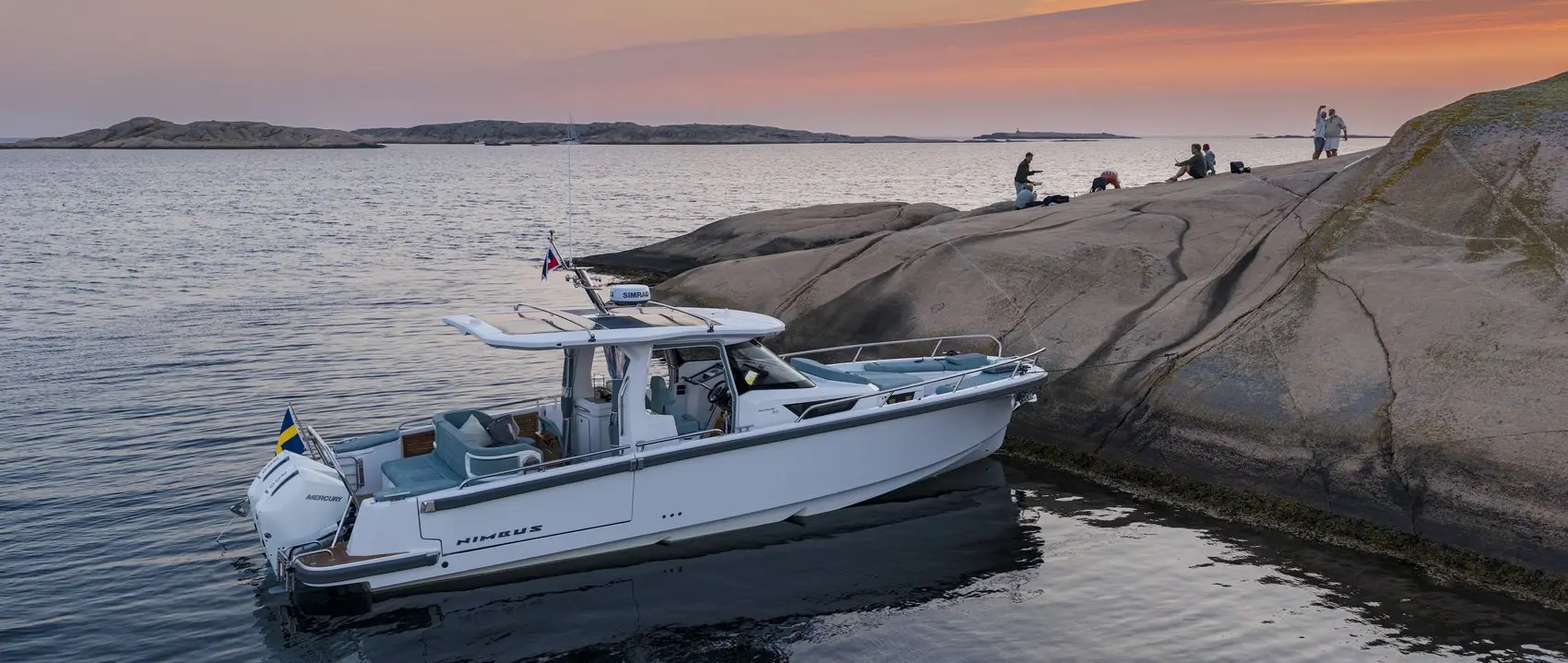
An early vote of confidence for a new cruiser
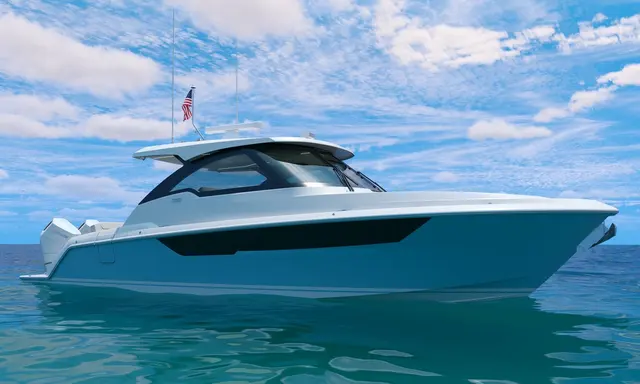
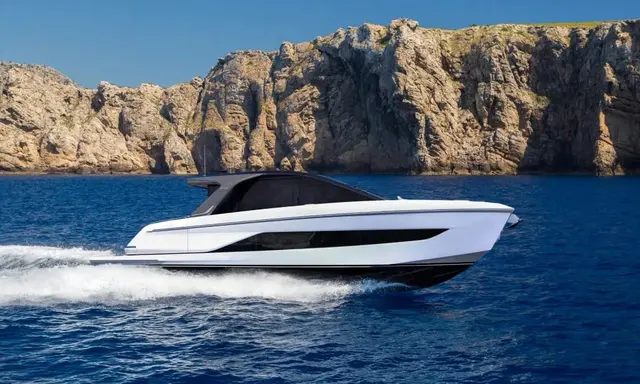
Nimbus Group says its Sport Tender 35 will arrive at boot Düsseldorf 2027 having been shortlisted for two significant international boating awards. In a statement issued on 12 November 2026, the Swedish builder confirmed nominations for European Powerboat of the Year 2027 in the 10–14 metre category and the Motor Boat Awards 2027 Weekender (open) class. The company introduced the model earlier in 2026 as the first member of its Sport Cruiser 35 series. The nominations are recognition by separate judging panels, not announcements that the boat has won either prize. That distinction matters as the builder prepares to present the model to a broad European audience in January.
Two competitions measure different qualities
European Powerboat of the Year and the Motor Boat Awards have different evaluation processes and category structures. Being considered for both may indicate that the design appeals to people looking at broadly comparable boats from more than one perspective, but the nominations do not establish a technical ranking or universal superiority. The Sport Tender 35 is in a size segment where owners often balance day cruising, fast coastal passage, sheltered accommodation and easy family handling. A buyer should therefore use the awards as an invitation to investigate the model, not as a substitute for a sea trial. Jurors’ impressions and a particular owner’s needs are not identical.
A new Sport Cruiser identity
Nimbus frames the Sport Tender 35 as the first boat in a new Sport Cruiser 35 series. This indicates an approach that may be applied across different deck configurations, with a particular emphasis on how people move and spend time aboard. The company’s chief executive Johan Inden says the development work was centred on those people rather than a single headline specification. This is a useful design principle in the 10–14 metre segment, where cabin, cockpit, side deck and helm dimensions compete for limited space. Every change in layout affects storage, shelter, safety and guest circulation; a coherent platform should make the trade-offs understandable.
The importance of hull behaviour
Nimbus says the model uses a twin-stepped, air-lubricated hull, a configuration also relevant to the later Sport Coupé 35. Stepped hull design can affect wetted area, trim and operating characteristics, but its real-world results depend on loading, power, conditions and setup. It would be premature to infer a specific fuel saving or speed figure from that description alone. Buyers comparing the Sport Tender 35 with other performance cruisers should ask for sea-trial data at realistic payloads, in different sea states, and with the engine package they intend to order. A marketing claim about efficiency is most useful when accompanied by the conditions under which it was measured.
Deck planning is about everyday movement
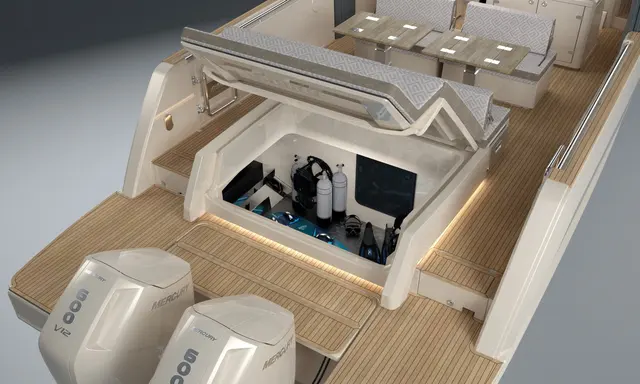
An open Sport Tender has to accommodate passengers arriving aboard, moving past the helm, using social seating and reaching the water. These requirements sound simple but can create conflicting priorities. A wide sun lounge might be attractive at anchor while reducing the room available for passing safely in a rolling sea. Handholds, nonslip surfaces, protected edges and a logical route between bow and stern are important to prospective owners. Nimbus’s emphasis on human experience suggests that the best way to assess the boat is to move through its deck in person. Photographs of empty spaces do not reveal how easy those routes feel with a full party aboard.
An open boat still requires weather planning
Even for owners who mainly enjoy fair-weather trips, the ability to manage sun, spray and sudden changes in conditions is important. The Sport Tender 35 is marketed as a fast, open-style cruiser rather than a completely enclosed all-weather boat. Shade solutions, seat placement, wind protection and drainage therefore influence comfort. The related Sport Coupé 35 illustrates a different design response to shelter, but that separate model should not be confused with the nominated tender. A responsible comparison asks how the intended cruising area and season affect the preferred layout. The choice for a Mediterranean summer may differ from that for colder northern European waters.
Day use and weekend use overlap
The Motor Boat Awards nomination in the Weekender (open) category highlights a familiar ambiguity in modern boating: many owners want one craft for social day outings and the occasional overnight trip. A successful layout has to work when guests are sitting in the cockpit, when the crew needs to prepare food or drinks and when sleeping space is in use. Buyers should test each of those modes instead of accepting an overall description such as versatile. Cabin headroom, ventilation, berth access and bathroom arrangement can matter more on the second night than they do during a short showroom inspection. A nomination alone does not determine whether those details suit a particular family.
The meaning of the boot Düsseldorf appearance
boot Düsseldorf is one of the major indoor boat shows in Europe and gives manufacturers an opportunity to place models before international buyers and dealers. The 2027 event will be especially important for the Sport Tender 35 because the boat will be shown while the award campaigns attract attention. A controlled exhibition setting can help visitors examine craftsmanship, cabin arrangements and equipment choices, though it cannot replace assessing underway behaviour. Anyone considering an order should ask the dealer about demonstrator availability, delivered options, warranty arrangements and expected handover dates. Show-display specification may differ from the standard configuration in the builder’s price list.
A nomination can help a dealer conversation
Awards recognition is useful when it prompts more precise questions rather than settling a purchase decision. Buyers may want to know which engine combinations were assessed, whether nominated boats carried optional equipment and what specific handling or construction details impressed the juries. A dealer may not have every answer, and it is better to acknowledge that than to present assumptions as certified test results. The same applies to claims about noise or emissions. Those topics depend on measurement methods as well as equipment selection. A comparative sea trial can reveal practical distinctions that categories and promotional images conceal.
Ownership cost extends beyond purchase price
For luxury-yacht buyers, the acquisition figure is only the beginning of the cost model. Fuel, insurance, routine maintenance, winter storage, dockage, cleaning and eventual resale can dominate the experience over several seasons. A 35-foot-class boat may be simpler to operate than a larger crewed yacht, but it still needs planned care and safe mooring. The Sport Tender 35’s eventual residual value cannot be inferred from two nominations. Prospective owners should obtain service schedules and real quotations from providers in their cruising area. Comparisons are meaningful only when equipment, usage and local taxes are kept consistent.
Engine choice must match actual habits
The right propulsion arrangement depends on intended speed, number of passengers, typical distance and the availability of technical support. A high-performance package can be appealing at a boat show but may not be best for owners who spend most of their time at displacement or moderate planing speeds. Conversely, an underpowered configuration can make a loaded boat less comfortable in difficult conditions. Specific choices should be evaluated from the builder’s current specification and demonstration fleet. The November Nimbus announcement is about awards nominations rather than an exhaustive engine configurator, so no unverified power, speed or consumption figures should be treated as facts here.
The marina berth is part of the design brief
Owners considering the Sport Tender 35 should think about more than the nominal length printed in a brochure. Real berthing requirements depend on overall dimensions including protrusions, the clearance needed for manoeuvring and any local restrictions. Boarding arrangements also need to match pontoon height and tidal range. These are not glamorous details, yet they can determine whether the boat fits the marina an owner plans to use. The same principle applies to dry storage and road transport, where mass and beam matter. Early measurement and written confirmation help avoid expensive assumptions made after signing a purchase order.
From first reception to lasting reputation
Nimbus reports that the Sport Tender 35 has been well received by customers following its introduction. That statement reflects the manufacturer’s own view and is not a quantified independent sales or reliability survey. Initial enthusiasm may be genuine while leaving long-term durability, support and resale performance to be demonstrated over time. Owners can improve the quality of their decision by speaking to dealers about service capacity and by seeking feedback from people operating comparable boats. Awards shortlists tend to reward new design achievement; ownership satisfaction includes many quieter matters that become apparent only after extended use.
A wider competitive field
The segment surrounding 35 feet is crowded with open cruisers, weekenders and dual-purpose boats from Scandinavian, Italian, British and American brands. The Sport Tender 35 must compete on a combination of design, operating characteristics, value and dealer confidence, not just on styling. Some rivals prioritise a larger cabin; others offer more exposed entertaining space or different propulsion choices. There is no universal best answer because the intended cruising mission changes the evaluation. The two international nominations indicate that Nimbus is attracting attention within this competitive field. Buyers should still compare like-for-like quotations and performance measurements before drawing financial conclusions.
What to verify at the next show
Visitors to the 2027 Düsseldorf show can use a simple inspection sequence: examine secure movement on deck, understand the helm sightlines, check storage access, try the accommodation and study service access to major systems. These are areas where a well-proportioned design can be appreciated without needing specialist instruments. Questions about stability, efficiency and ride quality require a sea trial. The owner should also confirm the actual equipment list of the display boat, since optional features can change both cost and impression. A structured visit makes better use of the show than selecting a model based on a dramatic stern photograph.
The business importance of dual recognition
For Nimbus, the nominations arrive as it establishes the Sport Cruiser series and prepares a wider public presentation. Awards can provide independent visibility in markets where buyers may be unfamiliar with a new model or dealer. The company’s statement links the recognition to its design philosophy, while emphasising the response of customers. The eventual award results will be separate news and should not be anticipated. In business terms, a nomination may support marketing, but production quality, parts availability and customer service will determine whether that attention becomes sustainable demand. Owners need the same practical confidence from the brand regardless of prizes.
A useful moment for considered buyers
The Sport Tender 35 story is noteworthy because two international judging programmes have selected the same recently introduced boat for consideration. It has not yet been declared a winner, and the award categories should not be confused with measures of suitability for every family. What makes the development interesting is the opportunity to look more closely at an open cruiser designed around movement and human use. As Nimbus prepares for boot Düsseldorf, prospective owners can use the announcement to begin informed discussions about layout, handling, support and operating costs. The value of the boat ultimately rests in how well it serves the journeys its owners actually make.