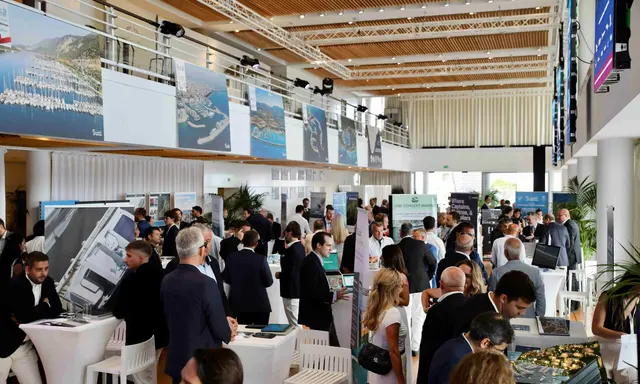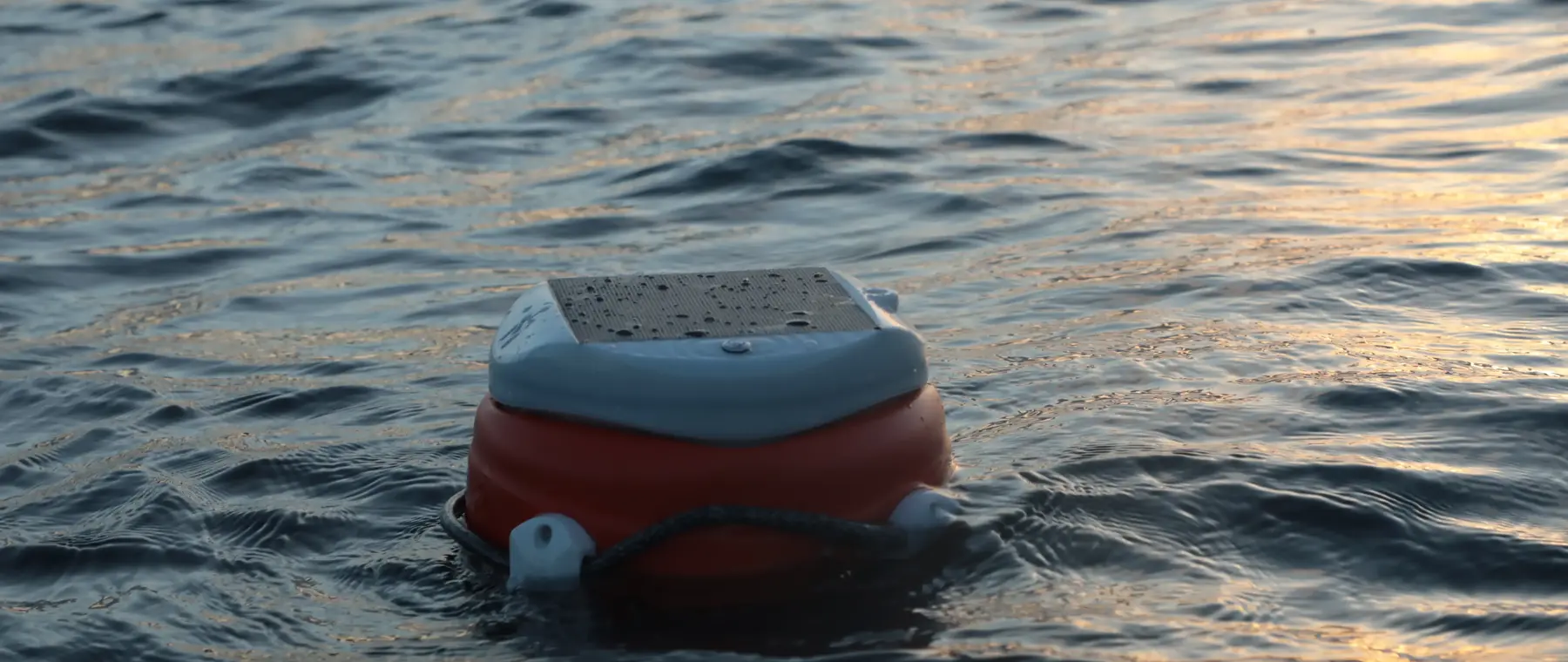
Mooring Solution, a French developer of anchor-monitoring equipment, is looking for investment to increase sales and continue work on its Morphéis connected buoy. The financing objective was reported on 16 September 2026, following the company’s appearance at Cannes Yachting Festival, and represents a new business-development phase for a product already sold commercially since the middle of 2025.
The distinguishing feature is the measurement point: Morphéis tracks a GPS buoy deployed above the anchor rather than inferring anchor movement exclusively from the yacht’s position. The concept has practical appeal to owners who spend repeated nights at anchor, but the company’s planned expansion and performance claims must be kept separate from independently proven results.
The announcement concerns investment and growth
Marine Industry News reported that the two-founder operation is seeking capital to expand its sales operation and fund further product development. It identified a target of about 300 units during 2027, with nearly 200 expected by mid-year, figures that should be understood as ambitions rather than booked orders or established company revenue.
The article describes Mooring Solution as Cannes-based with manufacturing in Marseille and says the company presently sells mainly to private owners. No fundraising amount, named investor, financing agreement or completed capital injection was disclosed in the material checked, so none should be represented as confirmed.
Monitoring the anchor instead of vessel movement
A conventional anchor alarm commonly draws a radius around the boat’s GPS position, raising an alert when the boat travels outside it. At anchor, however, a change of wind or tide can move a perfectly secure yacht around a wide arc, making that radius difficult to set if the skipper wants to avoid unnecessary alarms.
Morphéis seeks to reduce that ambiguity by placing its own position sensor in a buoy attached to the anchor deployment. Its intended reference is the anchor, which should remain fixed when holding properly, while the boat remains free to swing on its rode. The approach still requires careful deployment and is not a replacement for good anchoring practice.
How the buoy communicates with the crew
The product incorporates GPS, a battery and solar charging in a buoy that remains at the surface above the anchor. Its position data are transmitted to a separate receiver aboard, which can sound an alarm if movement meets the device’s trigger criteria; the company also describes remote notification functions dependent on communication availability.
This architecture makes the system distinct from a smartphone-only solution, but it adds equipment that must be secured, launched and retrieved during every applicable anchoring operation. Buyers should examine battery behaviour, receiver coverage, mooring-gear compatibility and how alerts work if the phone network is unavailable.
The present customer is a frequent cruiser
The company’s current sales focus includes owners of boats around 40 to 60 feet, a span overlapping Luxury Yacht Guide’s 12.00-to-23.99-metre coverage. That does not mean the device is restricted by yacht length alone; anchoring frequency, typical seabed, crew arrangements and the way a vessel moves at anchor are important operating considerations.
Independent French trade coverage places the consumer price at approximately €1,499 including tax, while the manufacturer’s own material discusses an investment of about €1,500. Prices and availability should be checked directly for the buyer’s market, and the equipment should be compared with an existing GPS plotter or mobile anchor alarm.
Product development remains a stated objective
The 16 September report says expansion would also support new connectivity features, including work directed at Starlink-linked notifications. This is a future development priority, not confirmation that a finished Starlink function is included in every system available to purchase today.
The company’s public website discusses alerts, solar charging, LED visibility and the onboard receiver, with its marketing making strong claims about the reduction of false alarms. Those claims describe the manufacturer’s intended advantage and should not be mistaken for published comparative sea-trial results across all anchoring conditions.
Safety depends on the complete anchoring system
An alarm may draw attention to a dragging anchor but does not determine whether the chosen ground tackle is suitable, whether enough chain was deployed or whether a safe anchoring position was selected. On a valuable cruising yacht, the owner remains responsible for evaluating depth, weather, swing room and the proximity of other boats.
The buoy also needs correct handling around the anchor and rode, with the installation checked against the vessel’s retrieval arrangements. Mooring Solution’s product could add information for the crew, but no claim that it prevents collisions or eliminates every false alert can be established solely from a brochure.
What to look for as the startup scales
Commercially, the measurable milestones will be actual funded investment, published sales figures, any new distribution agreements and clearly specified product revisions. The reported sales goals for 2027 provide benchmarks, but the company has not announced that the entire planned production volume has been sold.
For Luxury Yacht Guide, the fresh story is the company’s financing search and development strategy, not a second unveiling of a device first offered in 2025. Owners considering Morphéis should use the present product specification and a written seller quotation rather than expecting future connectivity features to arrive automatically.