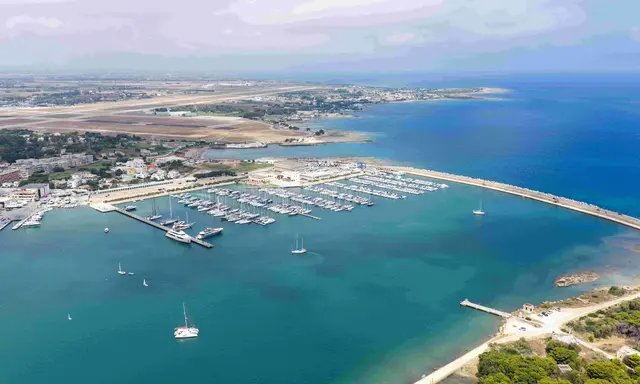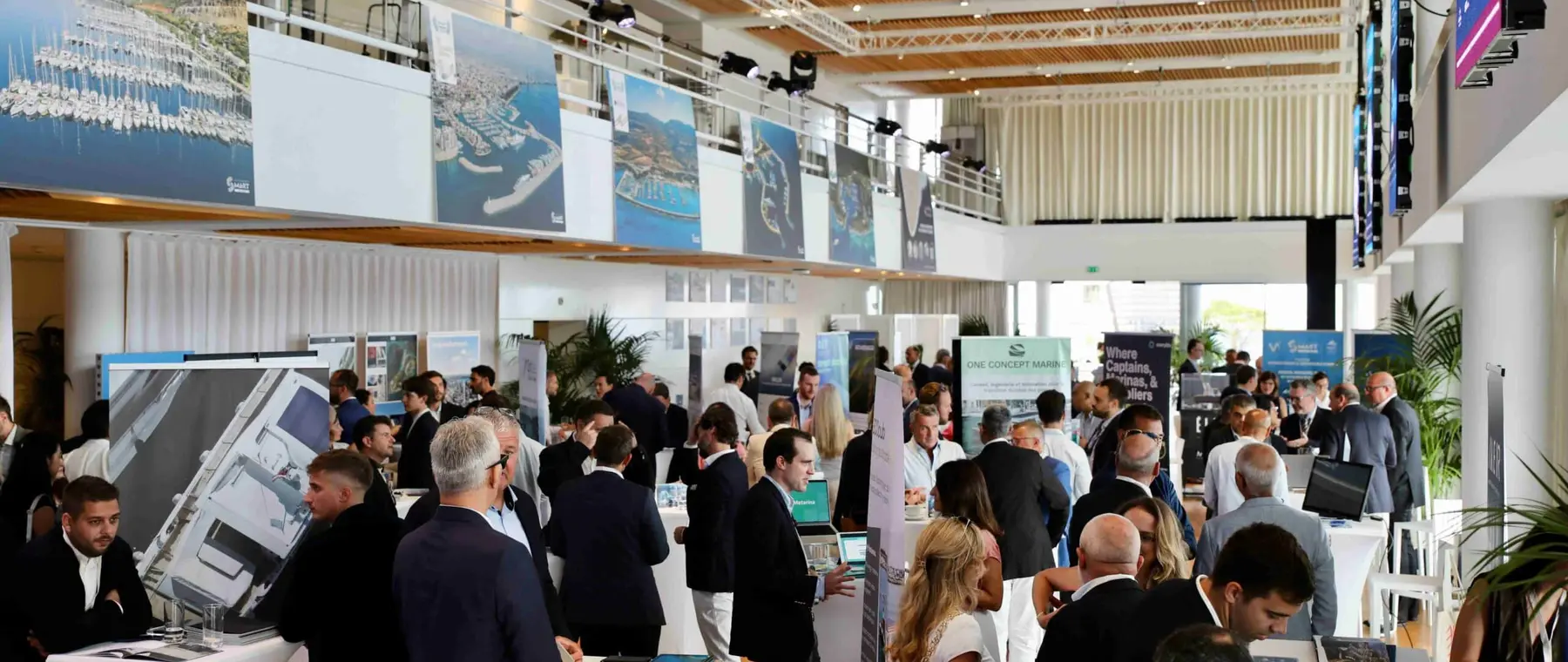
The sixth Monaco Smart & Sustainable Marina Rendezvous is scheduled for 20 and 21 September 2026 at the Yacht Club de Monaco. Organiser M3 Monaco expects marina managers, investors, designers, industry representatives and innovation companies from 28 countries to examine the technical and commercial requirements of future waterfront facilities.
The agenda ranges from cybersecurity in connected marinas to new construction materials, electrification and climate adaptation. For owners of luxury yachts below 24 metres, these are not abstract infrastructure debates: marina technology influences shore power, berth availability, personal data, maintenance and the services delivered at the pontoon.
Connected marinas create a security challenge
The first day includes a workshop dedicated to cybersecurity for connected marinas, reflecting the growing use of networked reservation, access-control, electricity-metering and customer-service systems. The organiser does not announce a universal security standard, but it is explicitly bringing the subject into its professional discussions.
An owner should be concerned with how a marina controls access to boat and customer information, not just how convenient its digital app appears. Sensible questions include whether payment systems are protected, how credentials are managed and what happens when a connected service is unavailable.
Electrification changes berth infrastructure
The second day examines how berth requirements may evolve as yacht electrification progresses, with associated sessions on energy production and connected services. A berth suitable for a conventional yacht today may not automatically offer the electricity capacity or charging arrangements required by a future electric or hybrid boat.
Marina developers must assess distribution capacity, safety, metering and how charging demand interacts with other shoreside users. Individual yacht owners should verify their vessel’s electrical requirements and the marina’s actual supply rather than relying on an advertised sustainability programme as proof that charging is available.
Refit appears alongside new construction
The programme includes decarbonisation of existing yachts through refit, extending the discussion beyond new builds and experimental propulsion systems. Older yachts will remain part of the fleet for years, so technical improvements in insulation, auxiliary power and energy management may be important even without replacing the main engines.
Refit work must be planned around the vessel’s original structure, available space and regulatory requirements. The value of a proposed upgrade depends on measured operating changes, installation quality and future serviceability rather than on whether the technology is considered new.
Materials and coastal climate risk are linked
Workshops will consider bio-concrete, recycled composites and reuse of sediments, while later sessions examine architecture in the face of climate change. These subjects connect the way a marina is built with how it may withstand changing environmental conditions and operate over a long service life.
Owners need not become construction engineers to benefit from this work, but they can ask facilities about protection from local exposure, emergency plans and resilience of essential utilities. A well-designed marina should combine physical safety with the everyday requirements of berthing and maintenance.
AI and connected services enter the waterfront
Monday’s agenda includes artificial intelligence applied to marinas, digital services and development decisions from site selection to completion. The event will also discuss biodiversity and new investment models, showing how data, ecology and finance are increasingly treated as linked parts of port development.
New tools may improve scheduling or monitoring, but owners should distinguish working operational systems from ideas discussed at a conference. Any automated marina service still needs accountable operators, sensible data protection and reliable procedures when technology or connectivity fails.
Start-ups and architects will present projects
Around 30 start-ups and scale-ups have been selected for the innovation programme, while 11 architectural projects will be presented for consideration. The organiser plans to announce the Monaco Smart & Sustainable Marina Awards at the closing ceremony on 21 September.
Presentations can expose marina operators to emerging solutions and allow suppliers to test ideas with prospective customers. An award or selection for the event should be treated as recognition of a concept or proposal, not independent proof that a system has already been installed successfully across the market.
What the meeting means for yacht owners
The two-day event is professional rather than a display of specific 12-to-23.99-metre yachts, but its agenda addresses the places those yachts depend upon. Reliable shore power, useful services and secure access can affect ownership just as directly as engine choice or interior layout.
The practical value will come from solutions that operators actually implement after the discussions. Until a marina announces and verifies a new facility, owners should continue to check existing berth capabilities and operating arrangements directly with the port concerned.