A German partnership with a practical tender proposition
An electric propulsion announcement made during METSTRADE 2026 has a particular relevance to the tenders carried by luxury cruising yachts. Kräutler Elektromaschinen has presented a partnership with Sylents, a German developer of waterjet drives, around an electric outboard concept that avoids an exposed propeller. The manufacturer-issued notice dated 16 November describes an integrated lithium-ion battery of 1 kWh, adjustable height and trim, Bluetooth connectivity and the use of recycled PVC in the product construction. Those features are useful starting points for examining the system, but they are not a substitute for an independent test of range, thrust, handling or durability. For owners of 12 to 24 metre yachts, the interesting question is not whether a new motor sounds innovative. It is whether the propulsion arrangement makes a small tender easier to launch, operate and maintain across the varied conditions of an actual cruising itinerary.
Why removing an exposed propeller matters
A conventional outboard has a rotating propeller below the gearcase, a familiar layout that remains effective across many tender types. A protected waterjet takes a different approach: water is drawn into the propulsion unit and expelled to generate thrust, with the working impeller housed rather than exposed. This can appeal to crews who routinely use dinghies beside swimmers, close to a bathing platform or around shallow waterfront approaches. It does not make a vessel inherently harmless, however. Water intakes, jet discharge, moving hulls and poor helm decisions still create risks. The useful distinction is that one specific exposed rotating component has been removed from the external profile. Buyers should ask what safety testing has been completed, how the intake is guarded and how the manufacturer explains its operating limitations. There is a difference between a product designed to reduce a hazard and a guarantee that the hazard has disappeared.
A small battery changes the operating calculation
Sylents and Kräutler identify a 1 kWh integrated lithium-ion battery in their METSTRADE presentation. That figure describes nominal stored energy, not a verified cruising distance or a fixed number of minutes under full power. Actual endurance depends on motor setting, hull displacement, loading, current, wind, sea state and the state of the battery. Tender owners should resist the temptation to divide a headline capacity by a single advertised power figure and treat the answer as a reliable passage plan. The test worth asking for is endurance on the actual tender, with the intended passenger load and a safety reserve. At low speed, a short transfer from yacht to shore may demand little energy; an unexpected headwind on the return leg can alter the calculation markedly. Charging time and the availability of a spare or replaceable battery may matter as much as maximum power when the tender is used frequently throughout a day.
The value of adjustable height and trim
Adjustable mounting height and trim are highlighted in the official announcement, and both can influence how a propulsion unit behaves when fitted to different transoms. A cruising yacht may carry a lightweight inflatable tender during one season and a different utility craft in another. The ability to set the waterjet at a suitable working position is therefore more than a styling feature. Incorrect height can affect intake flow, thrust and how the boat handles in chop, while an unsuitable trim setting can compromise balance and visibility from the helm. The manufacturer should be able to provide an installation envelope, compatible transom measurements, required clearances and recommended weight limits. A careful owner will ask whether adjustments are tool-free or require mechanical changes, how settings are secured against vibration and how repeatable the installation is after the motor has been removed for transport or winter storage.
Bluetooth connectivity and what it should actually provide
The inclusion of Bluetooth raises reasonable expectations of convenient information or configuration, but the manufacturer announcement does not establish that every imaginable connected function is available. Connectivity on a tender is valuable only if it supports something tangible, such as understanding battery state, checking a fault or keeping settings consistent. Critical propulsion controls should remain predictable when a phone is flat, missing or outside wireless range. A buyer should establish which functions depend on connectivity, whether a mobile application is needed for commissioning and how updates are applied. Equally important is clarity about ownership of the service information. A crew replacing an electronic component on a remote island should not discover that essential diagnostics are locked to one unavailable handset or an account belonging to a former owner. Digital features can simplify ownership, but they must not make a fundamentally straightforward tender more difficult to operate away from home.
The shallow-water case needs more than a slogan
The manufacturer's description identifies shallow waters and shoreline use as intended applications. A housed impeller can offer a different damage and contact profile from a traditional propeller, but a waterjet still requires a suitable flow of water through its inlet. Sand, weed, pebbles and debris are realistic concerns on the beaches and estuaries that make small tenders attractive in the first place. The important questions are how much depth the unit actually needs, what happens if the intake becomes obstructed and whether clearing it requires lifting the boat or removing components. The advertised lack of an exposed propeller must not be confused with permission to run across hard ground. Owners should request a published minimum operating depth and specific cleaning instructions before treating the system as appropriate for a favourite anchorage. An adaptable tender propulsion system also needs a clear procedure for recovering the boat after an accidental grounding.
Weight, handling and the realities of yacht storage
Sylents' own product information describes a compact outboard offering, but buyers should verify the exact weight and battery configuration of the model they are considering. On a 15 or 20 metre yacht, a modest change in motor mass can be significant when the tender is lifted by two people, positioned on chocks or placed on a bathing platform. Weight must be considered alongside its centre of gravity, the shape of the lifting points and the ease of disconnecting it from the transom. A motor that looks compact in a studio photograph can still be awkward to carry through a narrow lazarette. The owner should measure the intended storage volume, including all projections and the clearance necessary to disconnect charging cables. If the unit remains fitted when the tender is hoisted, the combined craft and propulsion weight must remain within the documented limits of the yacht's tender-handling equipment.
Recycled materials need detailed specifications
The announcement refers to durable recycled PVC construction, which is relevant to the conversation about material use in marine equipment. Yet the presence of a recycled ingredient is not an independently verified life-cycle assessment. A meaningful evaluation would identify where the material is used, its percentage by mass, its expected exposure to sunlight and salt, and whether it can be repaired or recycled again at the end of service. It is also important to distinguish structural parts from cosmetic covers. A recyclable cover may be valuable without establishing that the complete drive is environmentally superior to an alternative propulsion system. The more useful owner questions concern replacement-part availability, take-back policies, battery serviceability and the planned working life of the unit. Environmental claims become stronger when the manufacturer publishes measurable data and sets out how those claims are tested rather than relying on broad descriptions of sustainable design.
How a jet differs from a conventional electric outboard
The electric tender market already includes conventional propeller-driven outboards and integrated battery packages. Sylents' distinctive proposition is the protected waterjet configuration, rather than electrification alone. Jet propulsion has its own trade-offs, and efficiency at a particular speed or load cannot be inferred merely from the absence of a propeller. Owners will want comparable thrust and energy-consumption data, especially when operating a heavily loaded tender at displacement speeds. The handling response when reversing, stopping or manoeuvring near the parent yacht deserves particular attention. Waterjet arrangements may behave differently from a familiar propeller outboard, making a supervised sea trial worthwhile for anyone used to traditional steering and throttle response. A good comparison should use the same hull, loading, conditions and route where possible. Otherwise an apparent gain in convenience may simply reflect differences between boats rather than a genuine advantage in propulsion technology.
Maintenance must work beyond the dealer network
Electric drive systems generally eliminate the fuel handling and some engine-service tasks associated with combustion-powered outboards. They still require inspection of seals, electrical connectors, cooling passages, mounting hardware and mechanical components. A waterjet adds particular importance to intake cleanliness and access to the enclosed impeller area. The key issue for yacht ownership is whether routine procedures can be performed safely by a capable crew member, or whether each small fault requires a return to a specialist dealer. The manufacturer should specify inspection intervals, replacement consumables, saltwater rinsing procedures and the storage conditions for its lithium-ion battery. Warranty exclusions related to immersion, incorrect charging or impact should be read before purchase. Documentation should also explain what to do if the drive reports an electronic fault while away from shore. A reliable tender is often defined by the speed with which ordinary problems can be identified and resolved.
The safety case aboard a larger yacht
A yacht's tender is part of its wider operating system, not simply another recreational toy. Crew need procedures for launch and recovery, passenger boarding, battery charging, secure stowage and emergencies. Introducing a new electric motor means incorporating its charging arrangements into the yacht's electrical and fire-safety planning. Owners should ask for the battery's documented transport and charging requirements, the manufacturer's relevant conformity declarations and guidance for crew training. Positioning a charging station within an enclosed tender garage raises different questions from charging a removable battery in an appropriately designed space. The same principle applies to towing: some propulsion products can be towed in the water under specified conditions, while others require particular precautions. Nothing in the manufacturer's short METSTRADE announcement should be taken as confirmation of a universal procedure. Those details need to come from the full technical documentation for the exact motor being installed.
What the METSTRADE announcement establishes
The confirmed development is a partnership publicised by Kräutler around Sylents' German-made electric jet outboard technology. The published feature list covers a protected, propeller-free concept, integrated 1 kWh battery, adjustable trim and mounting height, Bluetooth and recycled PVC. It does not provide independently verified range figures for the readers' intended tenders, comparative fuel or energy costs, a universal installation approval or evidence that all versions of the drive are already available everywhere. Those distinctions matter. A manufacturer announcement is newsworthy because it introduces a useful alternative to the market; it is not an owner sea trial. Luxury Yacht Guide will treat the product as an option to evaluate rather than a proven replacement for every existing tender motor. The next meaningful evidence would be public technical data, operating demonstrations on representative tender hulls and clear information on service support across major cruising regions.
The decision for 12-to-24-metre yacht owners
For a luxury yacht owner choosing a tender propulsion system, the most useful shortlist combines four realities: the distance travelled, the difficulty of handling the motor, the type of shoreline visited and the quality of local support. The Sylents proposition is particularly interesting where short transfers, shallow approaches and a desire to avoid an exposed propeller are central to the brief. If a tender must travel long distances at sustained speed, the decision will turn more heavily on recorded endurance and charging logistics. Before ordering, request a demonstration with the complete passenger load, written installation guidance, actual charging requirements and confirmation that replacement parts can reach the yacht's usual home port. The partnership is a notable addition to the electric tender conversation, but sound ownership decisions still begin with measurable performance and disciplined operating procedures.
Primary reporting and image credit
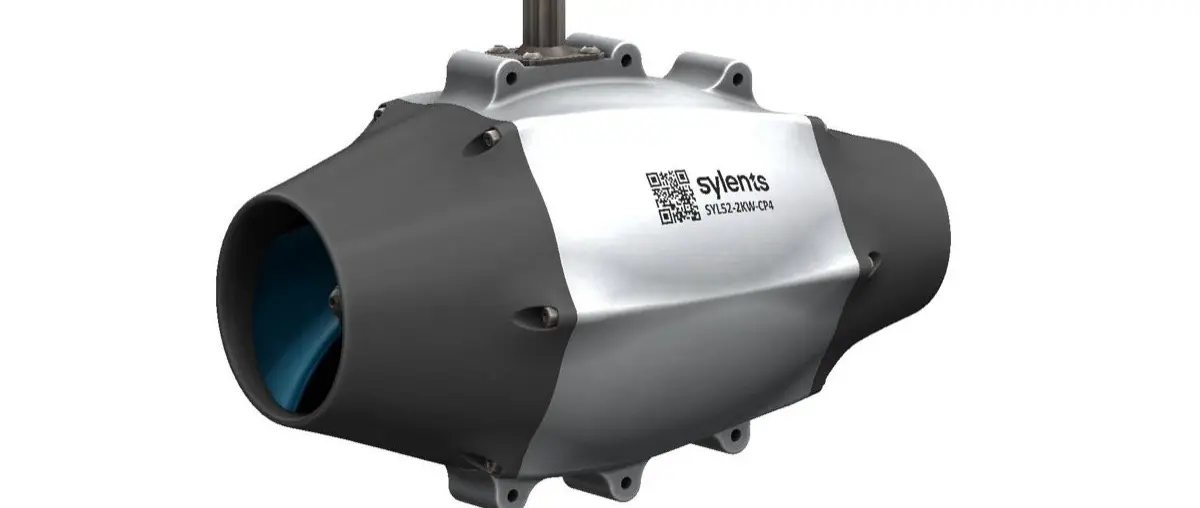
Primary manufacturer and organiser source(s): https://www.metstrade.com/exhibitors/krautler-elektromaschinen-gmbh-sylents/news/new-sylents. © Sylents / original manufacturer. Genuine first-party waterjet pod product photograph; illustrates the wider company propulsion range, not the newly announced 1kWh outboard. Image is used only for correctly attributed factual editorial coverage and never represented as open-licence stock photography.