A steering update unveiled for motorboats
Jefa Steering has expanded its ES150 electric steering system with a tilting helm option intended to give boatbuilders and owners more flexibility over the position of the steering wheel. The Danish marine-equipment specialist announced the Tilt Helm upgrade on 11 November 2026 ahead of METSTRADE in Amsterdam, explaining that it can be specified for new installations or fitted to compatible existing ES150 systems.
The announcement concerns an ergonomic mechanical interface within an electric steering product, not a new yacht, an autopilot certification or proof that a specific production boat has already adopted the upgrade. The new option deserves attention because the way a driver reaches and operates the wheel can influence comfort and the practical layout of the helm.
Five positions rather than one fixed angle
The company states that the wheel can be adjusted from minus ten degrees to plus thirty degrees, in increments of ten degrees. That creates five available settings. The range allows a driver to choose a wheel angle that better suits their seat, stance and reach.
This is a specific maker-supplied specification rather than a promise that every person will find the same position comfortable. Factors such as console height, foot support and the distance to the instruments remain important. A proper helm evaluation should consider the complete driving position.
Why posture matters on a boat
Operators of recreational motorboats may spend long periods holding a wheel while watching traffic, weather and navigation instruments. An awkward posture can make the task more tiring, particularly in changing sea conditions when the driver has to maintain balance while making adjustments.
An adjustable wheel is one way to improve comfort, but it is not a safety system by itself. The helm must still allow clear sightlines, secure handholds and access to essential controls. The benefits depend on a well-designed installation.
Sitting and standing are different modes
Many RIBs, sportsboats and adventure craft are operated from a seated or leaning position in calm water and from a standing position when visibility or motion requires it. A fixed steering wheel can be a compromise between those uses.
Jefa presents Tilt Helm as a way to accommodate both positions without redesigning the entire console around one wheel angle. Boatbuilders can consider the likely range of operators and the seating arrangement when deciding how to integrate the mechanism.
Electric steering remains the foundation
The tilting option is part of Jefa's ES150 electric steering family. Electric steering uses electronic signals and an actuator to control the rudder or outboard direction, subject to the specific system design. This differs from a conventional mechanical cable or hydraulic connection between wheel and steering gear.
An electrical system introduces requirements for power supply, wiring, monitoring and a defined response to faults. The public Tilt Helm announcement does not provide every fail-safe detail for the complete ES150 installation, so those matters should be confirmed directly with the manufacturer.
A change aimed at boatbuilders
Christian Jørgensen, product lead at Jefa Steering, said the option provides greater freedom to configure helms around different driving positions. For production builders, that could reduce some design compromises between the driver, the instrument display and the shape of the console.
An equipment option does not eliminate the need for testing. Each builder should verify wheel clearance, access, sightlines and the loads the helm assembly can safely tolerate. Integration matters as much as the nominal adjustment range.
Existing owners may have an upgrade route
Jefa says the Tilt Helm will be offered as a retrofit package for existing ES150 systems, subject to compatibility. This is relevant to owners who are satisfied with their steering performance but would prefer a more comfortable wheel position.
Compatibility should be checked using the exact installed version and the manufacturer's current instructions. It would be unsafe to assume that every installation can accept the new hardware without changes to its mounting, wiring or surrounding furniture.
The importance of a secure adjustment
An adjustable steering assembly needs to remain stable after a position has been selected. A driver must be able to depend on the wheel when manoeuvring, even if the boat is moving sharply.
The announcement does not publish the complete mechanical locking arrangement, service interval or proof-test procedure. Installation and maintenance should therefore follow Jefa's official documentation rather than a generic modification of the helm mechanism.
A wheel is part of a wider operating environment
Helms on luxury motor yachts increasingly include integrated electronics, switch panels, engine information and communication equipment. Changing the wheel angle may alter how easily the driver sees or reaches adjacent controls.
The correct solution involves reviewing the complete station. Boatbuilders should check visibility of displays, access to throttles and any emergency switches across the wheel's adjustment range. A feature intended to improve ergonomics should not introduce a new obstruction.
Comfort for multiple drivers
An owner may share a boat with other family members or professional crew who differ in height and preferred operating posture. Adjustable seating has long been common in premium vehicles and some boats, but the wheel position is another part of the overall setup.
The benefit is greater flexibility, not proof that all owners need the same adjustment mechanism. A buyer should physically try a representative installation before assuming the advertised range will suit their own layout.
RIBs are a particularly relevant application
RIBs and other high-performance small craft can subject drivers to changing loads and frequent transitions between seated and standing operation. The company specifically identifies such boats as a market for Tilt Helm.
For an owner using a RIB as a yacht tender, operator comfort is important because the craft may carry guests between an anchorage and shore. The specific steering installation must still be evaluated against the tender's design and operating limits.
Servicing depends on the full system
A tilting wheel changes one element of the helm. The electric steering hardware, control electronics and connections still require the inspection and maintenance described in the manufacturer's instructions.
A retrofit should be carried out by someone who understands the relevant installation. The fact that a component can be fitted to an existing system does not mean an owner should improvise the work without the right tools and knowledge.
An earlier nomination provides background
Jefa's ES150 family was previously recognised in the marine-equipment design community, including a DAME nomination in 2024 under the former Electric Steer name. That provides product background but is not a 2026 award for the Tilt Helm option.
A fresh product update should not be described as a newly won award merely because it builds on an earlier nominated system. The verified 2026 development is the adjustable helm geometry and its announced availability.
Boat design may benefit from less rigid packaging
For a naval architect or interior designer, every centimetre around the helm matters. Seating position, roof height, viewing angles and safe movement determine how much room is available for equipment. A more flexible wheel position could help designers create a practical operating space without sacrificing comfort.
Those are potential design advantages rather than verified savings in build cost or space. Each application needs its own arrangement drawings and testing.
Integration should begin early
A builder selecting electric steering needs to account for electrical load, steering response, equipment mounting and the relationship with any other helm systems. Late changes can create additional engineering work, particularly if structural or console modifications are required.
The company offers the adjustment as part of the ES150 ecosystem, but buyers should still ask how the new option affects installation, warranty and commissioning. Documented compatibility is more reliable than visual resemblance between parts.
What operators should assess on a trial
A useful evaluation would compare driving posture in seated and standing positions, check wheel clearance at each of the five settings and confirm the controls remain comfortable in different sea states. The operator should also be familiar with the steering system's behaviour.
This is a suggested evaluation method, not a claim that a particular independent sea trial has already measured fatigue reduction. The manufacturer's announcement does not report a numerical improvement in driver endurance or accident prevention.
A maker-supplied illustration, not a delivered boat
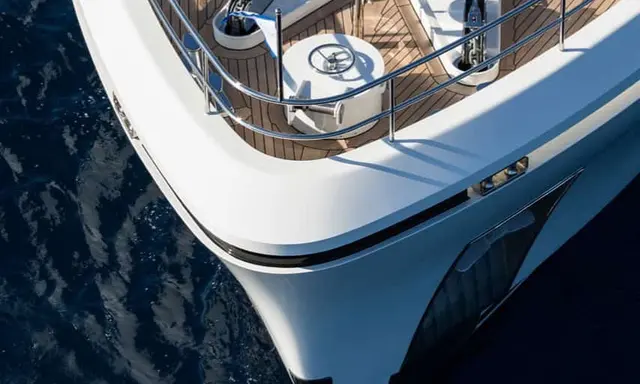
The accompanying visual is from Jefa's parent marine-equipment group and illustrates the boating environment in which its systems are used. It is not presented as a photograph of the ES150 Tilt Helm hardware or proof that the pictured yacht carries that exact configuration.
Where a precise product comparison is needed, the correct reference is Jefa's current drawings and technical specifications. Contextual photography must not be allowed to substitute for those details.
What remains to be confirmed
The maker has defined the five tilt settings and described a retrofit path, but the full installed price, individual build compatibility and service procedures need confirmation for each project. A yard should not infer those details from the general announcement.
As deliveries and installations progress, further documentation could show how the feature has been incorporated into specific craft. Those will be separate milestones.
A useful refinement of the helm
The ES150 Tilt Helm is an incremental but practical development for builders who want to accommodate different operators without fixing the steering wheel at one angle. Its appeal is clearest in boats where the driver regularly changes position.
The announcement establishes a genuine technical option rather than an entirely new yacht platform. For LYG readers, the important question is whether the adjustment improves the operation of their particular boat while preserving all the other requirements of a safe, reliable helm.
Primary reporting and image credit
Primary report: https://www.metstrade.com/products-and-services/bsi-marine-equipment-group/news/jefa-steering-announces-product-upgrade-to-es150-electric-steering. © BSI Marine Equipment Group / original photographer. Authentic manufacturer's marine working-deck photograph; illustrative of boating only, not the ES150 unit. Image is used only for correctly attributed factual editorial coverage and never represented as open-licence stock photography.