A confirmed winner after the nominations
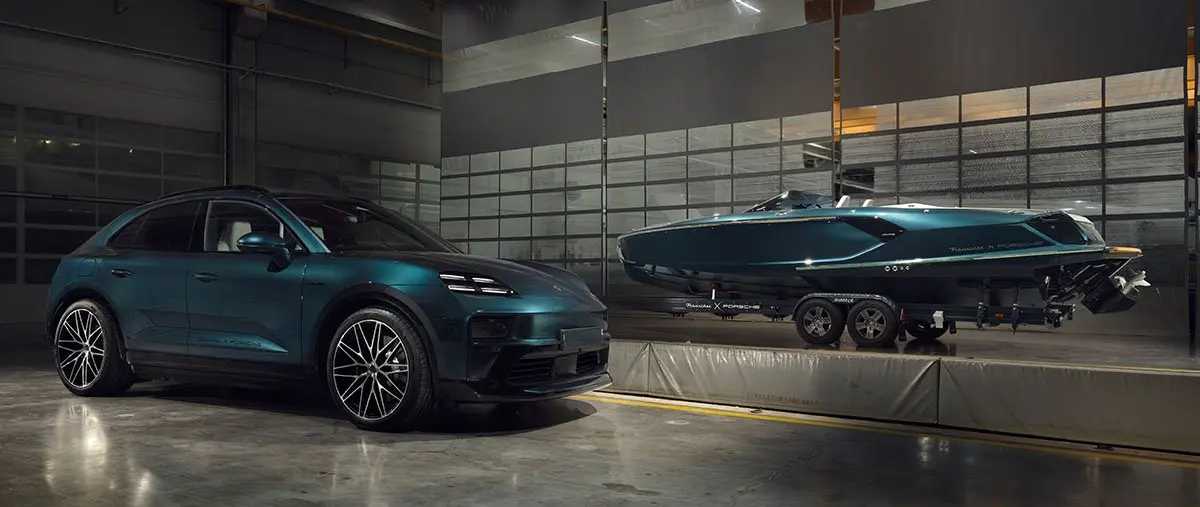
The Frauscher x Porsche 790 Spectre has won the Best Electric category at the Best of Boats Awards 2026, presented in Berlin on 26 November. The result was confirmed in an eyewitness report from the awards ceremony, which identifies Frauscher chief executive Stefan Frauscher as accepting the prize. It turns the boat's earlier award nomination into a completed, separately verifiable achievement.
The distinction matters to owners and professionals following marine electrification. A shortlisted model has received recognition from the jury, but that recognition should not be represented as new certification, proof of unrestricted offshore range or the announcement of a fresh production order. The award concerns the particular electric sports boat and its qualities as evaluated for the competition.
What the jury recognised
The organiser's Best of Boats programme considers vessels within practical categories, including electric boats, family craft and larger cruising yachts. In the account of the 2026 ceremony, the jury highlighted reliability, ease of use, performance, design and construction quality as important reasons for selecting the Frauscher x Porsche collaboration.
The awards assess the experience offered by different products, rather than ranking every motor yacht against a single overall standard. A winner in the Electric category should not be assumed to outperform every conventional motor yacht in range, accommodation or seakeeping. It has been recognised for a specific combination of characteristics within its designated class.
An Austrian boatbuilding partnership with Porsche
The 790 Spectre joins Frauscher's experience in building distinctive premium recreational boats with Porsche's electric-vehicle engineering and brand identity. The project is part of a wider cooperation that has already produced other high-performance electric craft. The new award demonstrates a particular stage of recognition rather than the start of the partnership itself.
The relationship is relevant to the wider yacht market because electrification requires coordination between hull builders, electrical suppliers and service organisations. A marine product cannot simply borrow a car powertrain without considering cooling, loads, installation, charging and the operating conditions encountered on the water.
Where the model fits the ownership market
At approximately 7.92 metres, the 790 Spectre is not a cabin cruiser designed to accommodate a family for extended passages. It is a premium recreational powerboat intended for short outings, rapid acceleration and distinctive handling. Within luxury yachting, that makes it relevant as an independently owned dayboat or potentially as a shore-side companion to a larger yacht.
A superyacht owner considering a luxury electric tender still needs to evaluate lifting weight, charging, dimensions and suitable storage. An award-winning electric craft is not automatically suitable for every mother ship. Its technical fit and safety arrangements need separate confirmation.
Electric performance must be described precisely
The Best of Boats programme refers to a maximum speed of around 51 knots for the 790 Spectre. That is a published performance figure associated with the model, not a measured result from an independent sea trial conducted for this article. Owners should distinguish peak speed from the practical cruising speed at which they expect to spend most of their time.
Electric propulsion can deliver prompt torque and an appealingly quiet low-speed experience. Yet its range depends on speed, battery state, load, water conditions and reserve policy. A performance-focused headline should never obscure those variables.
Why acceleration attracts attention
An electric motor can develop strong torque from low rotational speed, changing how a light, performance-oriented boat responds when the throttle is applied. This helps explain why electric dayboats may feel unusually responsive. The effect can be enjoyable but requires familiarity and measured handling from the operator.
Acceleration figures need defined test conditions to be meaningful. The award report confirms the jury's favourable assessment, but it does not supply a new standardised acceleration record for this boat. It would be inappropriate to invent a time from rest to a specified speed.
Quiet running changes the experience
One advantage frequently associated with electric recreational craft is reduced engine noise compared with a similar combustion-powered installation. On a luxury dayboat, this may make conversation and gentle manoeuvring more comfortable, especially close to an anchorage or marina.
Quiet propulsion does not make the boat silent. Wind, waves, hull contact and auxiliary systems remain audible, and other people on the water may not hear an approaching craft as readily. Safe speed and responsible lookout remain important even when mechanical noise is reduced.
Charging is part of the product
A practical electric boat needs more than an attractive battery specification. Owners must be able to charge it where it is actually kept, using equipment suited to the available electrical supply and operating environment. A marina might offer different connections from a private dock or a superyacht's tender station.
Before purchase, the client should request a clear explanation of charging time, compatible hardware, electrical protection and service arrangements. The same boat can be convenient in one location and demanding in another if the infrastructure does not suit the owner's routine.
Range and speed are connected
At high speed, energy demand can increase quickly, even when propulsion is efficient. A top-speed figure therefore cannot be combined with a range quoted for a slower operating mode to produce an imaginary high-speed endurance. The operating plan needs to be based on actual performance tables and sensible reserves.
For an electric dayboat, a realistic assessment should include the distance to the intended destination, any diversion, time spent moving at low speed and the energy required to return. This is particularly important when a guest or owner expects a spontaneous afternoon outing rather than a carefully planned demonstration.
The quality of the helm matters
A vessel built around quick response and modern propulsion should help its driver understand essential operating information without distraction. Battery condition, estimated endurance and fault alerts need to be presented clearly, while conventional navigation and safety information must remain accessible.
The award result does not reveal every detail of the boat's control architecture. Owners should ask for an onboard demonstration and an explanation of what information changes when the vessel moves between speed or power modes. A well-designed interface supports judgement but cannot replace it.
Premium construction is not only appearance
The jury's comments emphasise workmanship and design alongside performance. For a luxury boat, finish quality, fittings and the way parts are assembled influence the experience of ownership. The ultimate assessment also depends on how those components endure repeated use and exposure to salt, sunlight and weather.
An award provides a favourable professional assessment at a particular time. It is not a lifetime durability guarantee. Maintenance, warranty terms, replacement-part availability and the support network should still be part of a purchasing decision.
Service support for electric equipment
Marine electrical systems require specialists who understand the components and their safety procedures. High-voltage equipment may involve particular inspection and isolation practices. This is relevant whether a boat is operated privately or supplied as part of a yacht's guest-activity programme.
Owners should confirm who performs routine servicing and what assistance is available away from the manufacturer's principal base. A premium product can be technically sophisticated, but a dependable service arrangement will determine how easily it can be enjoyed over several seasons.
What the ceremony established
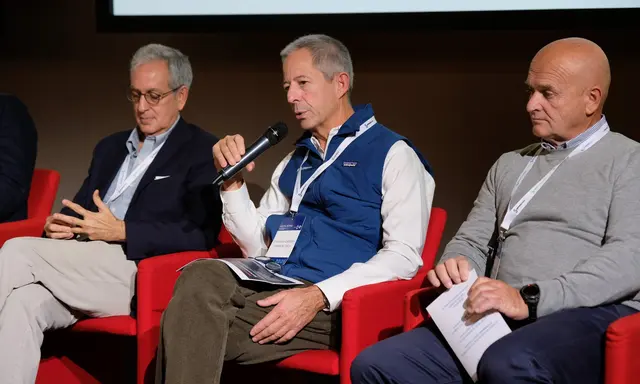
The Berlin event brought together a sixteen-member international jury and finalists from multiple categories. The published eyewitness account describes more than 350 test experiences forming part of the awards process and identifies the 790 Spectre as the actual Electric winner. The name of the winner and the award category are therefore verifiable facts.
The report should not say that Porsche itself won every marine-electric category, or that the boat was the overall best motorboat of 2026. Other awards were given for different purposes. This result belongs specifically to the Frauscher x Porsche 790 Spectre in Best Electric.
A distinction from earlier award coverage
Earlier coverage of the 790 Spectre noted nominations and anticipation ahead of the event. Those were valid stories at their respective dates but could not establish the eventual winner. The new information is the ceremony's decision and the fact that the prize was accepted on behalf of the manufacturer.
A newsroom should record that change rather than republish the nomination as though it were fresh. This article focuses on the verified winning result, while the technical background explains its relevance to premium yacht owners.
Environmental language calls for care
Electric propulsion avoids exhaust emissions at the point of use, which can be valuable around marinas and coastal recreation areas. It does not mean the entire lifecycle of a boat has no environmental impact. Electricity generation, battery manufacture, construction materials and eventual disposal are separate parts of a full assessment.
The award is not a published lifecycle carbon audit. Buyers interested in environmental claims should request evidence about manufacturing, energy use, battery replacement and recycling. Responsible reporting does not turn one product accolade into a universal sustainability certification.
Relevance to larger yachts
Developments in small premium electric boats can influence the expectations of superyacht owners, particularly for tenders and waterside leisure equipment. The ability to move quietly and without local exhaust may be attractive where conditions and charging arrangements permit.
However, installing or carrying such a boat aboard a larger yacht brings a different set of requirements. Weight distribution, launching arrangements and the available electrical capacity must be assessed by qualified personnel. The recognised qualities of the dayboat do not remove those responsibilities.
The next test is sustained ownership
The award establishes positive recognition from the 2026 Best of Boats jury. Longer-term experience will show how the 790 Spectre performs across different usage patterns and service environments. Such evidence may emerge from owner reports, service histories and later independently documented trials.
For now, the confirmed news is clear: the Frauscher x Porsche electric powerboat has moved from finalist status to winner in Berlin. The result adds a distinct accolade to a collaborative product, while practical suitability remains a question for each buyer's intended use.
How buyers should interpret the result
A client comparing premium electric dayboats should place the award alongside first-party specifications, a real demonstration, detailed charging requirements and professional advice about the planned operating area. It can help identify an interesting product without resolving every ownership question.
Frauscher's 790 Spectre illustrates a market in which electrical engineering and high-end boatbuilding increasingly meet. The Berlin honour recognises that combination within its category. The next meaningful development would be new product data or operating evidence, not a repetition of the award announcement.
Primary source and image credit
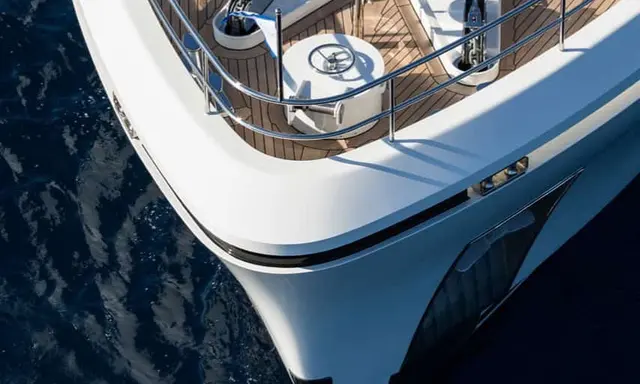
Verified editorial source: https://yachtsmen.eu/2026/best-of-boats-award-2026/. © Frauscher x Porsche / original photographer. First-party vessel photograph; award result reported from the original 26 November Berlin ceremony. The source image has been screened against previously used SYG, LYG and LBG lead media. The photograph illustrates the actual subject or the identified vessel, as credited.
Additional first-party builder specification: https://www.frauscherxporsche.com/en/790-spectre/. Model performance and equipment details remain subject to confirmation by the builder.