A new guide at METSTRADE
Australian anchoring-equipment manufacturer Muir has released Volume II of its Secrets of Anchoring Systems series, focusing on commissioning and day-to-day operation of yacht and ship anchoring gear. The company announced the new guide at METSTRADE 2026 in Amsterdam, explaining that it combines engineering knowledge with the experience of captains, officers, yard personnel and deck crews.
The publication is a guidance resource rather than a new certification regime or a guarantee that every anchor installation works in the same way. Its value lies in encouraging crews to understand the equipment aboard their own vessel, the procedures approved for that installation and the limitations of its various components.
The subject is operating knowledge
Volume II is titled Commissioning and Operation of Yacht and Ship Anchoring Systems. It addresses the transition from a yard installation to a system that working crew can operate confidently, including what to check during handover and how to establish clear routines.
A windlass may appear straightforward when demonstrated at a dock, but the actual loads and operational risks are more complicated. The guide is intended to explain the reasoning behind procedures rather than offer only a list of button presses.
Almost six decades of experience
John Muir founded the company in Hobart, Tasmania, in 1968. Today it manufactures anchoring and docking systems for recreational craft, commercial vessels and larger yachts. The new guide draws on that background while acknowledging the experience of people who work with these systems at sea.
A manufacturer has valuable technical knowledge, but the correct operating procedure still depends on the actual model installed and its condition. Owners should treat the guide as a complement to vessel-specific manuals rather than a replacement.
Understanding the different components
An anchoring arrangement may include an anchor, chain, windlass, brake, clutch and chain stopper. Each serves a different purpose, and confusion about which component should carry a load can create serious risk.
Muir highlights the distinction between a windlass that moves chain and the equipment intended to secure it when the yacht is lying at anchor. That is a central practical lesson because machinery designed for handling an anchor should not automatically be treated as a permanent structural restraint.
Why the stopper matters
The new resource explains the importance of transferring the load appropriately when a yacht is anchored. Chain stoppers or other designated securing arrangements are part of the system's design, while the windlass has a defined working function.
The exact method of transfer and securing must follow the yacht's equipment specification and crew procedures. An article cannot safely substitute a universal sequence for the manufacturer's installation instructions, particularly where hydraulic or electric arrangements differ.
Brakes and clutches require understanding
The guide addresses why the order in which a brake and clutch are operated matters. These components control the movement of the anchor chain and the connection between the machinery and its load.
Incorrect use can allow unwanted movement or expose personnel to dangerous forces. A crew member should be trained on the actual system and understand how the controls behave before participating in deployment or retrieval.
The handover pack is essential
Commissioning is not complete when the windlass turns under power. A good handover should include the correct drawings, manuals, component details, testing records and the information needed to identify the system for later service.
Owners and captains should know where those records are stored and ensure they remain available when crew change. Missing documentation can complicate troubleshooting and prevent specialists from giving accurate advice about a particular installation.
Taking over an unfamiliar yacht
Professional crew may join a yacht without having been present during its construction. Their first tasks include learning how the anchoring system is arranged, what procedures are approved and whether any modifications have been made.
The new publication explicitly addresses the process of taking command of an unfamiliar arrangement. That topic is relevant to charter managers and private owners alike, because personnel changes should not lead to the loss of essential technical knowledge.
Deployment involves more than lowering chain
Choosing an anchorage requires consideration of depth, holding ground, weather, nearby vessels and available swinging room. Once a location is selected, the crew must control the anchor and chain without placing people in unsafe positions.
Muir's guide deals with deployment as part of a complete operating process. It does not establish that all anchorages are suitable for a particular vessel or that one chain-length formula can replace local judgement.
Retrieval is a separate operation
Recovering an anchor requires coordination between the bridge and those working forward. The yacht's movement, chain angle and equipment status affect how the operation is carried out.
A captain should avoid using the windlass to perform work outside its rated purpose. The guide encourages crews to understand these limitations and maintain clear communication. The exact instructions must still come from the fitted equipment and the vessel's approved procedures.
Underway stowage matters
Once an anchor has been recovered, it must be secured appropriately for the passage ahead. The purpose is to prevent unintended deployment or movement as the boat pitches and rolls.
This can be overlooked by owners who use their boats mainly in calm local waters. Larger waves or long passages make correct stowage especially important. A properly documented procedure should identify the required securing arrangements and final checks.
Conditions at anchor can change
A yacht may settle safely in an anchorage only for the wind or current to change later. Monitoring remains essential, even when the equipment is correctly set. Crew must be alert to the possibility of dragging, altered loads or nearby traffic.
The manufacturer's guide offers operational insight, but no publication can promise that an anchor will hold in all circumstances. Decisions about remaining in place or moving depend on weather, local conditions and the skipper's assessment.
Emergencies need preparation
Unexpected conditions may require the crew to act quickly. A failed component, dragging anchor or urgent need to depart should not be the first occasion on which personnel discuss the system's limitations.
A vessel-specific emergency procedure can reduce uncertainty. It should be based on the installed equipment, crew competence and relevant safety requirements, with appropriate drills and maintenance. The new resource is intended to help operators think through such matters.
Input from three working environments
Muir says the guide incorporates practical perspectives identified as From the Bridge, From the Engine Room and From the Yard. Each brings a different understanding of the system.
The bridge team sees manoeuvring and communication, engineers deal with machinery and maintenance, and yards understand installation and commissioning. All three perspectives can help identify problems that may be missed if a system is evaluated from only one location.
Adaptable to a safety management system
The company suggests the guide can support the development of vessel-specific procedures within a yacht's Safety Management System. That is an important distinction: crews should adapt the principles to the equipment and operating arrangements they actually have.
The publication itself is not a statutory safety-management certificate. Depending on a yacht's flag, size and use, additional requirements may apply. Operators should consult qualified specialists where necessary.
A three-volume approach
Volume II sits between Volume I, which addresses design, layout and installation, and Volume III, which covers broader anchoring practice for recreational crews. Together they connect specification decisions with the work carried out after a yacht leaves the yard.
Owners may find it useful to review all three perspectives, especially when planning a major refit or changing anchoring equipment. A carefully chosen component still needs to be installed and used correctly.
A freely available resource
Muir says the guide is available through its online resources hub. It was presented at the company's METSTRADE stand in Hall 7 during the 17–19 November exhibition. Availability of a guide does not imply that every user has received formal instruction.
The document should be read alongside the relevant manuals, class requirements and established procedures. The company also invites industry feedback that may inform future editions, describing the publications as living resources.
What yacht owners should request
When buying a yacht, owners should ask whether the anchoring arrangement has been correctly commissioned and whether manuals, diagrams and maintenance records are available. A pre-purchase survey should include the equipment relevant to planned use.
For a refit, the shipyard and specialists should review the existing installation before proposing a replacement. Equipment ratings, chain dimensions and available space need to be considered together.
The cover is not an installation photograph
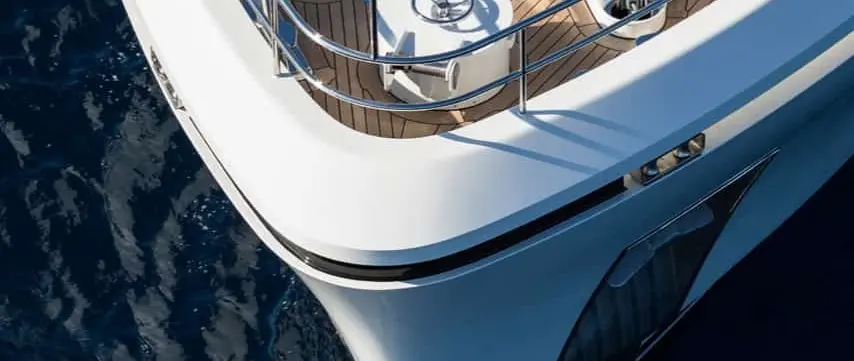
The accompanying image is an authentic Muir-issued photograph of marine anchoring equipment, used to illustrate the subject. It is not a claim that the pictured yacht carries the newly described guide or a specific system that has just been commissioned.
Correct attribution and context matter because the article concerns operational training and a new publication, not the delivery of an individual windlass. The manufacturer's website supplies the official book and background details.
A practical development for yacht operations
The importance of the new Volume II is the attention it places on crew knowledge. Anchoring requires machinery, structural components, navigation decisions and cooperation between people in different parts of the vessel.
The announcement offers a useful new reference for owners and professional crews, while leaving responsibility for the actual installation and its operation where it belongs: with the properly trained people using their vessel's approved equipment.
Primary reporting and image credit
Primary report: https://www.metstrade.com/exhibiting/superyacht-zone/muir-anchoring-systems/news/muir-unlocks-secrets-of-anchoring-systems-with-launch-of-new-guide. © Muir Engineering / original photographer. Authentic Muir-supplied yacht bow and anchoring installation photograph, illustrating the new operations guide. Image is used only for correctly attributed factual editorial coverage and never represented as open-licence stock photography.