The test used the Forward Helm configuration
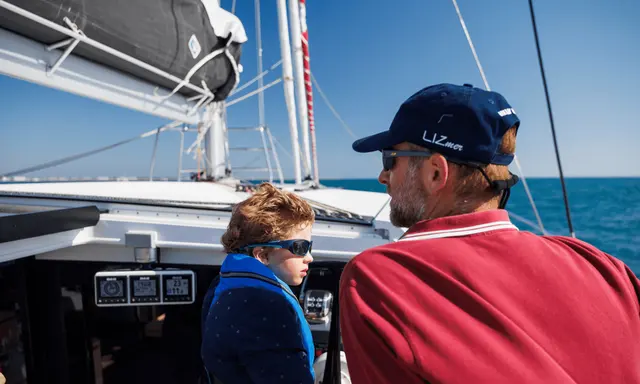
The reviewed yacht used HH's enclosed Forward Helm arrangement, positioned behind a dedicated working cockpit at the mast base where running rigging and winches are concentrated. That separates navigation from the active sail-control area while keeping both close enough for a small crew to coordinate manoeuvres.
The alternative is a dual aft-helm layout, giving owners a meaningful choice in how they want to sail the yacht. The test boat also carried optional aft tiller chairs, adding a third steering experience when conditions made exposed helming attractive.
Aft tiller chairs delivered the most direct feedback
The review describes curved bucket seats positioned well outboard, with push-button mainsheet and traveller controls close to hand. From those seats the helmsman gains a low, direct view over the water rather than operating through a wheel and sheltered interior station.
That arrangement is unusual on a cruising catamaran of this size. It gives performance-minded owners a more immediate sailing experience while allowing them to retreat to protected controls when weather or fatigue makes comfort the higher priority.
The boat reached mid-teen speeds during the trial
With fourteen to sixteen knots of wind, the HH52 made around ten knots on a close reach before accelerating into the mid-teens after changing to a larger reaching sail. The test therefore demonstrates that the performance claims translate into useful speed without requiring race-only conditions.
Passage speed has practical value beyond excitement. A faster cruising yacht can shorten weather exposure and increase route options, although owners still need to balance sail area against crew workload and sea state.
Semi-custom construction supports different ownership styles
HH offers Ocean Cruising and Sport Cruising versions with different carbon content, along with alternative cabin and galley layouts. That makes the 52 less of a fixed production package and more of a platform that can be tuned toward cruising autonomy or a stronger performance bias.
At around sixteen metres, the yacht remains squarely within LYG. The sea trial is therefore useful evidence for owners evaluating whether sophisticated controls and carbon construction genuinely make a private cruising catamaran more rewarding to sail.
Official sources: www.hhcatamarans.com.